From a former Golden Eaglets goalkeeper representing Uganda to Nigerian-born players choosing Malawi, Sudan and Benin Republic, footballers with Nigerian connections are finding international opportunities elsewhere in Africa.
When Akpan Udoh helped Nigeria win the FIFA Under-17 World Cup in Chile in 2015, his future appeared tied to the country whose colours he wore alongside future Super Eagles stars Victor Osimhen and Samuel Chukwueze.
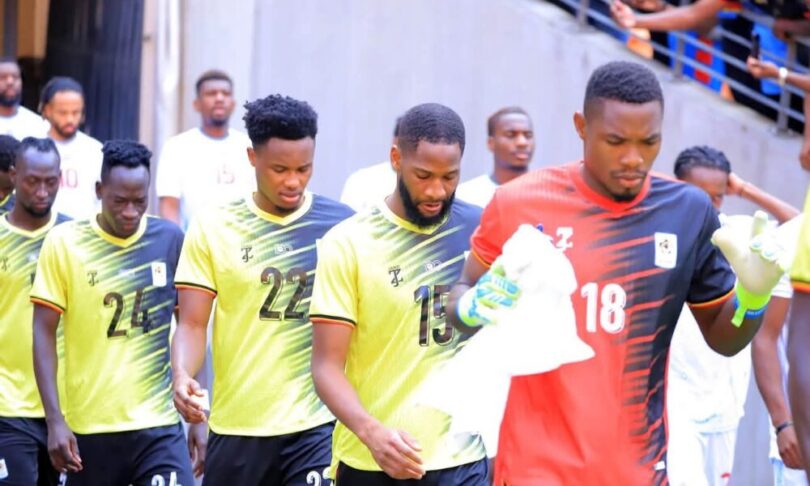
Udoh made his international debut for Uganda on 2 October, keeping a clean sheet in a 2-0 friendly victory over the Democratic Republic of Congo.
His journey reflects a growing trend in African football, where national teams are looking beyond their borders for players who qualify through ancestry or naturalisation.
From Uganda and Malawi to Sudan and Benin Republic, several footballers born in Nigeria or with Nigerian heritage have found opportunities to represent other African countries. Their experiences vary, ranging from players who developed their careers abroad to those whose family ties have opened the door to international football.
The Federation of Uganda Football Associations (FUFA) announced on 27 September that Udoh and Kingdom Osayi were among nine players identified through its national team recruitment programme.
The initiative followed a scouting exercise involving more than 200 potential heritage players, with 20 identified for further consideration.
Udoh, born on 18 July 1999, was part of Nigeria’s 2015 Under-17 World Cup-winning squad. He qualifies to represent Uganda through his grandmother, Auma, who was born in Busia, according to information published about his recruitment.
Osayi, born on 3 June 2004 to Nigerian parents, qualifies through his maternal grandmother, who was born in Kaberamaido, Uganda.
Before his move to Swedish club Assyriska FF, Udoh played for several Nigerian clubs, including Heartland, MFM, Doma United and Rangers International.
Osayi, meanwhile, had been involved with Nigeria’s Under-23 team setup but was not fielded at the 2019 U-23 Africa Cup of Nations. Having not represented Nigeria in a match at that tournament, his path to Uganda differed from that of players who have already featured for another national team.
Both players’ recruitment reflects Uganda’s efforts to widen its pool of available talent ahead of international assignments, including the 2027 Africa Cup of Nations qualifying campaign.
For Udoh, the transition is particularly striking because he previously represented Nigeria at youth level. His Uganda debut has now taken his career into senior international football with another country.
Malawi offers another example of how footballers with Nigerian connections are finding international opportunities elsewhere in Africa.
Jubril Okedina, a defender who developed in English football, attracted discussion about a possible future with Nigeria’s youth teams. He ultimately committed his senior international career to Malawi, receiving his first senior call-up and making his debut in March 2024.
Forward Babatunde Adepoju followed a different route.
Born and raised in Lagos, Adepoju built his professional career in southern Africa, particularly Malawi, where he played for clubs including Blue Eagles, Masters Security, Mighty Wanderers and FCB Nyasa Big Bullets.
After spending several years in the country, he obtained Malawian citizenship through naturalisation. He has also expressed a desire to give back to the country that helped develop his football career.
His international breakthrough came when he received his first call-up for Malawi’s 2026 FIFA World Cup qualifying campaign. He subsequently featured for the Flames in their competitive fixtures and contributed to the team’s Africa Cup of Nations qualifying campaign.
For Malawi, both players provide additional options, illustrating how national teams can strengthen their squads by recruiting eligible players with connections to other countries.
Former Nigerian international Sunday Adetunji’s career took another turn in 2026 when he switched his international allegiance to Sudan after establishing himself in the country’s domestic game with Al-Hilal Omdurman.
The forward previously played for several Nigerian clubs, including Abia Warriors, Plateau United and Rivers United.
Adetunji had made one senior appearance for Nigeria, coming on as a substitute in a 4-0 friendly defeat to Mexico on 4 July 2021.
His subsequent career took him to North Macedonia and Serbia before he moved to Sudan. His spell with KF Shkupi in North Macedonia was particularly productive: he scored 20 league goals in his debut season and helped the club win its first league title.
His limited senior involvement with Nigeria is relevant to his change of association. FIFA permits certain players to change the national association they represent, but the process is subject to conditions involving nationality, previous international appearances, age and participation in major competitions.
A player cannot switch national teams simply because he has changed clubs or obtained another passport. He must satisfy the applicable eligibility criteria and secure formal approval where required.
Adetunji’s case illustrates how a player’s international prospects can change after club football takes him to another country, where he may establish the legal and sporting connection required to represent its national team.
Benin Republic has a longer history of fielding footballers with Nigerian connections, reflecting the close geographical, cultural and family ties between the neighbouring countries.
Among the players who illustrate this relationship are Junior Olaitan, Tosin Aiyegun and emerging forward Joseph Ede Oloko.
Olaitan was born in Porto-Novo, Benin, to a Nigerian father and a Beninese mother. He spent much of his formative years in Lagos before returning to Benin to join Ayema FC in Porto-Novo.