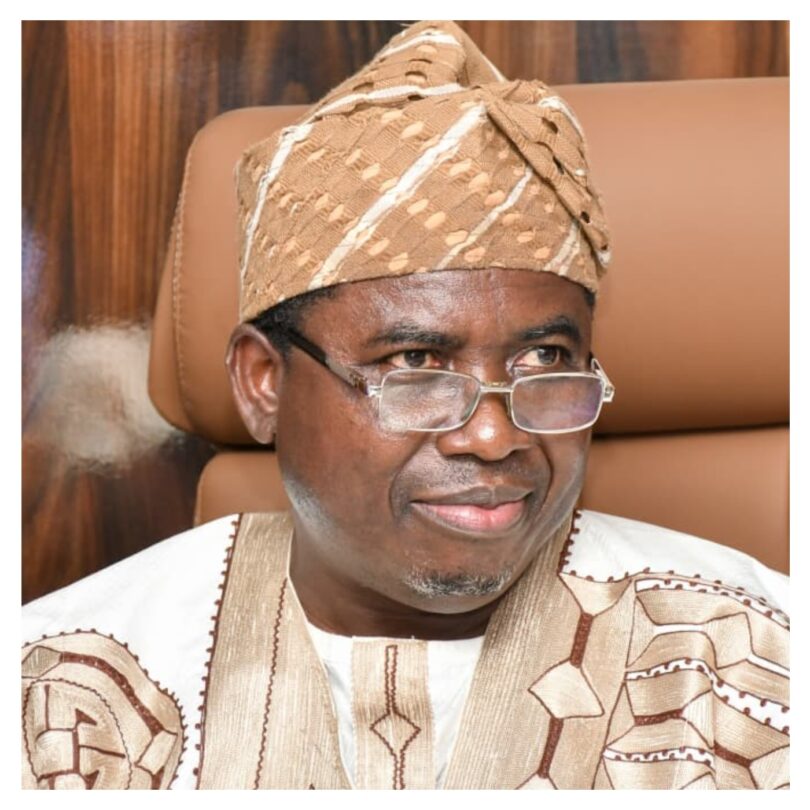
The Chairman of the Independent National Electoral Commission (INEC), Prof. Joash Amupitan, SAN, has called for stronger police support in the 2027 general elections, underscoring the critical role of security in the successful conduct of elections, describing it as both the “first mile and the last mile” of the electoral process.……
The Chairman of the Independent National Electoral Commission (INEC), Prof. Joash Amupitan, SAN, has called for stronger police support in the 2027 general elections, underscoring the critical role of security in the successful conduct of elections, describing it as both the “first mile and the last mile” of the electoral process.
In a Thursday statement signed by the INEC Editor-in-Chief, Victoria Eta-Messi, Amupitan made this known on Wednesday, during a courtesy visit to the Inspector General of Police (IGP), Olatunji Disu.
According to the statement, Amupitan formally sought the support and collaboration of the Nigeria Police Force ahead of the 2027 General Elections, during their engagement.
Congratulating the IGP on his recent appointment, the INEC Chairman expressed confidence in his leadership, noting that his experience would strengthen efforts toward ensuring a safe and secure electoral environment.
“We are confident that your vast experience and dedication will greatly enhance our collective efforts towards ensuring a safe and secure electoral process,” he said.
Prof. Amupitan informed the police leadership that the Commission has commenced preparations for the 2027 General Elections, scheduled for January 16, 2027, for the Presidential and National Assembly polls, and February 6, 2027, for Governorship and State Houses of Assembly elections.
He noted that the release of the election timetable and the ongoing political party activities, including ward congresses and conventions, signal the full activation of the electoral process, which he described as a “security trigger.”
According to him, political parties are expected to conduct their primaries in line with Section 84 of the Electoral Act 2026, which permits only direct primaries and consensus for candidate nominations.
The INEC Chairman updated the police chief on the upcoming off-cycle governorship elections in Ekiti and Osun States, as well as a series of bye-elections across the country, describing them as critical milestones in Nigeria’s democratic journey.
“These elections are crucial milestones in Nigeria’s democratic journey, and it is imperative that they are conducted peacefully and seamlessly,” he said.
Addressing longstanding challenges in Nigeria’s electoral system, Prof. Amupitan identified issues such as electoral malpractices, vote trading, and threats of violence as factors that undermine public confidence and pose risks to national security.
He stressed the need for proactive security measures, including comprehensive risk assessments to identify potential flashpoints and deploy appropriate mitigation strategies.
“The scale of insecurity across various parts of the country presents a threat to the conduct of free and fair elections. It is essential that we carry out thorough security risk analyses ahead of the elections,” he stated.
While acknowledging the Nigeria Police Force as the lead agency in election security, the INEC Chairman pledged the Commission’s full cooperation, emphasising the importance of intelligence sharing, strategic planning, and community engagement.
He further highlighted the role of the Inter-Agency Consultative Committee on Election Security (ICCES), describing it as the “heartbeat” of operational safety during elections.
“Our success depends on ICCES moving from reactive policing to proactive intelligence coordination,” he said, adding that all stakeholders must ensure a unified, multi-agency approach to protecting electoral personnel, materials, and voters.
Prof. Amupitan reaffirmed INEC’s commitment to working closely with the police and other security agencies to deliver peaceful, credible, and transparent elections that reflect the will of the Nigerian people.
Responding to the concerns and requests raised by the INEC Chairman, the police chief assured the Commission of the Force’s readiness to provide a secure environment for the conduct of the 2027 general elections.
Disu reaffirms the Force position as the lead agency in election security management, saying they will discharge responsibilities with professionalism, impartiality and strict adherence to the Constitution, the Electoral Act and other extant laws.
The IGP stated that the Force had begun strategic threat assessments and intelligence mapping nationwide to identify flashpoints and emerging security risks ahead of the elections.
Disu noted that issues such as political violence, the proliferation of illegal arms, voter intimidation, cyber manipulation, misinformation, and attacks on electoral infrastructure had been identified as priority concerns requiring proactive attention.
He added that intelligence-led deployments and preventive policing strategies would be adopted to neutralise threats before they escalate.
Disu also assured the Commission of adequate security for electoral officials, sensitive materials, collation centres and other critical electoral infrastructure throughout the electoral process.
He stressed that no political party, candidate or interest group would enjoy preferential treatment from the Police, warning that officers found engaging in partisan conduct or unethical practices would face disciplinary and legal consequences.
“We will ensure that we enforce electoral laws firmly and we will do it professionally,” the IGP said.
The Police boss further called for early release and wide dissemination of the election timetable to support effective planning, logistics coordination, personnel training and inter-agency collaboration.
He advocated stronger cooperation among security agencies through joint trainings, intelligence sharing and harmonised communication strategies, while also revealing plans to engage political parties through peace accords and stakeholder seminars aimed at promoting peaceful conduct before, during and after the elections.
He added that officers selected for election duties would undergo intensive training on electoral security management, human rights compliance, rules of engagement, crowd control and ethical conduct.