“It is a system of rules. If we are able to come together and rewrite those rules, the truth is that we will always have restructuring to clear the debt. But as we clear the debt, it creates room for more debt to come in.”
Across Africa, rising debt burdens and the high cost of borrowing have renewed concerns about the terms under which governments take loans and how those debts are managed.
PREMIUM TIMES reported that African countries spend about $90 billion every year servicing debt and pay another $75 billion in additional interest because of the high risk premium attached to borrowing,
At the sixth African Conference on Debt and Development (AfCoDD VI) held in August in Nairobi, Kenya, the African Forum and Network on Debt and Development (AFRODAD) called for African countries to work more closely together in their dealings with creditors.
In many African countries, the cost of the debt is forcing governments to make difficult choices between servicing debt and spending on health, education and climate resilience, even as the continent requires about $1.3 trillion annually to achieve the Sustainable Development Goals.
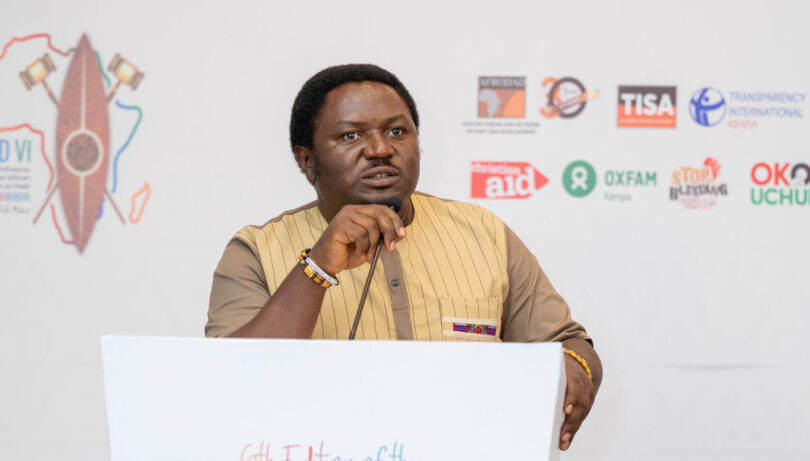
AFRODAD’s Policy, Advocacy and Research Manager, Theo Jong, argues that African countries weaken their bargaining position when they negotiate with creditors separately.
In this exclusive interview with PREMIUM TIMES on the sidelines of the conference, Mr Jong, a Cameroonian development professional, academic, and researcher, spoke about the problems in sovereign loan agreements, debt transparency, resource-backed borrowing, and why he believes African countries need a common position when negotiating with creditors.
He said better debt governance, transparency and accountability are critical to finding a solution to the debt crisis on the continent.
Read excerpts from the interview below.
PT: AFRODAD has studied sovereign loan agreements in several African countries. What loan terms are most worrying, and can you point to a specific agreement where a clause disadvantaged a country?
Jong: AFRODAD has studied sovereign loan terms, and there are several issues of concern. I’ll focus on two that are particularly important.
The first is transparency. There are often confidentiality clauses in these loans, which means the terms are not available for citizens, the media and parliamentarians to scrutinise.
That creates problems for transparency and accountability and for ensuring responsible borrowing. Borrowing should serve African citizens rather than put countries under economic stress.
The second concern is that many of these contracts can only be litigated in foreign jurisdictions. If there is a dispute, it may be heard in London, Paris or New York rather than within the jurisdiction of the African country that borrowed the money.
Many of these loans are also governed by the laws of foreign jurisdictions, which is another important concern.
There are also issues around the currencies in which African countries borrow. They borrow in dollars, euros, Japanese yen or Chinese yuan. This creates a challenge because countries have to earn those foreign currencies before they can service the debt.
When there are problems such as inflation or currency devaluation, debt servicing becomes even more difficult.
Another problem is that some contracts are signed in languages that parliamentarians and government officials cannot read. For instance, we have had contracts signed in Chinese. How many of us can actually read Mandarin?
When clauses that could increase debt distress are contained in such contracts, it becomes difficult for governments to deal with them if they do not fully understand what they have signed.
Borrowing itself is not the problem; we have heard that throughout this conference. The bigger questions are what countries are borrowing for and whether they have proper debt governance.
The problem is also the lack of coordination. Nigeria talks to China on an individual basis. Cameroon, Chad, Benin, Zimbabwe and Zambia do the same.
Debt is governed by rules that have shaped the global financial system and debt architecture. If African countries want to reform those frameworks and secure better borrowing terms, they need to reform the system.
But when governments negotiate with creditors individually, they become more vulnerable. They lose the opportunity to negotiate collectively and strengthen their bargaining power to change some of the terms on which African countries borrow.
PT: There is growing discussion about debt transparency. What are African governments still not telling their citizens? Can you give a specific example of a loan, creditor or liability that has been difficult for the public to identify?
Jong: African countries have had several instances of hidden debt.
Senegal is one example. A large amount of debt was contracted under the previous government and was later identified and inherited by the current government.
That raises questions about transparency and accountability in how governments borrow.
We have also seen confidentiality clauses in debt negotiations under the G20 Common Framework, including in the cases of Zambia and Ghana. Some terms are not made public to citizens and parliamentarians.
At the end of the day, people can find themselves carrying a very large debt without knowing the exact amount, the terms under which it was contracted or the purposes for which it was borrowed.
Those are common problems in African countries and have contributed to the continent’s debt challenges.