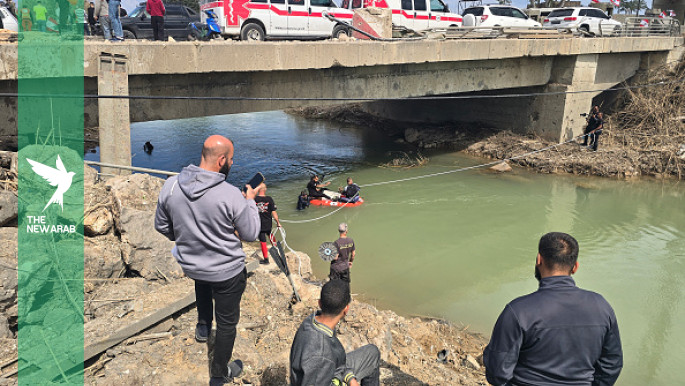
Lebanese Civil Defense personnel search for missing people in the river beneath the bomb-damaged Qasmiyeh bridge [Getty]
The Israeli military has continued to demolish homes in occupied southern Lebanon, as the two countries prepare for a second round of talks this week amid a 10-day ceasefire.
From Sunday night into early Monday, Israeli forces blew up residential buildings in the villages of Shamaa, Naqoura and Bayyada in the Tyre district, while a strike hit the village of Tayri in Bint Jbeil district. The Israeli army claimed it targeted rocket launchers in a strike on the village of Burj Qalawiya.
Despite a US-brokered truce that came into effect on Friday, Israeli artillery has continued to shell Lebanese border villages, while Israeli reconnaissance aircraft still fly over the country.
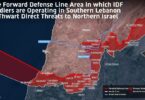
The Israeli army shared a map of what it called its security zone along the entire Lebanon-Israel border, stretching five to 10 kilometres deep, in a bid to create a no-man’s land where dozens of towns and villages have been wiped out. On Monday, the Israeli army warned Lebanese citizens to stay clear of this area.
Israel has told residents from south of the Litani River, much of which has been evacuated, that they will not be allowed to return before Hezbollah is fully disarmed and a ‘security deal’ is reached with Beirut.
Negotiations
Lebanon and Israel are preparing for a second preparatory meeting this week ahead of broader negotiations, following rare direct talks between their ambassadors in Washington on 14 April. Lebanese officials are pushing to extend the ceasefire to avoid ‘negotiating under fire’, which Israel had demanded.
Local Lebanese media reported that a second meeting could take place either on Tuesday or Wednesday, although this is yet to be confirmed, but diplomat Simon Karam is expected to head a Lebanese delegation.
President Joseph Aoun reiterated on Monday that the aim of the talks is to end both the conflict and Israeli occupation, stressing that these negotiations were separate from any other diplomatic process, in an apparent reference to the troubled US-Iran talks in Islamabad.
“The upcoming negotiations are separate from any other talks, as Lebanon faces two choices: either the continuation of the war, with all its humanitarian, social, economic and sovereignty-related consequences, or negotiations to bring this war to an end and achieve lasting stability. I have chosen negotiation, in the hope that we can save Lebanon,” Aoun said.
MTV Lebanon has reported that a meeting between Aoun and US President Donald Trump is being prepared, “and could take place soon.”
The US is seeking a broader peace deal between the enemy states, but Israel has threatened to remain in south Lebanon if Hezbollah is not fully disarmed. The Iran-backed group and Israeli forces have been engaged in cross-border fire and ground battles since war between both sides resumed on 2 March.
Hezbollah has refused to disarm before Israeli forces end their occupation of southern Lebanon and halt their attacks on the country.
On Monday, Hezbollah said that it destroyed four Israeli Merkava tanks, in its first announcement since the truce began.
In a statement, the group said an Israeli convoy of eight armoured vehicles was targeted by explosive devices planted before the ceasefire near the village of Deir Seryan, forcing Israeli troops to withdraw from the area.
Search for the missing
In the coastal city of Tyre, rescue teams said they pulled another body out of the rubble of a building which was struck moments before the Friday morning ceasefire came into effect, raising the death toll from the attack to 19, with four people still missing.
Civil Defence teams also began diving operations in the Litani to search for two missing persons believed to be buried underneath a key bridge bombed by Israel.
Israel struck bridges in the coastal area of Qasmiyeh several times during the war to completely isolate the region south of the Litani from the rest of Lebanon, which Human Rights Watch has described as a potential war crime.
Israel bombed nearly every other bridge crossing the river. Since the truce began, the Lebanese army has worked on reopening some of the bridges to allow access to motorists.