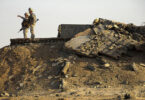

The settlers stormed Joseph’s Tomb under the protection of the Israeli army [Getty]
Thousands of Israeli extremists stormed Joseph’s Tomb in the east of the city of Nablus in the occupied West Bank on Wednesday morning, under the protection of Israeli occupation forces.
Among them were Israel’s far-right Finance Minister Bezalel Smotrich and members of the Israeli Knesset.
Local sources said that Israeli forces closed several roads in eastern Nablus early this morning to secure the entry of thousands of Israelis into Joseph’s Tomb, where they carried out Jewish rituals and prayers.
Around 5,000 people took part in the raid, according to Israeli media. Although groups of Israeli extremists and settlers have stormed Joseph’s Tomb before, today’s raid was considered particularly significant due to the large numbers involved and Smotrich’s presence.
The extremist minister called for a “permanent Jewish presence” at the site, a move that has raised Palestinian fears over a reported plan to carry out Israeli settlement activity in the area while establishing a permanent religious outpost.
“Smotrich’s personal participation in the storming of Joseph’s Tomb represents a clear political message that the Israeli government is moving toward establishing a permanent settler presence at the site, which lies in densely populated eastern [Nablus], rather than limiting itself to the periodic incursions that have taken place for years,” settlement affairs researcher Mahmoud Hannoun told The New Arab.
He pointed out that Joseph’s Tomb was near the Balata refugee camp, one of the largest in the West Bank, making the site extremely sensitive, adding that discussions by Israeli settlers on establishing a yeshiva religious school at Joseph’s Tomb would effectively mean establishing a permanent settlement nucleus inside eastern Nablus.
Israel passes bill to seize control of West Bank heritage sites
The raid came as the Israeli Knesset approved the first reading of a bill to establish a “Judea and Samaria Heritage Authority” which would have jurisdiction over all archaeological sites in the West Bank, even those in Area A, which is under Palestinian political and security control.
The authority would operate directly under Israel’s Ministry of Heritage, which is currently headed by far-right minister Amichai Eliyahu.
According to the proposed law, one of its key functions would be “the expropriation and possession of archaeological sites for excavation, development, and management purposes, as well as the collection of archaeological information”.
The Ibrahimi Mosque in Hebron is believed to be a key target of this law. Israel added it to the list of “Jewish heritage sites” after it occupied the West Bank in 1967, while allowing Israeli settlers access to it.
In July 2024, Israel approved, in a first reading, a bill “extending the powers of the Israeli Antiquities Authority to archaeological sites in the West Bank.”
What is particularly notable about the new proposal, however, is the transfer of the antiquities portfolio to Israel’s Ministry of Heritage – a ministry with sovereign authority – whereas the Antiquities Authority itself is merely an executive body. According to Hebron Municipality lawyer Samer Shehadeh, this gives the decision political and long-term implications regarding the future of archaeological sites.
Shehadeh told The New Arab that the Israeli project was about “stripping powers” from the Palestinian Authority and transferring them to Israeli authorities, in clear violation of the 1997 Hebron Agreement and international law.
Shehadeh explained that any change to the existing status quo inside the Ibrahimi Mosque must be carried out through agreement between the Palestinian Authority and the Israeli occupation in accordance with the agreement.
He argued that imposing any measures under the new project without the consent of both parties would render them “completely illegal measures”.
Shehadeh said that one of the project’s objectives may be to “undermine the legal status of the Ibrahimi Mosque as a Palestinian World Heritage site recognised by UNESCO, thereby stripping it of Palestinian sovereignty in favour of Israeli sovereignty through the Ministry of Heritage, while attempting to entrench an Israeli narrative that considers it part of Israeli heritage”.