
The legislation seeks to establish a state policing structure that would operate concurrently with the existing federal police system.
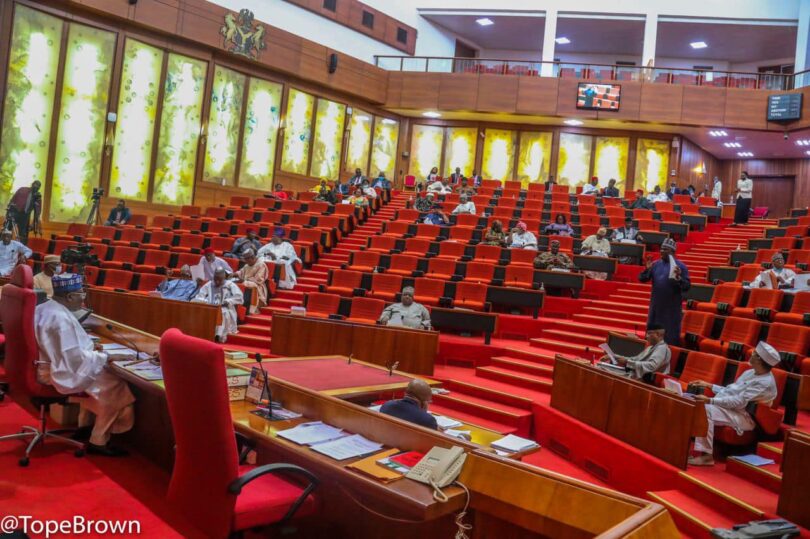
The Senate on Wednesday passed the bill seeking to establish state police in Nigeria.
The upper chamber approved the bill after considering the report of its Committee on the Review of the Constitution, presented by Barau Jibrin, its chairman.
The bill’s clauses were considered at the Committee of the Whole before its final passage.
The Senate President, Godswill Akpabio, announced the passage of the bill after more than two-thirds of the senators voted in support via a manual voting process in which they raised their hands.
The Senate Leader, Opeyemi Bamidele, led the debate on the bill before lawmakers proceeded to consider its various clauses.
The legislation seeks to establish a state policing structure that would operate concurrently with the existing federal police system.
However, Clause 17 of the bill, which deals with appointment, command, direction and tenure, provides that while the Inspector-General of Police shall head the Federal Police Service, the State Police Service shall be headed by a Commissioner of Police appointed by the governor of the state, subject to confirmation by the state’s House of Assembly.
Section 17(6) states that a state governor may give lawful written directives of a general policy nature to the Commissioner of Police of the state on matters relating to the maintenance of public safety and public order.
Section 17(7) further provides that the Commissioner of Police of a state shall not arrest, detain, investigate, or deploy force against any person, political party, or group for criticising the government, except in accordance with the law. This provision is intended to prevent the misuse of state police against political opponents or critics, ensuring that any action taken against such individuals or groups complies with due process and existing laws.
Details later…