
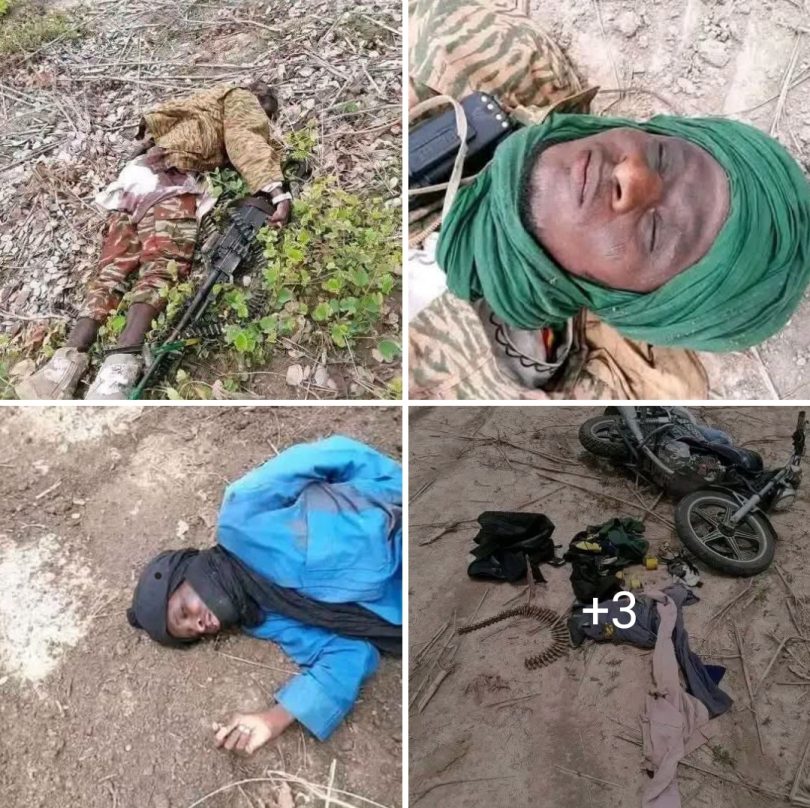
In the silent hours before dawn on Friday, June 26, 2026, the stillness of Kangiwa village in Kebbi State was broken not by the terror of marauding bandits, but by the calculated advance of joint security forces executing a precision strike that would leave a defining mark on Nigeria’s ongoing war against rural insecurity.
Acting on credible intelligence and deploying coordinated ground operations, security operatives neutralized a significant number of armed bandits and dismantled a critical enclave that had long served as a launchpad for violence across the North-West corridor. The recovery of weapons, ammunition, and motorcycles tools that have enabled years of swift, devastating raids was not just a battlefield gain, but a disruption of the very mechanics of terror.
Yet beyond the smoke of confrontation lies a more profound reality: this operation is not merely about what was destroyed, but what it represents.
For years, bandit groups have thrived in the gaps geographical, economic, and institutional. They have relied on mobility, local familiarity, and the absence of sustained state presence to orchestrate attacks, retreat into forests, and return with renewed force. What the Kangiwa operation signals is a gradual closing of those gaps a shift from chasing shadows to striking at the roots.
This is the quiet evolution of Nigeria’s security doctrine: from reactive defense to proactive disruption. Intelligence-led operations, when fused with local collaboration and decisive force, erode the myth of invincibility that has long emboldened these criminal networks.
But even as this victory is recorded, a sobering truth remains Nigeria has won many battles before, only to watch instability resurface in new forms, in new locations, under new commanders.
The deeper challenge, therefore, is not in executing operations like Kangiwa, but in sustaining their impact.
First, pressure must be relentless.
Banditry is adaptive. When confronted, it retreats; when ignored, it regroups. A single operation, no matter how successful, cannot substitute for continuous surveillance, persistent patrols, and a security presence that outlasts the headlines.
Second, the war must move beyond the gun.
In many of these communities, the line between victim and recruit is dangerously thin. Poverty, displacement, and the absence of opportunity create a fertile ground for criminal networks to replenish their ranks. Without targeted economic interventions agricultural support, ranching reforms, rural infrastructure, and youth empowerment the cycle of violence will regenerate.
Perhaps the most critical battlefield is not in the forests, but within the communities themselves. Intelligence is the lifeblood of modern security operations, and it flows only where trust exists. When villagers see security forces as allies rather than occupiers, information moves faster, threats are identified earlier, and lives are saved.
For the displaced families of Kebbi State, this operation is more than a tactical success it is a fragile promise. A promise that the state can reach even the most remote corners. A promise that the long nights of fear may one day give way to quiet, uninterrupted sleep.
But promises in Nigeria’s security landscape have often been fleeting.
The Kangiwa offensive, therefore, stands at a crossroads: it can either become another isolated victory in a long chain of temporary gains, or it can mark the beginning of a sustained, coordinated, and holistic push toward lasting peace.
The difference will not be made on the battlefield alone—it will be determined by policy, persistence, and political will.
As the nation reflects on this moment, one truth must remain clear: victory is not defined by the number of enemies neutralized, but by the number of communities that no longer live in fear.
May the courage of those who serve continue to light the path forward. May the sacrifices already made not be in vain. And may Kangiwa not just be remembered as a site of conflict but as a turning point in Nigeria’s long journey toward peace.