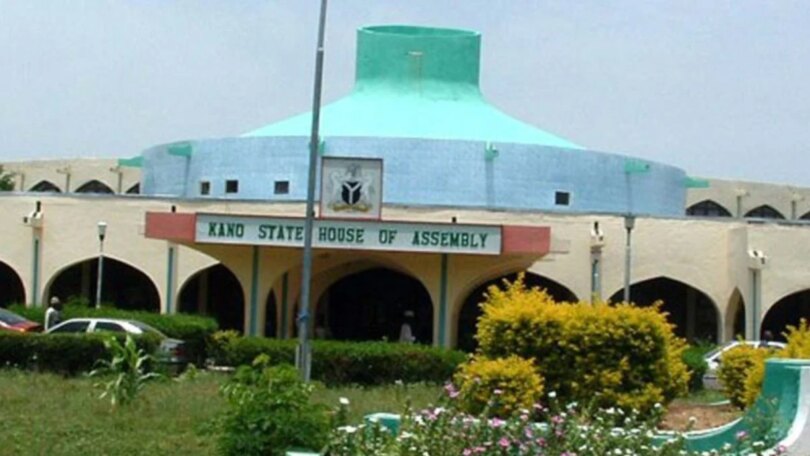
The Kano State House of Assembly has summoned Yusuf Bello-Aliyu, a lawmaker representing Nassarawa Constituency under the New Nigeria Peoples Party (NNPP), to appear before its Committee on Ethics over a controversial social media post allegedly containing offensive remarks.
The Assembly directed the lawmaker to explain the circumstances surrounding the post after members raised concerns about his conduct and the responsibility attached to his position as an elected representative.
Politics Nigeria reports that the matter came before the House during plenary following a motion of urgent public importance.
Speaker Jibril Ismail-Falgore announced the decision after lawmakers debated the motion moved by Abdulhamid Abdul-Minjibir, who represents Minjibir Constituency under the All Progressives Congress (APC).
Abdul-Minjibir told the House that he had come across a social media post allegedly showing Bello-Aliyu holding the ears of a rabbit while making comments he considered inappropriate for a serving member of the legislature.
The lawmaker said the content had raised questions about the image of the Assembly and the standard of behaviour expected from people elected to represent their constituencies.
He argued that public office holders must be mindful of their actions, particularly on social media, where their statements and activities can quickly reach a wide audience.
While presenting his concerns, Abdul-Minjibir stressed that the title of honourable member should reflect a commitment to responsible conduct and respect for the institution.
“The title ‘honourable’ is a distinctive title that should be respected; we should carry it with dignity and act accordingly by doing good things that will give us a good name,” he said.
He added that the post had caused him concern and that other lawmakers who had seen it were also troubled by its content.
According to him, the matter required the attention of the House because members of the legislature were expected to protect the reputation of the institution through their public conduct.
Abdul-Minjibir urged his colleagues to refer the matter to the Committee on Ethics, which would invite Bello-Aliyu to explain his actions.
He maintained that allowing the lawmaker to respond through the appropriate legislative process would help the House establish the circumstances surrounding the incident.
He also suggested that the decision could serve as a warning to other members who might engage in conduct considered inconsistent with the responsibilities of their offices.
The motion prompted further contributions from lawmakers, several of whom emphasised the need for elected representatives to demonstrate discipline and responsibility in their dealings with the public.
Musa Ali-Kachako, who represents Takai Constituency under the APC, supported the call for the House to address the matter.
He said lawmakers should set a good example for the people they represent and ensure that their conduct reflects the responsibilities of public office.
Ali-Kachako called for disciplinary action where necessary, provided it was carried out in accordance with the Assembly’s rules and established procedures.
He stressed that elected representatives must demonstrate respect for the law and the institution in which they serve.
He also emphasised the importance of maintaining public confidence in the legislature, noting that lawmakers should not engage in behaviour that could undermine the respect attached to their positions.
“They are lawmakers and not lawbreakers,” he said, calling for the Assembly to take the matter seriously.
Usman Abubakar-Tasiu, who represents Kiru Constituency under the NNPP, also expressed concern about the growing misuse of social media platforms.
He criticised the use of such platforms to insult people and called for measures to address the problem.
Abubakar-Tasiu suggested that legislation could be considered to promote responsible use of social media and curb practices he considered inappropriate.