PARIS – Several factors are making the latest Ebola outbreak in eastern Democratic Republic of Congo difficult to tackle, including it being of an unusual strain, late detection and dwindling international aid.
What makes this latest outbreak – the 17th to date in the DRC – unusual is “a combination of unfortunate circumstances,” says French immunologist Aurelie Wiedemann, an Ebola specialist at the French National Institute for Health and Medical Research (Inserm).
The World Health Organisation (WHO) highlighted on May 19 “the scale and speed” of this outbreak spreading in eastern DRC, having already caused more than 130 deaths there.
Previous outbreaks have proved fatal for between one third and half of those infected.
But this time, the DRC faces an unusual strain known as Bundibugyo. This variant is not necessarily more deadly than the most widespread strain, known as Zaire, which is itself highly lethal. However, having been identified only during two previous outbreaks, it is poorly understood.
There are multiple challenges, many linked to this particular strain. First and foremost, there is no proven effective treatment or vaccine against the Bundibugyo strain.
The WHO has pledged to investigate if existing Ebola treatments or vaccines might prove effective. “We still have hope; it’s still an Ebola virus, albeit a different strain. But we’re going in a bit blind,” warns Dr Wiedemann. She points out that the Bundibugyo strain is only 65 per cent similar to that of Zaire, the basis of which the main vaccine was developed.
Another problem is that this latest strain for a period of weeks apparently evaded most screening tests calibrated for Zaire, a factor behind late detection with the outbreak already well under way. Those factors “suggests that the epidemic is larger than currently ascertained; however, the true magnitude remains uncertain,” researchers at Imperial College London concluded this week citing modelling aimed at surpassing virological testing alone.
There are other additional difficulties related to the situation in the DRC comprising several war zones. A first case was detected on Sunday in an area controlled by M23 rebels. Also, many highly rural regions are difficult to access.
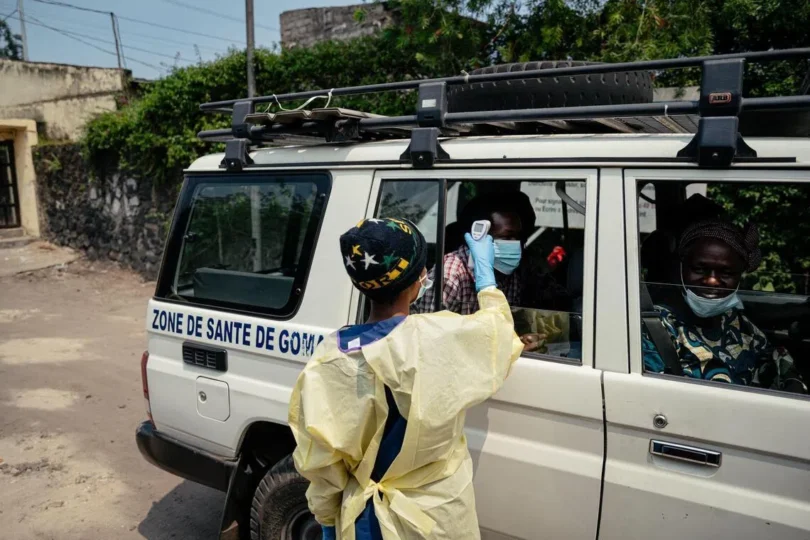
In the absence of a proven treatment, the challenge on the ground is to detect cases as speedily as possible to manage symptoms such as fever and isolate patients to prevent virus spread.
“Another key element is contact tracing, which is not easy,” Mr Mamadou Kaba Barry, who manages the onsite outbreak response for NGO Alima, tells AFP.
Mr Barry highlighted the challenges posed by certain rituals that could actually facilitate transmission.
“We say goodbye to the deceased, we give them a final bath, we kiss them… These have been cultural customs for millennia – but they pose a challenge” against disease spread, he explains.
NGOs are also dealing with a general drop-off in international aid, particularly from the United States, which, since Mr Donald Trump returned to office, has dismantled its development aid agency (USAID).
“The reduction in aid has had an impact on the response,” says Mr Barry. “Releasing funds as quickly as possible could make a big difference from today.”
Most experts do not see a risk of a pandemic even if cases have been identified in Uganda, neighbouring the DRC.
The WHO itself has classified the current outbreak as a public health emergency of international concern but not a pandemic.
A massive Ebola outbreak in West Africa in the mid-2010s did not spread beyond the continent, where it caused nearly 30,000 deaths.
Although Ebola is known for its high fatality rate, it is a relatively less contagious virus than, for example, Covid-19 or measles.
“Ebola is not an airborne virus, it is transmitted through contact with the bodily fluids of an infected individual which requires relatively close contact and makes it harder to spread globally,” explained epidemiologist Anne Cori, who supervised the Imperial College study at Britain’s Science Media Centre. AFP