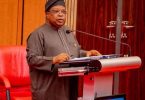

Addressing electoral credibility, Eniotu urged the Independent National Electoral Commission, INEC, to strengthen transparency, public access to electoral information and compliance with statutory requirements ahead of the next general elections.
He identified accurate voter records, lawful electoral procedures and meaningful public scrutiny as essential foundations of credible elections.
Referring to the Electoral Act 2026, he pointed to Section 19, which addresses the display or publication of the voters’ register, and Section 77, which deals with political parties’ membership registers and their submission to INEC before primaries, congresses and conventions.
He urged INEC to communicate applicable timelines clearly, provide accessible opportunities for voters to inspect their records and establish effective procedures for claims, objections and corrections.
The Commission, he added, should explain how compliance with political parties’ membership register requirements would be verified and enforced, while observing lawful safeguards for personal information.
Eniotu also called for greater transparency in the publication of voter registration figures, insisting that INEC should distinguish between applications received, completed registrations and the final number of eligible registered voters.
He said the Commission should provide timely explanations whenever figures change or credible discrepancies emerge.
Political parties, he added, must maintain accurate membership records and comply with their statutory obligations, with the same standards applied consistently to all parties and candidates.
“Public confidence grows when electoral procedures and information can withstand scrutiny,” he said.
Speaking on mental health, Eniotu called for urgent reforms to Nigeria’s legal and healthcare systems, particularly the decriminalisation of attempted suicide under Section 327 of the Criminal Code and Section 231 of the Penal Code, where applicable.
He stressed that individuals who survive suicide attempts require immediate medical attention, psychiatric assessment, treatment and sustained support rather than the threat of criminal prosecution.
The Managing Partner welcomed ongoing efforts towards decriminalisation and urged the National Assembly and relevant State Houses of Assembly to complete the necessary legislative reforms.
He also called for increased investment in affordable mental healthcare, crisis intervention services and training for police officers, healthcare professionals and other first responders.
Eniotu further highlighted the need for greater attention to severe mental health conditions following childbirth, particularly postpartum psychosis.
Referring to Section 327A of the Criminal Code, which recognises infanticide in specified circumstances involving disturbed mental balance following childbirth or associated lactation, he emphasised the importance of early diagnosis, urgent treatment and appropriate psychiatric evidence.
He said the protection of children and the provision of care for mothers experiencing severe psychiatric conditions must be pursued together through coordinated healthcare and justice systems.
“Our laws must protect life and provide an effective path to treatment and rehabilitation,” he stated.
The firm also announced the admission of Professor Olanrewaju Aladeitan, a Professor of Public and International Law at the University of Abuja, as a partner in the law firm.
Eniotu described Aladeitan’s admission as a significant development in the firm’s growth, citing his more than two decades of experience in legal practice, academic research, policy advisory and institutional leadership.
The new partner previously served on the legal team at Perchstone & Graeys that advised on the US$1.9 billion Nigeria Liquefied Natural Gas project financing.
He holds a doctorate in Law from the University of Abuja, a Master of Laws degree from Obafemi Awolowo University and an MBA from Robert Gordon University, Scotland.