
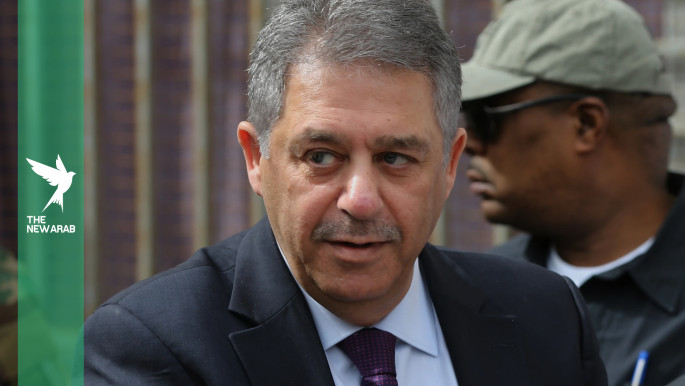
Ashraf Dabbour served as the Palestinian Ambassador to Lebanon from 2012-2015 [Getty]
Lebanese security agencies arrested former Palestinian ambassador to Lebanon Ashraf Dabbour overnight on Wednesday, acting on an Interpol arrest warrant tied to financial corruption allegations.
Dabbour was detained upon arrival at Beirut’s Rafic Hariri International Airport from Jordan, in implementation of a Red Notice issued in absentia.
“The Lebanese judiciary was contacted, which in turn requested his detention”, a security source told The New Arab. “He was referred to the Criminal Investigations Department of the Internal Security Forces, and then to the Public Prosecution, which is following up on his case”.
In July 2025, Palestinian President Mahmoud Abbas relieved Dabbour of his duties as deputy to the general supervisor of the Palestinian file in Lebanon, reportedly as part of broader organisational and security changes within Fatah.
He later faced multiple financial allegations, including corruption and illicit enrichment.
Dabbour has been under scrutiny over his alleged role in the sale of properties in Beirut owned by the Palestine Liberation Organisation (PLO), which maintained a significant presence in Lebanon until Israel’s 1982 invasion.
During his tenure as ambassador from 2012 to 2015, he is accused of approving real estate deals for personal gain, including the purchase of a PLO-owned building in Beirut’s Corniche al-Mazraa area, and of transferring funds from embassy accounts into his personal banking.
After refusing to appear before Palestinian judicial authorities, an arrest warrant was issued against him through Interpol.
A legal source told The New Arab that the original arrest warrant had been issued by Palestinian authorities, meaning Lebanon must either release Dabbour after initial questioning or hand him over to the Palestinian government.
However, the source stressed that Dabbour’s status as a Palestinian refugee complicates the matter. “The Lebanese state has no option but to release him after hearing his testimony”, they said.
They added that Beirut is currently unable to carry out an extradition to the occupied Palestinian territories in the same way it would with other nationalities, citing the absence of applicable bilateral agreements.