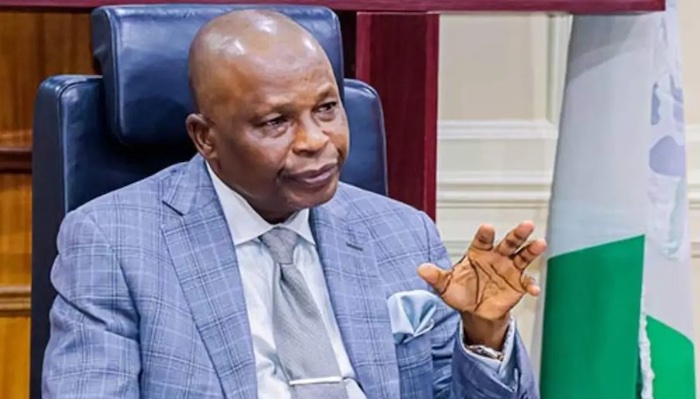
A legal enthusiast, Bayonle Beyioku, has defended the intervention of the Attorney-General of the Federation (AGF) and Minister of Justice, Lateef Fagbemi, in the ongoing controversy surrounding the forthcoming Nigerian Bar Association (NBA) national elections, insisting that the Attorney-General’s directives are binding on all stakeholders.
In a statement titled “Lead Your Sheep Not Into Perdition, Dear Osigwe,” Beyioku criticised the position of the President of the Nigerian Bar Association, Afam Osigwe, over his rejection of the AGF’s intervention, warning that the association risks sliding into a deeper crisis if the recommendations arising from the mediation process are ignored.
The statement follows the AGF’s intervention in disputes over the NBA’s July 18, 2026 national elections.
According to Beyioku, the Attorney-General convened a meeting of past NBA presidents and other stakeholders on June 11 to prevent the growing disagreements over the electoral process from escalating into a major institutional crisis.
He said the meeting resolved to establish a three-member committee comprising Chief Wole Olanipekun (SAN), Prince Lanke Odogiyon and Paul Usoro (SAN) to investigate the causes of the crisis and recommend solutions.
According to Beyioku, the committee invited memoranda from interested parties, including the three presidential candidates, the Chairman of the Electoral Committee of the NBA (ECNBA), the NBA President and other stakeholders.
He stated that, apart from the NBA President and the Mid-West Bar Forum, all those invited submitted memoranda and appeared before the committee, either physically or virtually.
He said the committee submitted its majority report to the Attorney-General on June 26, while a minority report followed on July 1.
Beyioku noted that the Attorney-General subsequently issued directives on July 6 based on the committee’s recommendations.
He said the directives drew criticism from the NBA leadership, particularly after Osigwe issued a statement rejecting them and later questioned the Attorney-General’s authority during an appearance on Channels Television’s Politics Today on July 8.
The legal enthusiast argued that the Attorney-General occupies a constitutionally recognised position as the nation’s Chief Law Officer and Chairman of the General Council of the Bar, and therefore acted within his official capacity in convening the stakeholders’ meeting, receiving the committee’s report and issuing directives.
He further contended that NBA leaders who participated in the June 11 meeting could not subsequently challenge the Attorney-General’s authority, arguing that their participation amounted to acceptance of the process.
Beyioku also maintained that the Attorney-General effectively served as a mediator during the stakeholders’ meeting and that parties who voluntarily submitted to the process were bound by its outcome.
Rejecting claims that the NBA is merely a non-governmental organisation beyond governmental oversight, he argued that the association is an incorporated trustee established under Nigerian law and exercises statutory responsibilities that make its affairs matters of public interest.
He also questioned the credibility of the NBA’s electoral process, citing what he described as findings of the committee regarding alleged shortcomings in the conduct of previous and proposed elections.
He further referred to concerns reportedly expressed by some presidential candidates over the integrity of the process.
Beyioku criticised the NBA President’s decision to invite international observers, including the European Union, the United States Embassy, the British High Commission, Yiaga Africa and the Transition Monitoring Group, to observe the July 18 election.
He questioned whether comparable professional bodies, including the International Bar Association, adopt similar measures during their internal elections.
He urged the NBA leadership to embrace the Attorney-General’s recommendations as an opportunity to reform the association’s electoral system and restore confidence in its processes, rather than dismissing the intervention.
According to Beyioku, proceeding with the election without first addressing the concerns identified by the committee could further undermine the credibility of the Bar.
He maintained that the Attorney-General’s directives remain binding on the NBA leadership, the Electoral Committee, candidates, voters, service providers and all participants in the electoral process.