Nigeria’s crude oil exports stood at N12.91tn in the second quarter of 2026, accounting for 47.79 per cent of the country’s total exports, according to the National Bureau of Statistics.
With global oil prices rising sharply amid the ongoing United States-Iran conflict in the Gulf region, stakeholders say sustaining the gains from crude oil exports will depend largely on the country’s ability to secure its oil infrastructure and maintain stable production in the Niger Delta.
Brent crude has risen to about $98 per barrel, significantly above the $64.85 benchmark used in Nigeria’s 2026 federal budget. The surge is expected to boost the country’s oil earnings, foreign exchange inflows and fiscal revenues, particularly if elevated prices persist.
However, analysts warn that the benefits of higher oil prices could be undermined if disruptions to crude production and transportation persist. This has renewed attention on pipeline protection operations led by Tantita Security Services Nigeria Limited (TSSNL) and other security agencies operating in the Niger Delta.
The Q2 export performance showed that Nigeria maintained a sizeable merchandise trade surplus, with exports significantly exceeding imports during the period.
NBS data showed that Nigeria’s total merchandise trade rose to N41.44tn in Q2 2026, representing a 5.61 per cent increase from the N39.24tn recorded in the corresponding quarter of 2025.
The figure also represented a 19.13 per cent increase from the N34.79tn recorded in Q1 2026.
Exports accounted for 65.20 per cent of total trade during the quarter, valued at N27.02tn, while imports stood at N14.42tn, representing 34.80 per cent of total trade.
Nigeria’s exports increased by 18.77 per cent year-on-year from N22.75tn in Q2 2025 and rose by 27.64 per cent quarter-on-quarter from N21.17tn in Q1 2026.
Crude oil remained the country’s largest single export commodity, accounting for N12.91tn, or 47.79 per cent of total exports.
Asia emerged as Nigeria’s largest export market, receiving goods worth N8.72tn, representing 32.29 per cent of total exports. Europe followed with N8.07tn, or 29.87 per cent, while exports to Africa stood at N6.65tn, representing 24.62 per cent.
Exports to the Americas were valued at N3.11tn, or 11.52 per cent, while Oceania accounted for N459.96bn, representing 1.70 per cent.
Of Nigeria’s exports to Africa, ECOWAS member states accounted for N3.75tn, representing 56.39 per cent. India was Nigeria’s leading individual export destination during the quarter, receiving goods valued at N3.29tn, equivalent to 12.17 per cent of total exports.
With Brent crude trading above $98 per barrel, well above the federal budget benchmark of $64.85, the current rally is expected to strengthen Nigeria’s fiscal position, foreign exchange reserves and exchange rate stability.
Analysts say a further escalation of tensions, particularly any disruption to the Strait of Hormuz, a vital route through which roughly 20 per cent of global oil supply passes, could push crude prices significantly above $100 per barrel.
The Chief Executive Officer of the Centre for the Promotion of Private Enterprise, Dr Muda Yusuf, said higher oil prices would typically strengthen Nigeria’s current account balance, improve foreign exchange liquidity and increase export proceeds.
“This could reduce short-term pressure on the naira and reinforce investor confidence,” Yusuf stated in a recent policy brief titled ‘Implications of the Iran–US–Israel Conflict on the Nigerian Economy’.
For Nigeria, sustained high crude prices could therefore translate into stronger export earnings and improved external balances, provided oil production and transportation remain stable.
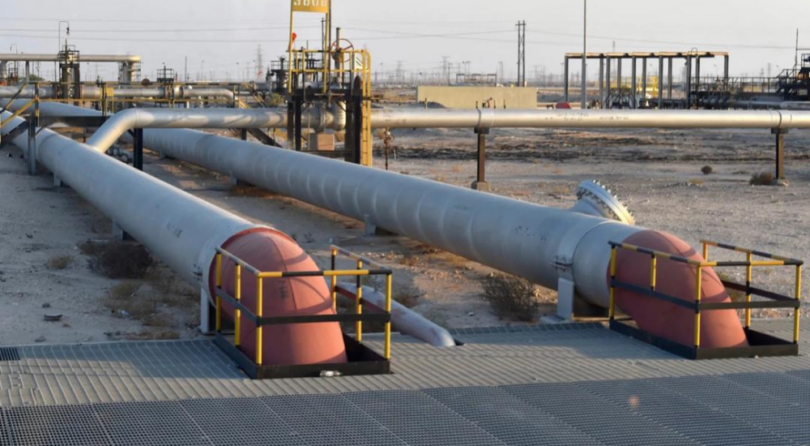
Against this backdrop, stakeholders say sustaining the gains from higher oil prices will require continued protection of the country’s oil assets, particularly pipelines and other critical infrastructure in the Niger Delta.
The battle against oil theft requires more than conventional security measures. It also involves deploying institutions with the capacity, technology and local expertise to monitor critical infrastructure, detect breaches and respond quickly to threats.
The Federal Government engaged Tantita Security Services Nigeria Limited to protect oil pipelines and other critical assets in the Niger Delta, with the objective of supporting crude oil production and safeguarding national revenue.
President Bola Ahmed Tinubu appointed TSSNL, led by High Chief Government Oweizide Ekpemupolo, alias Tompolo, to participate in the protection of Nigeria’s oil assets in the region.
The company works in collaboration with other security agencies to secure oil infrastructure, combat oil theft and support peace and stability across the Niger Delta.
Its operations have been credited by stakeholders with improving the security of oil pipelines, supporting uninterrupted crude oil flows and helping the country move from persistent losses associated with oil theft towards greater stability in production and revenue planning.
The improved security environment has also supported efforts to increase oil production and reduce the scale of crude theft, while strengthening the protection of infrastructure considered critical to Nigeria’s economic fortunes.
As stakeholders continue to advocate stronger collaboration among security agencies and oil industry operators, the protection of pipelines remains central to efforts to sustain crude production, export earnings and fiscal revenues.
Tantita has also moved to strengthen its surveillance capabilities through the deployment of advanced technology.
The company recently contracted United States-based security technology firm Textron Systems to deliver three uncrewed aircraft systems to enhance surveillance of Nigeria’s oil and gas infrastructure.
Under the contract signed late last year, Textron Systems is to deliver three Aerosonde Mk. 4.7 vertical takeoff and landing uncrewed aircraft systems to Tantita.
The systems will be delivered in an ITAR-free configuration designed to facilitate export to international customers. The aircraft are expected to enhance surveillance operations aimed at protecting critical oil and gas infrastructure.
The agreement also includes options for training and additional aircraft to support planned expansion of the surveillance capability.
The Aerosonde Mk. 4.7 VTOL UAS uses Hybrid Quadrotor technology, allowing it to take off and land vertically without requiring a conventional runway.
Textron Systems said the system’s reliability and operational record make it suitable for security operations across high-risk environments.
“The Aerosonde Mk. 4.7 VTOL UAS is a mature, highly reliable, and industry-proven autonomous solution that will provide Tantita Security Services with transformational capability to execute their security operations,” said David Phillips, Senior Vice President, Air, Land and Sea Systems.
He added that the system’s demonstrated performance would enable Tantita to expand its capabilities to protect oil and gas infrastructure considered essential to Nigeria’s security and economic prosperity.
The system has been deployed in operations across the globe and is currently used on more than 10 U.S. Navy ships. It can also accommodate multiple payload configurations in both VTOL and fixed-wing operations.
The International Monetary Fund has also projected that higher oil prices could improve Nigeria’s balance of payments position.
In an interview transcript, the Director of the IMF’s Communications Department, Julie Kozack, said oil-exporting countries could experience improved balance of payments as a result of higher crude prices.
“For countries that are energy importers, they may face pressures on their balance of payments. For countries that are oil exporters, their balance of payments may improve because of higher prices,” she said.
Kozack noted that changes in global financial conditions were likely to affect countries differently, depending on their economic structure.