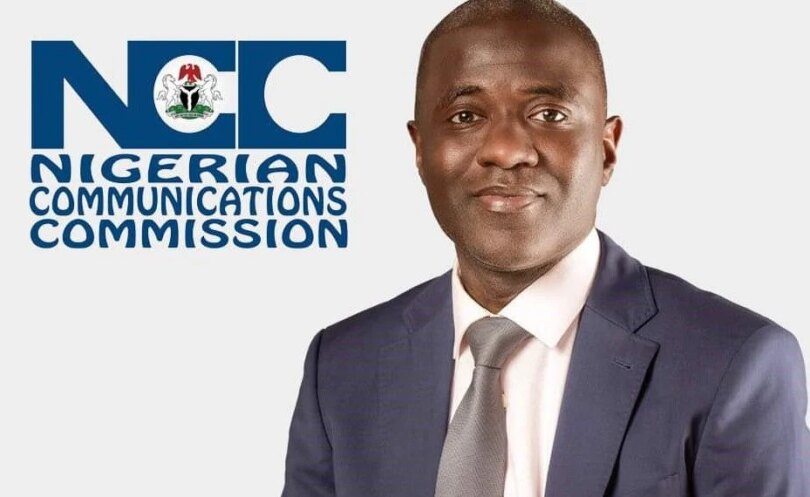
Executive Vice Chairman, EVC, of the Nigerian Communications Commission, NCC, has harped on the need for sustained investment and expansion of broadband connectivity.
He further noted that Nigeria has consumed about 1.6 million terabytes of data in July 2026, which is up from about 1.13 million a year earlier, an increase of almost 47% within 12 months, adding that keeping pace will require sustained investment, both to expand networks and to improve the experience of people already connected.
The EVC spoke at the Nigeria Digital Connectivity Investment Forum themed: Unlocking Infrastructure Investment through Data, Transparency and Partnerships, organised by NCC in collaboration with Swedfund International AB and Ookla. He noted that Nigeria’s digital economy is expanding rapidly, driven by increasing demand for broadband connectivity, digital services, and data-driven innovation across sectors.
He noted that reliable, high-quality connectivity has become essential for economic growth, financial
inclusion, education, healthcare, agriculture, public services, and digital entrepreneurship.
According to Maida, while Nigeria has made significant progress in expanding telecommunications infrastructure and mobile broadband access, important gaps remain, including uneven network performance, infrastructure deployment constraints, rising demand for higher- quality connectivity, underserved and commercially challenging areas, and the need to mobilise greater levels of private investment in digital infrastructure.
He said that to address these challenges, more than infrastructure deployment is required, adding that reliable data and intelligence are increasingly important to understanding where connectivity gaps exist, where demand is emerging, what infrastructure constraints affect deployment, and where investment can generate the greatest economic and social impact.
In this context, he said that the NCC is advancing a more data- driven approach to understanding Nigeria’s connectivity environment, drawing on multiple sources of network, infrastructure, coverage, market and other relevant intelligence to support better policy, regulatory and investment decisions.
The forum, according to NCC, is designed to translate Nigeria’s growing body of connectivity, infrastructure and market intelligence into practical investment opportunities, partnerships and actions that can accelerate digital infrastructure development.
Maida said, “At a time when the telephone line was beyond the reach of most Nigerians, policy reform and a transparent licensing process gave private investors the confidence to enter the market. The networks they built changed how we communicate and opened opportunities that have continued to grow. That experience still has much to teach us.
“The Nigerian Communications Act of 2003 expressly recognises the importance of encouraging investment and gives the Commission a responsibility to facilitate it. We take that responsibility seriously, alongside our duty to protect consumers and promote fair competition. Today, the demands on those networks are much greater.
“A trader waiting for a payment to go through, a student joining an online class, and a business serving customers across the country-all dependent on connection that works when they need it and where they need it. As emerging technologies such as cloud and artificial intelligence become more widely used, that dependence will deepen further.
“We can see the demand in our figures. Nigeria has consumed about 1.6 million terabytes of data in July of this year, up from about 1.13 million a year earlier. That’s an increase of almost 47% within 12 months. Keeping pace will require Sustained investment, both to expand networks and to improve the experience of people already connected. We have indeed been working to improve the conditions for that investment.
“The 2025 tariff adjustment addressed the financial pressures on operators and their ability to invest, with a clear expectation of better service for consumers. In 2024, His Excellency President Bola Ahmed Tinubu’s designation of telecommunications infrastructure as critical national information infrastructure has strengthened the basis for protecting these assets; our engagement with the subnationals on right of way is also helping to address deployment costs.
“We know that investors need confidence in how rules will be applied and how decisions will be made. We also know that there is more work to do on the practical difficulties of deployment.
“This forum is an opportunity to discuss those difficulties openly with the people who can help resolve them. We are making evidence-based decision-making central to how we regulate. For investors, that means a clearer understanding of where the opportunities lie and greater confidence in the basis for our decisions.
“For us, it means understanding what is holding investment back, choosing our interventions carefully, and checking whether they work. Our collaboration with Swedfund and Ookla is helping us build that understanding. It gives us independent insights into the connectivity people actually experience.
“We want investors to benefit from that understanding and from regulatory decisions that are clear, proportionate, and supported by evidence. Over these two days, we will look at opportunities across Nigeria and explore the financing and partnerships they require.”