
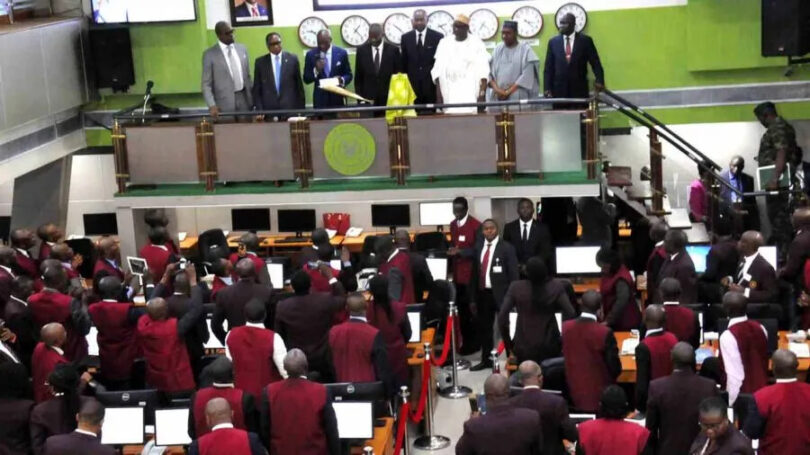
…Bank Reforms, Crude Price Surge Power Equities Rally
The Nigerian equities market recorded a strong performance in the first nine months of 2026, creating an estimated N63.72tn in market wealth as the benchmark All-Share Index (ASI) surged by 61.43 per cent despite bouts of profit-taking during the period.
The market’s remarkable rally was driven largely by the banking sector recapitalisation exercise, stronger corporate earnings, renewed investor confidence and gains in crude oil prices, which improved the outlook for energy stocks.
Data from the Nigerian Exchange Limited (NGX) showed that the ASI rose from 155,613.03 points at the beginning of January to 251,211.67 points at the end of September, representing a 61.43 per cent increase.
Similarly, the total market capitalisation of listed equities expanded from N99.38tn to N163.10tn over the nine-month period, representing an increase of N63.72tn.
The performance came despite periods of significant market correction, particularly in June and August, when investors embarked on profit-taking following the sustained rally recorded earlier in the year.
In June, the market shed about N13.29tn in capitalisation, while market capitalisation declined by approximately N587bn in August.
Market analysts, however, viewed the corrections largely as profit-taking after the prolonged market appreciation, rather than a fundamental deterioration in the underlying equities market.
Investors also took advantage of the gains recorded on equities to lock in profits and reposition their portfolios towards fixed-income instruments as yields remained attractive.
The nine-month performance was achieved against the backdrop of persistent inflationary pressures, elevated interest rates, foreign exchange uncertainties and heightened geopolitical tensions that continued to influence global financial markets.
A major catalyst for the equities market rally was the successful completion of the Central Bank of Nigeria’s banking sector recapitalisation programme.
Under the recapitalisation framework, the CBN raised the minimum capital requirement for commercial banks to N500bn for international banks and N200bn for national banks, with March 31, 2026 set as the compliance deadline.
The exercise triggered an unprecedented wave of capital raising by banks through the Nigerian capital market as lenders sought to strengthen their balance sheets and meet the new regulatory requirements.
The massive fundraising activities increased the depth and liquidity of the equities market, while also drawing greater investor attention to banking stocks.
Major banks, particularly tier-one lenders, became key beneficiaries of the renewed buying interest as investors positioned for the potential benefits of stronger capital bases, increased lending capacity, improved earnings and enhanced dividend prospects.
The banking sector consequently emerged as one of the key drivers of the market rally, recording a 35.77 per cent gain in the first half of the year, with major financial institutions, including GTCO Plc, among the prominent performers.
The recapitalisation exercise also reinforced the role of the equities market as a major source of long-term capital for Nigerian businesses, particularly financial institutions undertaking large-scale balance-sheet restructuring.
Beyond the banking sector, developments in the oil market provided another significant boost to equities.
International crude oil prices rose amid heightened geopolitical tensions, including the conflict involving Iran and Israel, improving the earnings outlook for upstream oil and gas companies listed on the NGX.
The stronger crude price environment increased investor interest in energy-related stocks, as market participants anticipated improved revenues and profitability for companies with significant exposure to upstream petroleum operations.
The oil and gas sector consequently became one of the strongest-performing segments of the Nigerian equities market during the review period.
Corporate earnings also provided support for the rally, with investors responding positively to stronger financial results from several listed companies.
Improved earnings expectations, combined with the successful banking recapitalisation programme and stronger oil prices, helped sustain buying interest despite intermittent sell-offs.
The market’s performance also reflected renewed confidence among domestic investors following the strong gains recorded since the beginning of the year.
However, the pace of the rally also prompted increased profit-taking, particularly after some stocks recorded substantial price appreciation.
The corrections in June and August therefore highlighted the volatility accompanying the market’s rapid ascent, as investors periodically reassessed valuations and shifted funds between equities and alternative asset classes.
Despite these corrections, the overall trajectory remained strongly positive, with the ASI closing September substantially above its end-2025 level.
The nine-month performance further strengthened the Nigerian equities market’s position among the stronger-performing African markets during the period, although investors continued to contend with macroeconomic risks, including inflation, interest rates, exchange-rate movements and global geopolitical developments.
With the banking recapitalisation cycle completed and corporate earnings remaining a key market driver, attention is expected to remain focused on the ability of listed companies to sustain earnings growth and translate stronger balance sheets and improved operating conditions into returns for shareholders.