We must tell ourselves uncomfortable truths about insecurity and those who enable it, argues TOLULOPE OGUNMUKO
I am by no means a security expert. My expertise lies elsewhere: in understanding how the human body works – including how it defends itself against threats. Doctors spend years studying what happens when protective systems fail. Once the body’s defence mechanism begins to break down, trouble is rarely far behind.
The body’s security can be compromised by external or internal factors. External invaders such as bacteria, viruses and parasites are relatively easy to understand. Internal threats are often more complicated. Many medics would agree that severe autoimmune diseases can be among the most difficult conditions to treat. In those situations, the body essentially attacks itself.
Ironically, HIV, once considered a death sentence, can now be controlled remarkably well with modern medicine. Yet severe autoimmune diseases still leave specialists scratching their heads. No amount of rice, protein shakes, herbal mixtures, prayers, or wishful thinking can correct a malfunctioning immune system. What is required is targeted treatment.
As I reflect on Nigeria’s security situation, I cannot help but think of autoimmune diseases. Nigeria’s security architecture has been breached repeatedly over the years. Yet it is only now, with insecurity spreading into North-Central and Western Nigeria, that many people seem to appreciate the scale of the problem. The reality, however, is that this disease has been festering for a long time. We simply did not appreciate how sick the patient had become.
A few weeks ago, I drove for about two hours through the North-West of England with friends and family on a day trip. It was an uneventful journey. We laughed, argued about music, stopped for snacks and arrived safely. It then occurred to me that this is precisely the sort of journey families in Ibadan should be making to Komu in Oyo State, home to the KAP Film Village and Resort.
Instead, conversations are increasingly dominated by stories of insecurity. The recent kidnapping of children in the area serves as a grim reminder that what should be a thriving tourist corridor is now discussed through the prism of fear. How do you market a tourist destination when the surrounding headlines are dominated by reports of kidnappings? How do you convince families to embark on leisure trips when children can be abducted and disappear for weeks without meaningful leads? How do you build a tourism industry in an environment where fear has become a travelling companion?
A society begins to malfunction when ordinary activities become extraordinary acts of courage. One of the greatest casualties of insecurity is not necessarily what is lost today. It is what may never happen tomorrow.
When I was a medical student at the University College Hospital, Ibadan, our set — Class of 2012 and eventual graduates of 2016 — looked forward to our public health medicine rural posting in Igbo-Ora. For many of us, it was much more than a posting. It was an adventure. We travelled from Ibadan in university buses and spent weeks immersed in rural life. We interacted with traditional rulers and community leaders. We learnt medicine in a different environment. We organised bonfire nights. We formed friendships that have endured for over a decade. Some of those friendships became relationships. Some of those relationships became marriages.
As our set approaches ten years after graduation, I often look back fondly on those experiences. They shaped us not only as doctors but as people. Then an uncomfortable question enters my mind. Would parents today willingly allow their children to embark on the same journey? Would universities feel comfortable transporting hundreds of students from relatively safer urban centres into rural communities for weeks at a time? Would students themselves feel secure enough to embrace such an experience?
The tragedy of insecurity is not merely that it kills. It also steals possibilities. It steals memories before they are made. It steals friendships before they are formed. It steals opportunities before they are discovered.
The hydra-headed challenge of insecurity in Nigeria can be analysed from countless perspectives. Indeed, we often suffer from what I call analysis paralysis. Poor governance. Unemployment. Poverty. Ungoverned spaces. The political economy of insecurity. Porous borders. Arms trafficking from the Sahel. Weak institutions. Corruption. Religious extremism. Ethnic tensions. The list is endless. Yet one common denominator remains: bad behaviour flourishes when consequences are absent.
One of the more controversial responses to insecurity has been Operation Safe Corridor, a programme aimed at rehabilitating and reintegrating former insurgents. Now, rehabilitation is not necessarily a bad idea. In medicine, rehabilitation is often a vital part of recovery. However, successful rehabilitation requires systems, monitoring, resources, accountability and long-term follow-up. That is where my concerns begin.
Supporters of Safe Corridor often point to examples from other countries where similar programmes have produced positive outcomes. Fair enough. But governance interventions are not unlike economic policies. We have spent decades importing IMF-style prescriptions and discovering that what works in one environment may fail spectacularly in another. Why should security policies be any different?
We have not successfully unified the data of our citizens and residents. We still struggle with basic identity management. Address systems remain inadequate. Tracking individuals remains problematic. How then do we monitor the activities of supposedly rehabilitated terrorists? More importantly, how does a country struggling to adequately train, equip and cater for its own security personnel suddenly become capable of providing comprehensive psychological, educational, vocational and social rehabilitation programmes for terrorists?
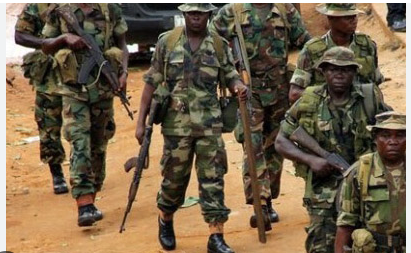
Our soldiers continue to operate under extremely difficult circumstances. Equipment shortages are frequently reported. Welfare concerns persist. Training environments in some instances remain embarrassingly poor. If we cannot fully look after those defending the nation, how do we expect to effectively rehabilitate those who sought to destroy it?
Then comes the most fundamental question of all. How do you rehabilitate individuals and return them to society without addressing the socio-economic conditions that contributed to their radicalisation in the first place? That is like treating malaria while leaving the mosquito-infested swamp untouched. Safe Corridor, in its current form, appears less like a solution and more like a gamble.
The South-West was among the first regions to recognise that something fundamental was changing. The late Arakunrin Rotimi Akeredolu understood this perhaps better than most. Long before insecurity became today’s national emergency, he consistently warned about criminal elements occupying forests and ungoverned spaces. The horrific massacre of worshippers in Owo in June 2022 only reinforced those concerns.
Whether one agreed with every position he took or not, Akeredolu appreciated the urgency of the moment. His support for regional collaboration strengthened Amotekun, a security initiative designed to provide local intelligence and support conventional security agencies. The underlying philosophy was simple: the people closest to the problem often understand it best.
Former Ekiti State Governor Ayodele Fayose similarly recognised the dangers associated with unchecked open grazing and farmer-herder conflicts. Years later, one is still left wondering why such an obvious source of tension remains unresolved. Personally, I struggle to understand how any business model that destroys the livelihoods of others can be defended indefinitely.
Imagine opening a supermarket and routinely helping yourself to neighbouring shops’ goods. Society would not tolerate it. Why then should a farmer spend months cultivating crops only to watch them destroyed without consequences? Justice delayed eventually becomes instability sustained.
Our scatter-gun approach to security is not helping matters. Consider Katsina State, where several local government areas have experienced sustained attacks from bandits. At various times, negotiation has been presented as a solution. Yet experience repeatedly suggests otherwise. Community leaders have entered forests to negotiate and ended up being kidnapped themselves. Villages have negotiated peace deals only to be attacked later by the same criminals.
There is an old saying that captures this perfectly: “If you feed a lion in the hope that it will eat you last, you are still on the menu.”
Perhaps what troubles Nigerians most is not simply insecurity itself. It is the absence of answers. How do armed men on dozens, sometimes hundreds, of motorcycles move through forests and communities for hours, abduct hundreds of schoolchildren and seemingly vanish without trace? How do such operations repeatedly occur in a country with multiple security agencies? How are these movements not detected earlier? How are escape routes not intercepted? How do we continue to lose brave soldiers while making so little visible progress?
Our military continues to pay a heavy price. Officers and soldiers die protecting communities many of us will never visit. Families bury fathers, mothers, sons and daughters. Yet too often their sacrifices fade quickly from public memory while the insecurity they fought against persists.
The nation asks questions. The answers rarely come.
Questions remain regarding several school abductions across Nigeria, including incidents in Kebbi and Oyo States. There have been recurring, unverified reports over the years of security withdrawals shortly before attacks in certain locations. These claims deserve formal, independent investigation rather than repetition or dismissal. If unfounded, they should be disproven; if substantiated, accountability must follow.
Similarly, Nigerians have not forgotten the public announcements that terrorism financiers had been identified. Years ago, the previous administration publicly declared that sponsors of terrorism had been uncovered and would be prosecuted. The former Attorney-General, Abubakar Malami, faced public criticism over the absence of visible prosecutions despite those assurances. Yet many Nigerians remain unconvinced that those who finance terror have faced consequences proportionate to the damage inflicted upon the nation.
In medicine, diagnosis without treatment is negligence. In governance, identification without accountability is scarcely better.
What particularly irritates many Nigerians, however, is not merely the insecurity itself but the perception of governmental insensitivity. Too often, official responses appear disconnected from the suffering of ordinary people. Every tragedy cannot be answered with bags of rice. Flood victims receive rice. Banditry victims receive rice. Terror victims receive rice.
Before long, one begins to wonder whether government sees citizens as people requiring solutions or merely recipients of palliatives. Rice may alleviate hunger for a few days. It cannot restore security. It cannot rebuild trust. It cannot compensate for bad leadership.
In essence, our response to insecurity must become coordinated. Returning to medicine, severe autoimmune diseases are rarely treated with a single intervention. We use immunomodulators, steroids, biologic agents, lifestyle modifications and regular monitoring. Sometimes treatment is daily. Sometimes it is monthly. Sometimes it continues for years. The critical point is coordination. Every component works towards the same objective.
Nigeria cannot continue with a situation where one tier of government appears comfortable with open grazing, ransom payments, negotiations and questionable deradicalisation programmes, while another publicly advocates a completely different approach.
Neither can we continue under circumstances where security budgets are announced with fanfare, but implementation remains dismal. Reports on 2024 defence capital budget performance indicate that only about N1.46 billion of the N20.56 billion earmarked for security equipment had been disbursed as at the time of reporting, feeding persistent concerns over the underfunding of critical defence capabilities. Around the same period, an estimated N10 billion was reportedly released for the solarisation of the Presidential Villa. If these figures hold up, the contrast alone should trouble any Nigerian; the relevant budget offices owe citizens a clear public reconciliation of both releases.
The absence of accountability is equally troubling. Who sponsors terrorism? Who profits from insecurity? Who sabotages intelligence efforts? Who benefits from chaos? These are not conspiracy theories. They are legitimate questions.
Recently, I heard a security analyst summarise the solution with an acronym I found remarkably compelling: SAD. Nigeria must become more Sincere. We must tell ourselves uncomfortable truths about insecurity and those who enable it.
Nigeria must become more Accountable. Governments past and present must demonstrate that no individual is above the law, regardless of status or connections.
Nigeria must become more Disciplined. Security requires consistency, strategic planning and difficult decisions. Sometimes it may even require external assistance, just as doctors occasionally employ powerful immunomodulators to stabilise critically ill patients while addressing the underlying disease.
None of this is complicated in theory. It is simply uncomfortable in practice — because sincerity implicates the powerful, accountability names names, and discipline outlasts news cycles.
Ultimately, insecurity in Nigeria has both external and internal drivers. The external threats are dangerous enough. The internal sabotage may be worse. And just like autoimmune disease, a nation often struggles most when it begins attacking itself.
The patient is still alive. But every delayed intervention worsens the prognosis. Nigeria has diagnosed the disease. What remains is the courage to treat it.
Dr Ogunmuko (@thowluwh on X) is a physician, medical educator and founder of The Muko Foundation. He writes from Manchester, United Kingdom.