
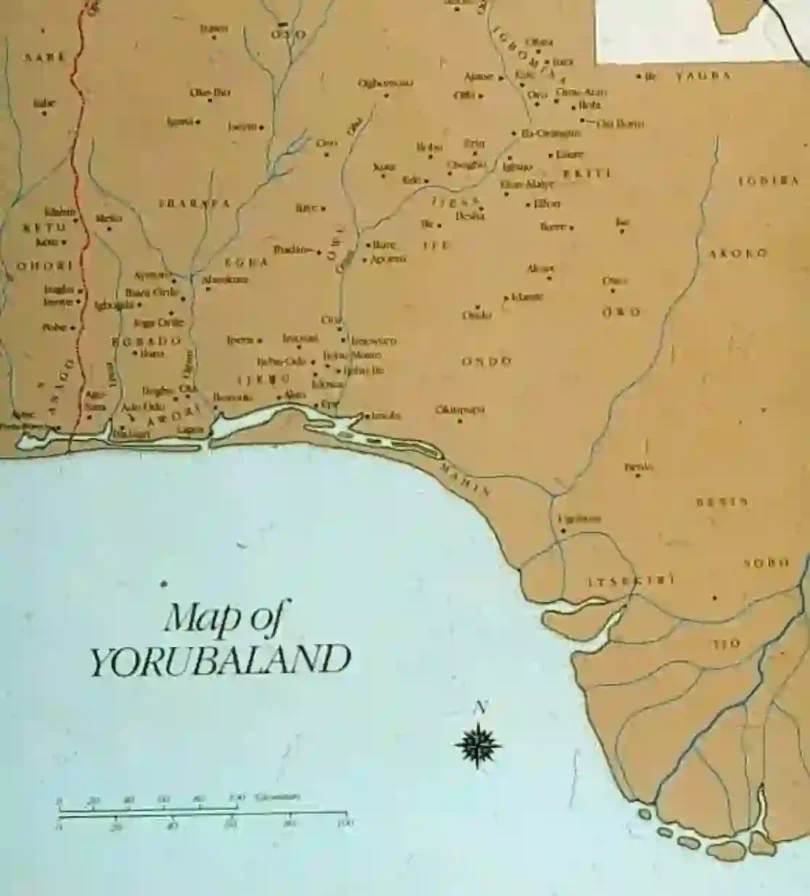
Yorubaland, one of Africa’s most culturally rich and historically layered civilizations, is home to hundreds of ancient towns and cities whose origins are preserved through oral traditions, royal lineages, and spiritual narratives. These founding stories—passed down through generations—blend mythology with history, reflecting the deep identity and worldview of the Yoruba people.
At the heart of Yoruba cosmology lies Ile-Ife, widely regarded as the cradle of Yoruba civilization. According to tradition, it was established by Oduduwa, the ancestral figure believed to have led the Yoruba people into existence. While deities like Obatala feature prominently in creation myths, Oduduwa is more commonly associated with political and dynastic foundations.
From Ile-Ife, waves of migration gave rise to powerful kingdoms and settlements across present-day southwestern Nigeria and beyond. One of the most prominent is Oyo, founded by Oranmiyan, a warrior prince whose legacy shaped the Oyo Empire into a dominant political force in pre-colonial West Africa.
In Ogun State, Abeokuta emerged in the 19th century as a refuge city for the Egba people during inter-tribal wars. It was established under the leadership of Sodeke, whose strategic vision turned the rocky terrain into a defensive stronghold.
Similarly, Ondo traces its origin to Pupupu, a royal figure said to have migrated from Ile-Ife and established the Ondo Kingdom. In Osun State, Ede was founded by Timi Agbale, a respected warrior and leader whose lineage still holds influence today.
The commercial and cultural hub of Ijebu-Ode owes its origin to Obanta, while Ogbomosho was founded by the legendary hunter Ogunlola, whose bravery in repelling invaders earned him lasting recognition.
In Kwara State, Ilorin presents a more complex origin story. It is traditionally linked to Ojo Isekuse, but its historical evolution was significantly shaped by Afonja, whose alliance with Fulani forces transformed Ilorin into a unique cultural crossroads.
Other notable towns reflect a blend of royal migration and localized settlement histories. Ado Ekiti is associated with Awamaro, while Ikere-Ekiti traces its roots to Aladeshelu. Ikole Ekiti is linked to Akinsale, and Ila-Orangun to Fagbamila Ajagun-nla.
In Lagos State, Ikorodu was founded by Oga, while coastal settlements like Epe trace their roots to early migrant groups influenced by both Yoruba and Benin traditions.
Despite the richness of these accounts, historians caution that many Yoruba origin stories remain fluid and interpretative. Variations often exist between palace traditions, Ifa corpus, and documented colonial records. In several cases—particularly across Ekiti, Ijesha, and Ijebu regions—multiple lineages lay claim to founding rights, underscoring the communal and evolving nature of identity.
What remains undeniable, however, is that these stories are more than historical footnotes. They serve as living heritage, reinforcing values of ancestry, leadership, migration, and resilience. Whether rooted in mythology or verifiable history, the founders of Yorubaland’s cities continue to shape cultural consciousness and traditional authority structures today.
As modern development reshapes these ancient towns, their origin stories remain a powerful reminder: every city carries a past, and in Yorubaland, that past is deeply sacred.