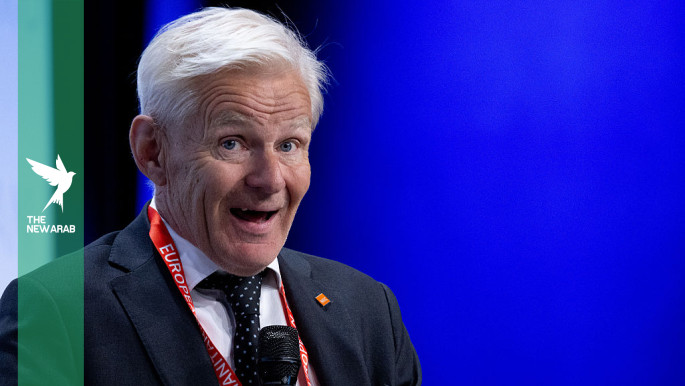
Jan Egeland was the top UN humanitarian official from 2003 to 2006 and a deputy Norwegian foreign minister in the 1990s [Omar Havana/Getty Images]
Norway should use some of the income from its $2.2 trillion sovereign wealth fund, the world’s largest, to help civilians suffering from the US-Israeli war on Iran, like it did for Ukraine, the head of the Norwegian Refugee Council aid group said.
The NRC is one of the world’s leading non-governmental aid organisations focused on displacement.
After Moscow’s 2022 full-scale invasion of Ukraine, Norway set up a long-term aid plan for Kyiv, with the backing of all parties in parliament, amounting to some $28 billion between 2023 and 2030, among Ukraine’s most generous backers per capita.
Jan Egeland, who was the top UN humanitarian official from 2003 to 2006 and a deputy Norwegian foreign minister in the 1990s, said Norway should do the same in the wake of the Iran war.
“Norway has now given enormous sums to Ukraine. And one of the arguments is that ‘we earned a lot of money on oil and gas prices going through the roof. Why not say the same here?’,” he told foreign reporters at NRC headquarters in Oslo.
“Let’s give to the Lebanese and the Iranians and the other victims of this war, direct and indirect, because the oil prices are now $100 per barrel.”
Wealth fund loss
Norway is Europe’s largest gas supplier and Western Europe’s largest crude producer. Egeland did not give details of how such a mechanism could potentially work.
Norwegian officials are sensitive to any criticism that the country benefits from conflicts that lead to increases in energy prices, given its self-image as a nation prioritising well-functioning global governance such as by backing the UN or by being a major international aid donor.
Finance Minister Jens Stoltenberg told Reuters on Friday Norway was “a staunch supporter of countries in need”.
“When measured as a share of national income, our aid to Ukraine is several times higher than that provided by other Western countries on average,” he said.
“In addition, we are amongst the world’s largest donors of development aid. While oil prices rise and fall, our support remains stable and long-term.”
Stoltenberg has previously said it would be wrong to assume Norway was gaining from the war.
He has said its export-led economy benefits most from a stable, peaceful international world order and a fall in global stocks damages the overall value of its wealth fund, which would be far greater than any increase in oil revenues.
The Norwegian government also has never said it is giving money to Ukraine because it earned extra income from higher gas prices – estimated to be 1,270 billion crowns ($136.07 billion) in 2022 and 2023 according to finance ministry calculations.
Sovereign wealth fund CEO Nicolai Tangen told Reuters last month any benefit to the fund from higher petroleum revenues due to the Iran war is lower than the effects of lower share prices abroad and a strengthening of the crown currency.
In the first quarter, the fund reported a loss of 636 billion crowns as the Iran war weighed on global stocks.
The wealth fund declined to give additional comment, saying this was a question for Norwegian politicians.