From watching Hubert Ogunde perform in Kano to training at RADA and building a five-decade career across two continents, he leaves behind an enduring legacy in Nigerian theatre and film.
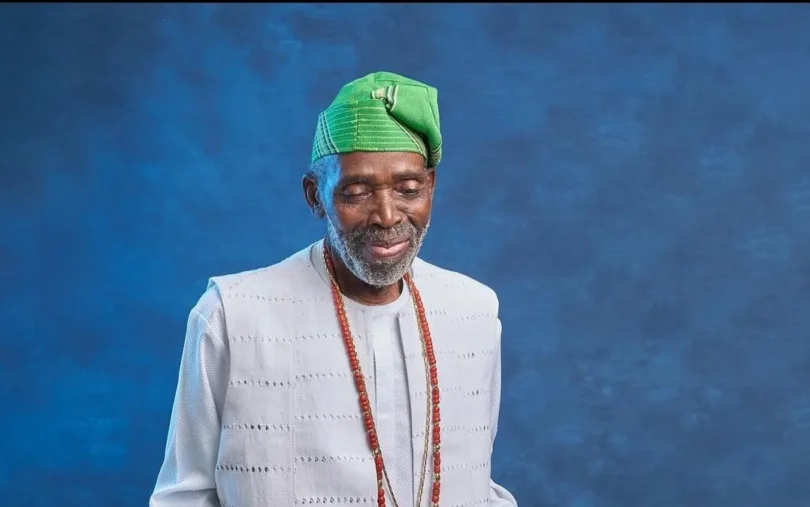
Veteran Nigerian actor and theatre practitioner Oludotun Baiyewu Jacobs, popularly known as Olu Jacobs, whose commanding voice and imposing screen presence made him one of the most recognisable figures in Nigerian theatre and film, has died at 84.
His son, Olusoji Jacobs, announced his death in a family statement describing the actor as a beloved husband, father, grandfather and uncle, and as “The Lion of Lufodo.”
“It is with gratitude to God for a life well lived and fought that we announce the passing of our dear husband, father, grandfather and uncle,” the family said.
Jacobs’ death ends a career spanning more than five decades and several eras of performance — from British repertory theatre and television to Nigerian stage productions and the burgeoning film industry that would become Nollywood.
Born on 11 July 1942 to parents of Egba-Alake heritage from Abeokuta, Ogun State, Jacobs spent his early childhood in Kano.
At Holy Trinity School, Kano, he became involved in debating and drama, interests that gradually developed into a determination to pursue acting professionally.
One encounter would prove particularly significant.
Jacobs had recalled watching a performance by legendary Nigerian theatre pioneer Hubert Ogunde at the Colonial Hotel in Kano, an experience that strengthened his desire to become an actor.
His father did not initially support the ambition, but Jacobs persisted.
In 1964, he travelled to Britain, where he trained at the Royal Academy of Dramatic Art (RADA) in London, beginning a professional journey that would initially take him far from the Nigerian film industry for which he would eventually become famous.
After his training, Jacobs worked with repertory theatre companies in Britain and Ireland.
Among his stage appearances was a role in A Taste of Honey at the Crucible Theatre in Sheffield in 1972. He later appeared in productions including Tom Stoppard’s Night and Day.
British television also became an important part of his early career. He appeared in programmes including The Goodies, Till Death Us Do Part, Barlow at Large, The Venturers, Angels, The Tomorrow People, The Professionals and The Third Eye.
His screen work extended to international films, including The Dogs of War, Baby: Secret of the Lost Legend and Pirates.
By the time he established himself in Nigeria, Jacobs had already accumulated considerable professional experience on British stages and screens.
Before acting became his career, he had also worked at UAC Market Research Company, conducting consumer research around Nigeria, particularly in the North.
Jacobs eventually returned to Nigeria and became part of a generation of theatre practitioners who brought professional stage experience into the country’s developing television and film industries.
His voice, diction, physical bearing and measured delivery made him difficult to overlook on screen.
He became particularly renowned for portraying kings, patriarchs, traditional rulers, political figures and men of authority, although his body of work extended beyond the imposing roles that became synonymous with his screen persona.
Over the decades, he appeared in more than 100 Nigerian films, with later credits including Oloibiri and The Royal Hibiscus Hotel.
His performance in Dancing Heart earned him the Africa Movie Academy Award for Best Actor in a Leading Role in 2007.
In 2013, he received the Industry Merit Award at the Africa Magic Viewers’ Choice Awards, while the Africa Movie Academy Awards honoured him with a Lifetime Achievement Award in 2016.
He was conferred with the national honour of Member of the Order of the Federal Republic (MFR) in 2011.
Away from the screen, Jacobs shared one of Nigerian entertainment’s most enduring marriages with fellow veteran actor Joke Silva.
The pair met in 1981 at the National Theatre in Lagos while working on Wole Soyinka’s Jero’s Metamorphosis. Their professional relationship blossomed into a romance, and they married in 1985.
Ms Silva retained her professional name after marriage, a decision her husband publicly supported. Mr Jacobs maintained that she had already built an identity and career as Joke Silva before becoming his wife and saw no reason for marriage to erase it.
Together, they built more than a marriage around acting.
The couple co-founded the Lufodo Group, through which they contributed to theatre, film production and the training of younger performers. Their work also extended to the Lufodo Academy of Performing Arts.
In 2022, the Lagos State Government handed over the management of the historic Glover Memorial Hall to the Lufodo Group.