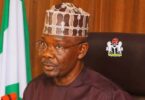

In an era where citizens increasingly demand visible and measurable results from those in public office, Hon. Okoro Uchenna Kalu has embraced a leadership style that places people at the center of governance.
As Majority Leader of the Abia State House of Assembly and representative of Arochukwu State Constituency, his approach reflects a deep understanding that leadership must go beyond speeches and translate into real impact.
For Okoro, lawmaking is not merely about drafting bills or participating in debates; it is about solving problems that affect everyday life. His philosophy is rooted in the conviction that governance must be responsive to the needs, aspirations, and challenges of the people he represents.
This mindset has influenced his priorities since assuming office in 2023. Rather than pursuing legislation for prestige, he has focused on initiatives that directly improve living conditions—whether through better infrastructure, access to healthcare, or economic empowerment.
By consistently aligning his work with the realities on the ground, Okoro has narrowed the gap between government and the governed. His actions reflect a deliberate effort to ensure that policies are not detached from the people they are meant to serve.
This people-centered approach has also fostered trust. Constituents see a leader who listens, engages, and responds, rather than one who operates in isolation. It has strengthened the bond between representation and accountability.
In a political environment where public confidence is often fragile, such an approach is both refreshing and necessary. It underscores the idea that leadership is not about authority, but about service.
Ultimately, Okoro’s philosophy is redefining lawmaking as a tool for transformation, one that prioritizes people over politics and impact over rhetoric.
Let’s take a look into some of his legislative strides in Abia State.
A Robust Legislative Portfolio
One of the most defining features of Okoro’s legislative agenda is the breadth and depth of his legislative contributions. In less than three years in office as Majority Leader, he has sponsored over 40 bills, covering a wide range of sectors critical to the development of Abia State.
His early work on appropriation laws helped set the tone for his legislative agenda. By contributing to and 2024, 2025 and 2026 budgets, he played a key role in shaping the financial direction of the state, ensuring that resources were allocated to priority areas.
These appropriation laws were not just routine exercises; they formed the foundation upon which development projects and government programmes were built by the administration of Governor Alex Otti. They reflected a careful balancing of fiscal responsibility and developmental needs.
Among his standout achievements are the Greater Aba Development Authority (GADA) Law and the Greater Ohafia Development Authority (GODA) Law. These laws are designed to stimulate economic growth, improve urban planning, and enhance service delivery in key regions.
The Abia State Electricity Law further demonstrates Kalu’s forward-thinking approach. By addressing the persistent challenge of power supply, the law has assisted in transforming the state’s economic landscape.
Beyond these, his legislative efforts extend to healthcare, security, taxation, and institutional reforms. Each bill contributes to a broader framework aimed at sustainable development.
Taken together, his legislative portfolio reflects not just productivity, but strategic vision and a commitment to building systems that will serve the state for years to come.
Championing Accountability And Reform
In addition to development-focused legislation, Hon. Okoro has emerged as a strong advocate for accountability and governance reform. His efforts in this area highlight a commitment to fairness, transparency, and responsible leadership.
The repeal of the Governor’s and Deputy Governor’s Pension Law stands out as a landmark achievement. This move signaled a shift toward fiscal discipline and equity, addressing concerns about excessive privileges for public office holders.
By championing this reform, Okoro has demonstrated a willingness to confront sensitive issues in the interest of the public good. He has reinforced the principle that leadership must be accountable to the people.
His sponsorship of the Procedure for Disclosure of Public Information Law further strengthens transparency. By making it easier for citizens to access government information, the law has empowered the public and promoted open governance.
Other reforms, including amendments to tax laws and procurement processes, have assisted to streamline governance and eliminate inefficiencies. These measures have contributed to a more effective and responsive public sector.
Such reforms are essential in building trust between government and citizens. They ensure that public resources are managed responsibly and that decisions are made in the best interest of the people.
Through these initiatives, Okoro has helped to create a governance culture that values integrity, accountability, and transparency.
Strengthening Security, Public Institutions
Security and institutional strength are fundamental to sustainable development, and Okoro has prioritized both through his legislative efforts. Recognizing that progress cannot thrive in an environment of instability, the Abia Assembly Majority Leader has supported measures aimed at enhancing safety and governance structures.
The establishment of the Abia State Homeland Security Agency and the Security Trust Fund reflects a strategic approach to addressing security challenges. These frameworks have provided the mechanisms for coordination, funding, and effective response.
In a broader context, such initiatives are crucial in fostering an environment where businesses can operate and communities can flourish without fear.
Beyond security, Okoro has focused on strengthening public institutions. His legislative work has contributed to the creation and reform of agencies across key sectors, ensuring that governance systems are robust and efficient.
The establishment of the Medicines and Health Commodities Management Agency is a notable example. It addresses critical gaps in healthcare delivery, ensuring that essential drugs are available and properly managed.
His efforts also extend to environmental management, public procurement, and planning agencies. These reforms enhance the capacity of institutions to deliver services effectively.
By strengthening institutions, Okoro is laying a solid foundation for long-term development,one where systems, rather than individuals, drive progress.
Bridging Policy And Impact Through Projects