…Slashes Debt Burden By 74% To N48bn In Three Years
…Reforms Reposition Abia From Debt Pressure To Prosperity
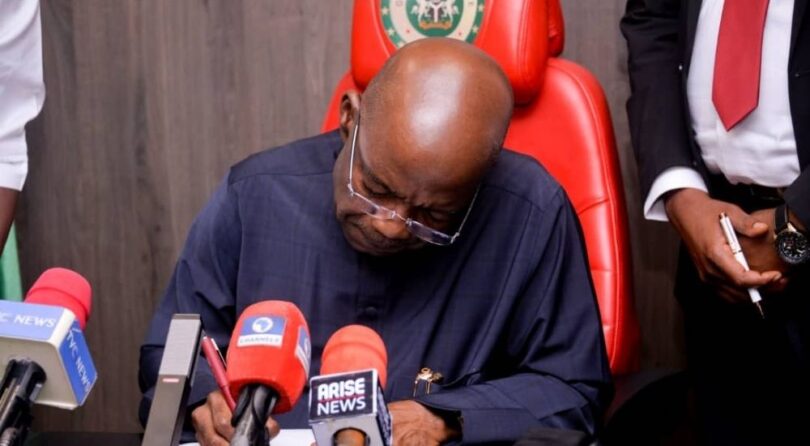
In less than three years of his administration, the Governor of Abia State, Dr Alex Otti, has reduced the inherited debt burden of the state from N191bn to about N48bn
The reduction was revealed by Dr Benson Nwaigburu, General Manager of the Abia State Debt Management Office.
Nwaigburu described the development as a landmark achievement in fiscal governance and evidence that prudent leadership, transparency, and responsible economic management can deliver measurable progress within a short period.
When Otti assumed office on May 29, 2023, the state was weighed down by a huge debt profile accumulated over several years by previous administrations.
The inherited liabilities had become a major obstacle to growth and development, limiting the government’s ability to invest in infrastructure, deliver essential services, meet obligations promptly, and inspire confidence among investors.
As of the time the present administration took over, many residents were concerned about the effect of the mounting debt burden on the future of the state.
However, the Debt Office Boss said Governor Otti’s administration immediately introduced reforms centred on fiscal discipline, transparency, accountability, and strategic planning.
Rather than accumulate fresh loans, the government focused on strengthening internally generated revenue, blocking financial leakages, reducing wasteful expenditure, and ensuring that public funds were directed toward productive and priority sectors.
“These bold and deliberate actions have produced outstanding results,” Nwaigburu stated.
He disclosed that the state had so far paid down over N142bn from the inherited debt stock without contracting fresh loans.
According to him, this has reduced the debt balance to approximately N48.4bn.
He added that the sharp decline represents about 74.3 per cent of the debt inherited by the current administration.
The Debt Management Office boss said the feat places Abia among the states making notable progress in debt reduction and fiscal responsibility since 2023.
He stressed that repaying more than 70 per cent of inherited liabilities within less than three years is a strong fiscal performance by sub-national standards, especially at a period when many states across the federation have either maintained or increased their debt profiles.
For many observers, he said, the achievement is proof that sound economic management can reverse even the most difficult financial conditions.
Nwaigburu stated that every reduction in debt creates fresh opportunities for development because funds that would have gone into servicing liabilities can now be redirected to people-oriented projects.
He listed roads, schools, healthcare, pensions, salaries, youth empowerment, security, and economic expansion as areas expected to benefit from the improved fiscal position of the state.
He explained that lower debt levels would also boost investor confidence, as businesses are often attracted to states with stable finances, predictable policies, and prudent governance.
“The people of Abia State are witnessing governance driven by results, not excuses,” he said.
He further noted that under Governor Otti, Abia is being steadily repositioned from debt pressure to prosperity and sustainable growth.
According to him, the administration has shown that leadership is not merely about making promises but about taking practical decisions that improve the welfare of citizens.
Nwaigburu also highlighted reforms within the Abia State Debt Management Office, saying the agency had remained largely inactive and ineffective before the appointment of a new management team by Governor Otti.
He said the office has since undergone significant transformation through policies anchored on accountability, transparency, and integrity.
The changes, he explained, have strengthened debt monitoring systems, improved reporting standards, and aligned the office with the broader fiscal reform agenda of the government.
He added that the transformation demonstrates how institutions can become effective when led with competence and a clear sense of purpose.
The governor’s approach to governance reflects his private sector background, where efficiency, performance, and measurable outcomes are highly valued.
This mindset has helped drive the reforms that are now producing visible results across the state.
Residents and stakeholders have continued to commend the administration for showing courage in tackling inherited financial burdens rather than postponing difficult decisions.
Many say the reduction in debt sends a strong message that Abia is charting a new economic path built on discipline and sustainability.
A healthier debt profile gives the state greater room to finance capital projects, respond to emerging needs, and plan for long-term growth without excessive dependence on borrowing.
The reduced debt obligations can free future administrations from financial constraints and create continuity in development planning.
Nwaigburu commended Governor Otti for what he described as bold and visionary leadership.
He urged residents to continue supporting policies that promote financial responsibility, transparency, and sustainable development.