
The fragile ceasefire between the United States and Iran faces fresh uncertainty following a new exchange of attacks that has heightened tensions across the Gulf region.
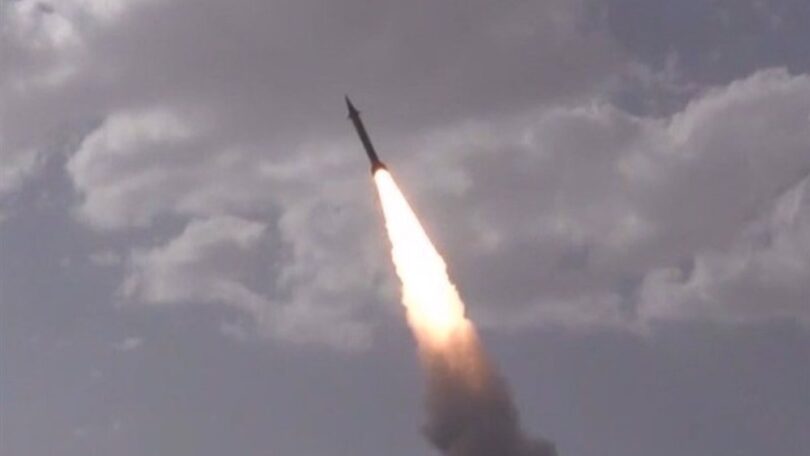
Iran launched missile strikes on a US military base in Kuwait on Wednesday morning, with the attack impacting operations at Kuwait International Airport.
The incident reportedly claimed the life of an Indian national and left more than 60 others injured.
The Iranian offensive was carried out in response to a US missile attack on an Iranian military ground control facility located on Qeshm Island near the Strait of Hormuz.
In a related development, the United States targeted a Botswana-flagged oil tanker en route to Iran’s Kharg Island port. According to US Central Command (CENTCOM), the vessel allegedly ignored Washington’s blockade on Iranian ports.
Tehran subsequently expanded its response by launching strikes against targets in Kuwait and Bahrain. Iranian officials said the attacks were directed at American air and helicopter bases in the Gulf as well as the headquarters of the US Fifth Fleet in Bahrain.
The Iranian Revolutionary Guard stated that the retaliatory operation “should serve as a lesson” against what it described as unprovoked attacks on Iran’s military facilities.
However, Washington maintained that the strikes failed to hit their intended targets, insisting that US defence systems intercepted Iranian missiles and drones or that they landed short.
The US account contrasts with reports from Kuwaiti authorities, who confirmed casualties and disruption at the country’s airport.
CENTCOM further disclosed that American forces destroyed three Iranian attack drones that were allegedly launched toward civilian vessels navigating regional waters.
The latest flare-up comes three months after the initial military confrontation involving the US, Israel and Iran.
Although a ceasefire between Washington and Tehran has remained in place since April 8, negotiations aimed at securing a permanent settlement have stalled over disagreements concerning Iran’s uranium enrichment programme and control of the Strait of Hormuz.
Last week, both countries announced a preliminary framework intended to reduce hostilities, but neither side has formally endorsed or signed the arrangement.
The renewed hostilities also coincide with growing fears that Israel’s military operations in Lebanon could undermine efforts to preserve the US-Iran ceasefire.
An Israeli strike in the Tyre district of southern Lebanon recently killed six people and wounded at least 48 others.
Speaking on the situation, US President Donald Trump expressed concern over Israel’s continued military activities in Lebanon during ongoing diplomatic efforts.
“I wouldn’t say angry. I was a little bit perturbed at his constant fighting with Lebanon, you know, at some point I said, ‘Bibi, we got to stop this,’” he was quoted as saying.
“I don’t want to bore anybody, but I started because we can’t let them have a nuclear weapon. Now, that pertains to Israel because they probably would have been the first ones to get hit. There would be no Israel,” he also noted.