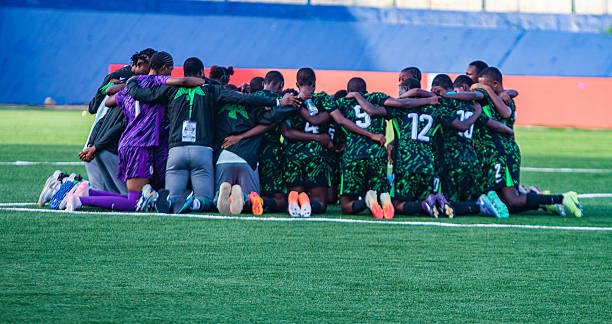
The Flamingos’s defeat to Poland was a disappointing start, but it was not without encouraging moments as the Flamingos created chances, showed attacking intent and produced a late response that nearly made the closing stages more uncomfortable for their opponents
The Flamingos of Nigeria suffered a frustrating start to their FIFA U-17 Women’s World Cup Morocco 2026 campaign on Saturday, losing 2-1 to Poland in their Group B opener despite a late rally that briefly raised hopes of a comeback.
Wiktoria Skrzypczak converted a first-half penalty in the 33rd minute after a Football Video Assistant Referee review, before Natalia Skrok doubled Poland’s advantage in the 65th minute. Substitute Oluebube Umejiaku pulled one back for Nigeria from an impressive free-kick in the 79th minute, but the Flamingos could not find the equaliser despite pushing for a late breakthrough.
The defeat leaves Nigeria needing a strong response against Puerto Rico on Tuesday before facing defending champions Korea DPR in their final group fixture. With Korea DPR opening their campaign with a 6-0 victory over Puerto Rico, the pressure is already building on the Flamingos to get their campaign back on track.
PREMIUM TIMES takes a look at five major takeaways from Nigeria’s disappointing opening day defeat.
The Flamingos entered the tournament hoping to build on their qualifying performances. Still, their opening match exposed how quickly a defensive mistake can change the direction of a World Cup contest.
Nigeria kept Poland at bay early on, with both sides searching for a breakthrough. However, the game turned in the 33rd minute when defender Ohunene Sunday was penalised for a foul inside the penalty area following a Football Video Assistant Referee review.
Skrzypczak stepped up and converted the resulting penalty, giving Poland the advantage and forcing Nigeria to chase the game.
The goal was particularly frustrating because the Flamingos had competed well enough to stay in the contest and had already created their own chances. Instead of entering the break with the possibility of building on their attacking momentum, Nigeria went into the dressing room trailing.
The defensive problems resurfaced after the interval. In the 65th minute, Poland capitalised on a poor clearance by the Nigerian defence, with Skrok finishing from Blanka Zajac’s assist to extend the lead to 2-0.
At this level, moments like these can decide a match. The Flamingos were not completely outplayed, but their inability to handle key situations decisively gave Poland the advantage they needed.
Busari will need to address those lapses before the next fixture. The Flamingos must improve their decision-making inside the penalty area, become more decisive when clearing danger and maintain concentration throughout the full 90 minutes.
Their attacking ability can still make them competitive against the remaining teams in Group B, but they cannot afford to keep giving opponents opportunities to punish avoidable mistakes.
One of the biggest frustrations for the Flamingos was that they had chances to put Poland under pressure long before the game slipped away.
Nigeria showed attacking intent during the first half, with Oluwakemi Adegbuyi and Queen Joseph among those who threatened the Polish goal. Adegbuyi tested goalkeeper Hanna Buchta in the 18th minute, while Joseph also went close in the 26th minute.
Mary Dunstan, Joseph and Elizabeth Adesuyi subsequently came close to finding an equaliser before half-time, but Nigeria could not convert their promising moments into goals.
That failure to capitalise on their chances became even more significant when Poland took the lead from the penalty spot.
The Flamingos entered the tournament with expectations built around their attacking potential, following an impressive run through African qualifying and strong regional performances. However, international tournaments demand greater precision, particularly against opponents who can punish mistakes at the other end.
Nigeria needed to be more clinical in front of goal. An opening goal would have changed the complexion of the match, potentially forcing Poland to abandon their preferred approach and take greater risks.
Instead, the European side grew in confidence after taking the lead. At the same time, Nigeria were left attempting to recover from a deficit that became more difficult to overcome after Skrok’s second-half strike.
The lesson for Busari’s players is clear: creating chances is only part of the job. Against Puerto Rico, the Flamingos must show greater composure in the final third and ensure that promising attacking moves produce a tangible reward.
With their qualification hopes already under pressure, Nigeria cannot afford another performance in which opportunities go begging.
If the penalty left Nigeria with work to do, Poland’s second goal made the task considerably more difficult.
After the restart, the Flamingos needed to find a way back into the contest without leaving themselves vulnerable at the back. However, Skrok’s goal in the 65th minute gave Poland a two-goal cushion and placed Nigeria on the brink of defeat.
The strike followed a poor clearance from the Nigerian defence, with Zajac providing the assist. It was another costly moment in a game where the Flamingos had struggled to turn their competitive spells into meaningful progress on the scoreboard.
Conceding a second goal also changed the match’s tactical demands. Nigeria had to become more aggressive, commit additional players forward and take greater risks in pursuit of a comeback.
That created a difficult balance for Busari’s team: push for goals while avoiding further defensive problems.
The response was encouraging, but the damage had already been done. Nigeria eventually pulled one back through Umejiaku, but they left themselves too little time to recover.
The experience should teach a young team still learning to navigate the pressure of major international tournaments. When a match starts to go against them, the Flamingos must stay organised and avoid letting one setback lead to another.
The defeat does not mean Nigeria lack the quality to compete, but it highlights the need for greater composure during difficult periods. Their ability to manage those moments will be crucial in the remaining group matches.