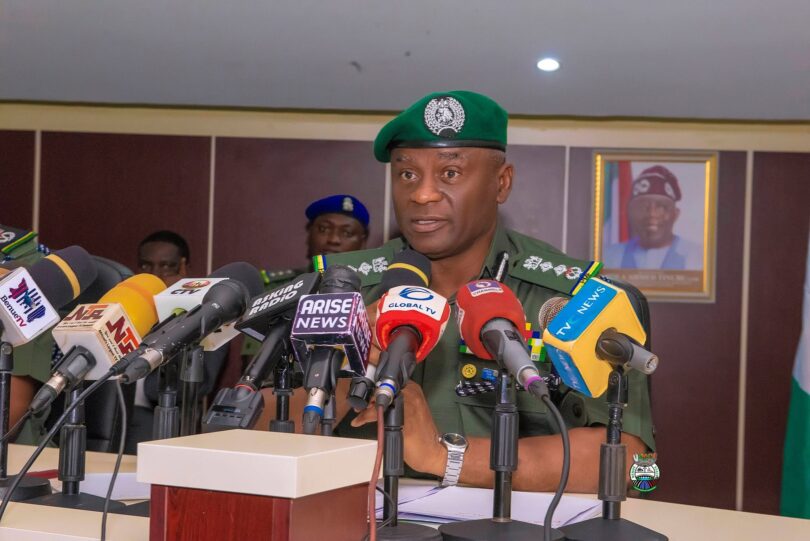
Police commands and fomations were instructed to increase surveillance, patrols, stop-and-search operations, access control and rapid-response capabilities around vulnerable locations.
The Nigeria Police Force has alerted commands and formations across the country to intelligence indicating possible coordinated attacks by terrorist groups on places of worship, schools, National Youth Services Corps (NYSC) orientation camps and other locations, according to Sahara Reporters.
The message, marked “Security General” and classified as “Treat as Very Important”, was circulated to police formations, including the assistant inspectors general of police overseeing Zones 1 to 17 and police commissioners across states.
According to the directive, intelligence available to the police indicates increased mobilisation of terrorist elements for possible attacks on places of worship, educational institutions, NYSC camps and other vulnerable targets.
The police identified parts of the North-east, North-west, North-central and South-west as areas of particular concern.
PREMIUM TIMES reports the country is grappling with multidimensional security threats including resource-based conflict, banditry, communal clashes and insurgency which is now expanding southward.
It also disclosed intelligence indicating the movement of armed elements from Katsina through Kaduna towards Plateau, a North-central state that continues to witness ethno-religious and resource-based crises.
The alert said suspected Islamic State West Africa Province (ISWAP) fighters and their local collaborators were also conducting surveillance and reconnaissance of potential targets.
Although ISWAP has claimed attacks outside the North-east, it is more active in the region and Lake Chad basin areas where it is heavily adopting technology to double its violent tactics and attacks against military targets and civilian populations it suspects to be aiding security forces.
This newspaper reported that schools across the country resume a new academic session on Monday, 14 September. Some schools already resumed a week earlier, on 7 September. However, schools in terrorised zones remained close due to escalating attacks.
The police alert expressed this concern, warning that terrorists could exploit the return of large numbers of students and staff to inflict mass casualties.
A PREMIUM TIMES analysis shows that over 2,000 students have been kidnapped by armed groups in about 30 incidents since 2014. The school attacks and students kidnap crises, which began under former President Goodluck Jonathan, worsened during the administration of his predecessor, Muhammadu Buhari, and now seemed to be a norm spreading southward under President Bola Tinubu.
Mr Tinubu has spent three years in office, but his administration has already recorded more than 13 mass abductions involving at least 674 students and their teachers.
The intelligence also raised concerns about possible attacks ahead of the 2027 general elections, with terrorists potentially seeking to create fear and destabilise communities.
The department of operations assessed the threat as having potentially progressed from “intent to preparatory activity” and directed formations to take immediate preventive measures.
Police commanders were instructed to increase surveillance, patrols, stop-and-search operations, access control and rapid-response capabilities around vulnerable locations.
Commissioners of police were also directed to strengthen security around state borders, entry and exit points and other routes that could be used by armed groups to move into affected areas.
The alert further directed police commands to strengthen cooperation with other security and intelligence agencies, school authorities, religious leaders and the NYSC to improve intelligence sharing and early-warning systems.
Personnels were instructed to remain vigilant and promptly report suspicious persons, vehicles, movements and objects through established channels.
The police also directed commands to immediately report credible threats or security incidents to the Inspector General of Police (IGP) and the Department of Operations.
This intelligence has not been publicly confirmed by the police. When contacted for comment, police spokesperson Ani Iniedu told our reporter he will get back.