
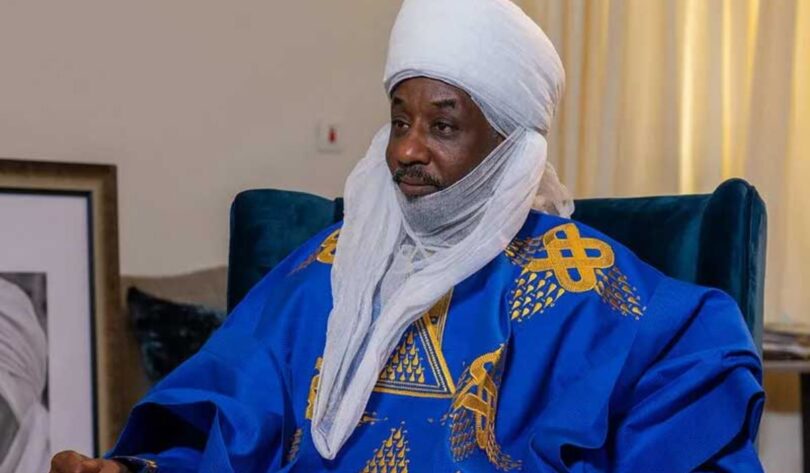
Sanusi Lamido Sanusi, the Emir of Kano, has criticised the timing of the removal of fuel subsidy and the adoption of a single foreign exchange rate market operation, saying it has worsened the country’s economic challenges, news.ng reports.
Sanusi stated this at a recent governance and economic policy discourse organised by The Niche with the theme: Governing the Economy.
The Emir, a former Governor of the Central Bank of Nigeria (CBN), while commending the economic interventions, questioned whether the measures put in place were appropriate.
He said, “Removing subsidy or liberalising the exchange rate, these are good interventions. Now, were they done at the right time? Those are certain questions. And were there other things that should be done that have not been done? These are other issues.”
As a financial expert, Sanusi noted that the country had reached a tipping point where subsidy removal was unavoidable, as the government’s revenue was being used to service debt.
“When you get to a point where one hundred per cent of your revenue goes into debt service, you cannot continue. Where is the money going to come from?” he queried.
Another grey area was spotted by the former apex bank chief, who noted that tightening the country’s monetary policy should have been the first step before removing the subsidy and adopting a single foreign exchange rate.
“If you decide to remove subsidy and liberalize exchange rate in an environment of very loose monetary conditions, before you have tightened money supply, the naira drops to a bottomless pit. Okay, so that was a timing issue,” he said.
While many concerned Nigerians welcomed the economic reforms, there were expectations that the funds saved from the fuel subsidy removal would be used to cushion the shock or address the infrastructural decay in the country, but that has not been the case.
According to Sanusi, the government is expected to channel the funds into strengthening the economy rather than depleting it through borrowing.
“Secondly, we’ve removed the subsidy. We’re not spending it. What we should now see is fiscal consolidation. You cannot remove wastages and continue borrowing,” he said.