
Singer Elvis Presley’s famous demand for “a little less conversation, a little more action, please” could have been tailor-made for today’s carbon markets.
The conversations have been remarkable: the summits, the standards, the integrity frameworks, the investigative journalism. And the market did respond, by contracting, filtering and rebuilding on firmer ground.
Yet, forests and peatlands across Borneo and Sumatra, holding thousands of years of stored carbon, keep disappearing. Each year of delay not only raises the cost of protecting these ecosystems, it also deepens overshoot risk, locking in emissions and making the path back to climate stability steeper, costlier and more uncertain.
For Asia’s business leaders, the question is no longer whether to act on climate, but when and how.
Their hesitation is understandable. But in today’s market, climate risk is financial risk. Inaction is becoming a material cost.
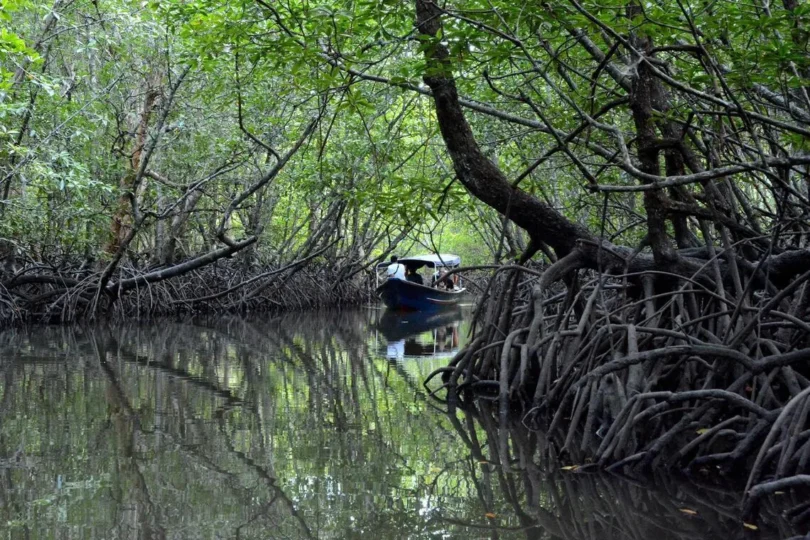
Asia holds some of the most carbon-dense ecosystems on earth. Indonesia’s peatlands alone store more carbon than all the world’s proven oil reserves emit in a decade. Mangroves in the Philippines, forests in Malaysian Borneo, and upland systems in Vietnam function as climate infrastructure, absorbing a significant share of global emissions while supporting water systems and coastlines.
Yet, nature receives a marginal share of climate finance globally. Forests attract only roughly US$84 billion (S$106 billion) annually against an estimated need of US$300 billion.
Nature-based carbon credits, which help to finance the protection of ecosystems like these, remain similarly underfunded, despite the fact that more than half of global carbon credits already originate in Asia. Capital is not matching the scale of the asset.
A common objection to investing in nature-based projects runs like this: “We should invest in direct air capture and engineered removal, not offsets that may not last.”
Near-term investment and procurement of nature-based credits can deliver immediate abatement and protect critical ecosystems, including forests, peatlands and blue carbon systems. In parallel, technologies such as direct air capture, enhanced weathering and advanced biochar are building the long-term pathway to permanence.
The relevant question is not which of these solutions to choose, but how to allocate capital across both the near and long term and sequence them. No seasoned investor would put all their capital into a single technological bet that may or may not reach scale several decades into the future. Climate mitigation should be approached with the same logic.
A sensible approach is to lock in high-integrity nature-based credits today, while gradually adding engineered removals as technology matures and becomes more accessible. This combined approach manages several risks at once: price variations, tightening standards and the possibility of supply shortages for specific credit categories. It also aligns with the evolving regulation, which places increasing emphasis on quality, traceability and durability.
Singapore is taking steps in this direction. It has struck at least 10 bilateral Article 6 agreements with partner countries and is contracting two million tonnes of carbon credits.
Japan’s Joint Crediting Mechanism spans 25 partner countries. China’s and South Korea’s emissions trading systems cover significant shares of their national emissions. These governments are not acting on theory. They are managing climate risk the way investors manage capital, by diversifying across a maturing market.
The credibility crisis in carbon markets is well documented. Some credits sold as climate action turned out not to be. The market fell sharply as a result, from nearly US$2 billion in 2021 to under US$750 million in 2023.
Then tougher standards took hold, independent verification improved, and buyers came back selectively, chasing high-integrity credits that deliver verifiable outcomes and can be scaled with confidence.
By 2024, the market had recovered to an estimated US$1.4 billion, concentrated in high-integrity credits that command premiums of up to 25 per cent. Scale, in other words, is only credible when rigour grows with it.
Nowhere is this more consequential than in aviation. Under the Carbon Offsetting and Reduction Scheme for International Aviation, or CORSIA, airlines will be required to source between approximately 160 million and 210 million tonnes of carbon credits in total – comparable to the annual emissions of Thailand.
For carriers operating routes across Asia’s fast-growing aviation market, participation is not optional. The question is what they choose to buy to build a solid portfolio.
Carbon markets are no silver bullet, but they remain one of the most immediately available levers for climate action. Forests, mangroves, peatlands and seagrass beds are pulling that lever right now, absorbing carbon, protecting coastlines, and sustaining fisheries and water systems that millions depend on. These are co-benefits no machine replicates. Investment in nature should not take place at the cost of technology, but rather alongside it.
The opportunity is to both protect nature and use well-functioning markets to build credible climate mitigation and adaptation efforts across a broader set of solutions. For companies, buying high-integrity nature-based credits is not greenwashing, but capital deployed into mitigation that is available now. The first layer of a real decarbonisation portfolio.
A little less conversation.
Martin Krause is director of the United Nations Environment Programme’s (UNEP) climate change division. On May 18, UNEP will co-host the event, GenZero Climate Summit Insights: Nature, Markets, Scale, with GenZero in Singapore.