
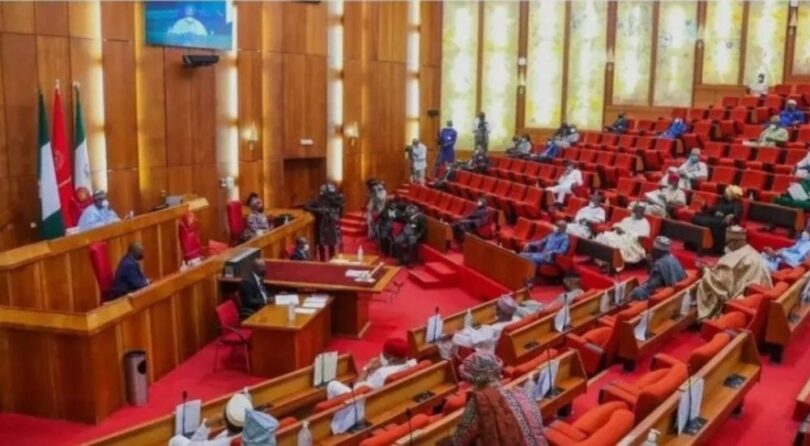
The Senate on Tuesday extended the implementation of the capital component of the 2025 Appropriation Act to December 31, 2026, marking the fourth time the Federal Government’s capital budget implementation deadline has been extended within nine months.
The extension effectively moved the deadline from September 30, 2026, to December 31, 2026, giving the government an additional three months to execute outstanding capital projects captured in the 2025 budget.
The 2025 budget, which was originally scheduled to expire on December 31, 2025, was first extended to March 31, 2026. It was subsequently extended to June 30, 2026, and later to September 30, 2026, before the latest extension to December 31.
The Senate approved the latest extension through a motion sponsored by the Senate Leader, Opeyemi Bamidele, who appealed to his colleagues to set aside the chamber’s standing rules to facilitate the speedy consideration and passage of the measure.
The motion was presented through Senate Bill 1067, titled, “A Bill for an Act to amend the Appropriations (Repeal & Enactment) Act 2025 from 30th September, 2026 to 31st December, 2026.”
Leading the debate on the bill, Bamidele strongly canvassed support for the extension, citing the need to enable the government to execute outstanding capital projects across different parts of the country.
He argued that the additional time was necessary to ensure that projects already captured in the 2025 capital budget were not abandoned or left unimplemented because of the expiration of the existing deadline.
The Deputy President of the Senate, Jibrin Barau, also supported the extension, arguing that extensions of budget implementation timelines predated the administration of President Bola Tinubu.
However, the Minority Leader, Abba Moro, faulted Barau’s claim, although he said there was no need to prolong the argument over the matter.
The Senate Whip, Mohammed Monguno, also supported the extension, even as he struggled to justify the repeated adjustment of the implementation deadline.
The bill was subsequently rushed through the traditional legislative stages of First, Second and Third Readings before the extension was approved through a voice vote.
The process was completed within a short period, with senators moving from the presentation and debate on the bill to its final passage without prolonged deliberation.
Many of the senators present at plenary appeared to show little particular interest in the bill, although none openly opposed the extension.
With the latest amendment, the implementation window for the capital component of the 2025 budget has now been stretched by 12 months beyond its original December 31, 2025 deadline.