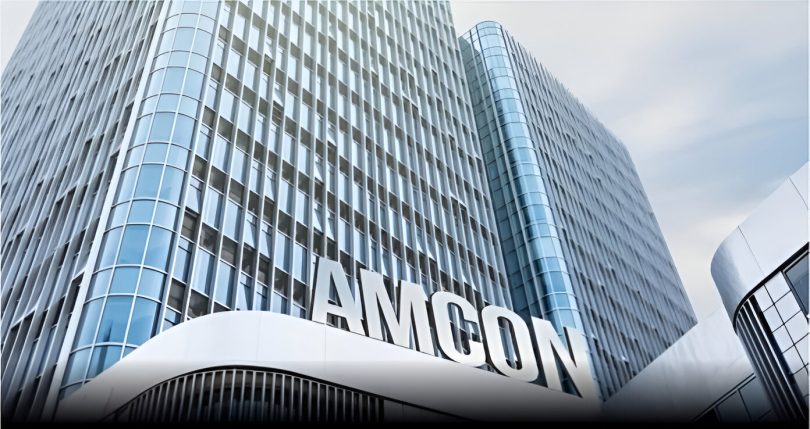
The committee said the report, detailing AMCON’s achievements and outstanding responsibilities since its establishment, should be presented to the National Assembly as it prepares to wind-down in 2030.
The Senate Committee on Banking, Insurance and Other Financial Institutions has directed the Asset Management Corporation of Nigeria (AMCON) to prepare a comprehensive report on its operations ahead of the corporation’s planned wind-down in 2030.
The committee said the report, detailing AMCON’s achievements and outstanding responsibilities since its establishment, should be presented to the National Assembly.
The committee’s chairman, Adetokunbo Abiru, gave the directive on Tuesday during the screening of Lamido Yuguda, a former deputy governor of the Central Bank of Nigeria (CBN), for confirmation as chairman of AMCON’s board.
Following the screening, the committee cleared Mr Yuguda’s nomination. It will submit its report to the Senate, recommending his confirmation.
The call for a comprehensive report was first raised by Niger East Senator, Sani Musa, who urged Mr Yuguda, if confirmed, to begin compiling a detailed account of AMCON’s activities, achievements and unresolved obligations before the corporation’s expiration.
Mr Musa noted that AMCON was established to address challenges arising from non-performing loans, distressed banks and other financial sector liabilities, adding that its statutory lifespan is expected to end in 2030.
“The issue I wish to raise is that AMCON was established to resolve challenges within the financial system, particularly non-performing loans, distressed banks and related financial obligations.
“It has a statutory lifespan and is expected to wind up around 2030. Looking at that timeline, there is a need for this committee to receive an up-to-date report on the status of AMCON.
“We need to know where the corporation stands today, what it has achieved since inception and what outstanding responsibilities remain before its expected sunset,” Mr Musa said.
Responding, Mr Abiru said he was confident that AMCON, under Mr Yuguda’s leadership if confirmed, would take the committee’s concerns seriously.
He subsequently directed the nominee and AMCON Managing Director, Gbenga Alade, to prepare and submit the comprehensive report to the committee.
“I have no doubt that, in the not-too-distant future, the committee will receive a comprehensive response on the issues you have highlighted.
“We deliberately decided to keep today’s exercise brief because this is already the third time the nominee has appeared before us. We know him quite well, so today’s exercise has been more of a formal interaction,” the senator added.
AMCON was established in 2010 under the AMCON Act as part of the federal government’s response to the banking crisis that followed the 2008 global financial meltdown. At the time, several Nigerian banks were weighed down by huge volumes of non-performing loans (NPLs), threatening the stability of the country’s financial system.
To prevent a systemic collapse, AMCON was created as a “bad bank” with the mandate to purchase toxic assets from commercial banks, recapitalise troubled financial institutions where necessary and recover bad debts from major obligors.
By taking over these distressed assets, AMCON helped restore confidence in the banking sector, improve liquidity and enable banks to resume lending to businesses and individuals.
Over the years, AMCON has acquired thousands of non-performing loans running into trillions of naira. The corporation has recovered significant sums through asset sales, debt restructuring and litigation. However, it has repeatedly disclosed that a relatively small number of debtors still account for a large proportion of its outstanding debt portfolio, with hundreds of obligors owing more than ₦4 trillion.
The corporation’s operations have also generated public debate. While many analysts credit AMCON with preventing the collapse of Nigeria’s banking industry after the financial crisis, others have criticised its prolonged existence, arguing that it has become a recurring financial burden because banks continue to contribute to the Resolution Cost Fund used to finance its activities.
In April 2025, the House of Representatives Committee on Banking and Other Financial Institutions held a stakeholders’ roundtable on AMCON’s sunset strategy, where legislators, regulators and industry stakeholders discussed how the corporation should conclude its operations while ensuring that unresolved debts and liabilities do not threaten financial stability.