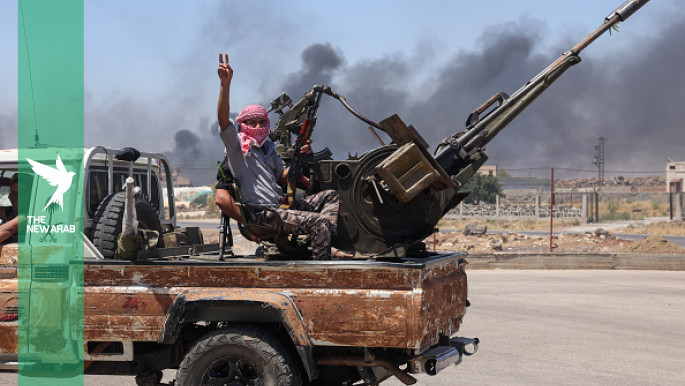
Bedouin and tribal fighters deploy at the western entrance of Syria’s Druze heartland of Suweida amid deadly sectarian violence, 18 July 2025. [Getty]
A United Nations official warned on Monday that efforts to repair divisions and stabilise southern Syria have stalled nearly a year after deadly sectarian violence in a Druze-majority province shook the country.
A UN investigation in March found more than 1,700 people, most civilian members of the Druze religious sect and some members of the Bedouin community, were killed in southern Suweida province in July 2025. It said Syrian government forces, tribal fighters and Druze armed groups may have committed war crimes.
A government-led, internationally backed roadmap launched in September 2025 was intended to restore order and repair relations among Druze factions, Bedouins and the government.
UN Deputy Special Envoy for Syria Claudio Cordone told the Security Council on Monday: “There has been no progress on the implementation of the September 2025 roadmap of confidence-building and reintegration in Suweida.”
Cordone said underlying issues remained unresolved while calls from some Druze for the province to secede have threatened Syria’s unity and territorial integrity. While they make up the vast majority of Suweida’s population, the Druze are a minority in Syria as a whole.
Kidnappings, counter-kidnappings and rivalries among Druze factions continued to undermine security in the province, he added.
The envoy said 13,500 students in Suweida were unable to sit national examinations this month after UN-supported mediation failed to resolve disagreements over location and security. Most students in the province have now missed exams for two consecutive years, according to the UN.
The remarks underscored the challenges facing Syria’s transitional authorities in Suweida, which has been a political and security flashpoint since the overthrow of President Bashar al-Assad in 2024.
Syrian officials including Suweida Governor Mustafa al-Bakour, an appointee of the Damascus government, argue Druze armed groups have hindered progress. He told Qatari-owned Syria TV in April that these factions obstructed efforts to restore state institutions, improve services and rebuild trust.
Bakour said the government continued to fund public salaries, support healthcare and education and restore infrastructure in Suweida despite security challenges. He said Damascus remained committed to dialogue and rejected Druze factions’ accusations that the central government has restricted food and other supplies to the province.
Druze leaders, who do not speak with a unified voice, have pushed back, saying they are safeguarding their community after last year’s violence and accusing Damascus of eroding trust through its conduct during the clashes.
Cordone also cited concerns about the country’s political transition, noting Syria’s transitional parliament has not been constituted more than eight months after elections. President Ahmed al-Sharaa must still appoint a third of the its members.
“The delay is generating anxiety,” Cordone told the Security Council. Syria’s Ministry of Information did not immediately respond to a request for comment.
(Reuters)