
The Executive Secretary of Tertiary Education Trust Fund(TETFund), Arc. Sonny Echono, has said the proposed International Standard Autism Centres in the six geopolitical zones are being considered for support under the 2027 TETFund Special Intervention.
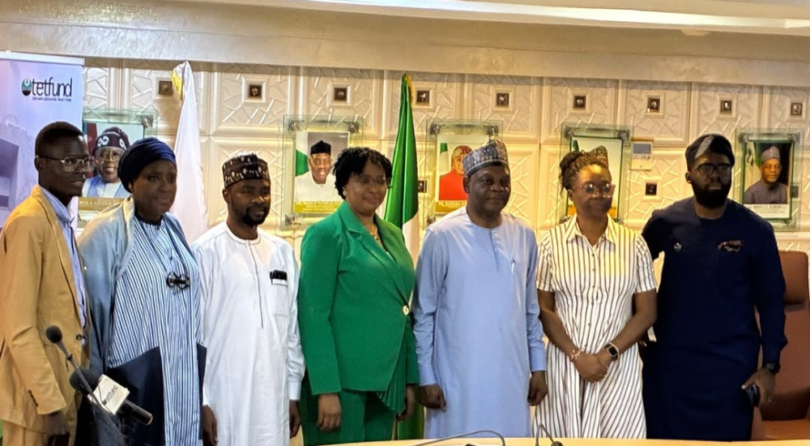
Echono disclosed this in Abuja on Thursday at the inauguration of the National Committee for the Establishment of International Standard Autism Centres.
He said the centres will be hosted by selected university medical schools, adding that the process of identifying suitable institutions is ongoing.
He said the calibre and diversity of the committee reflect the importance attached to the initiative, noting that members were selected based on their expertise, experience and collective capacity to develop a sustainable national framework.
He explained that the initiative builds on the gains of the recent Special High Impact Intervention for medical schools which is upgrading infrastructure and equipment for training in medicine, pharmacy, nursing, dentistry and related fields.
“The proposed centres will provide early diagnosis, assessment, treatment, rehabilitation, research and professional training, while promoting public awareness and supporting families and caregivers,” he said.
He noted that autism spectrum disorder is a complex developmental condition that requires early identification and sustained multidisciplinary support, adding that establishing centres across the six zones will expand access to specialised services, build local expertise and reduce the burden on families who currently travel long distances in search of appropriate care.
Echono who stated that the centres will be hosted by selected university medical schools, however noted they will be considered subject to the committee’s findings, the identification of eligible institutions, the availability of resources and the requisite approvals.
He charged the committee to ensure that any proposal is supported by a clear needs assessment, defined scope, appropriate technical specifications, realistic cost estimates and a credible sustainability plan.
“The selection of host institutions must be guided by clear and transparent criteria, including institutional capacity, geographical spread, existing medical and academic facilities, human resource potential, available land and space, institutional commitment and the ability to sustain the centres over time,” he said.
He said the committee’s Terms of Reference include developing a comprehensive framework for establishing the proposed centres, identifying suitable host universities, recommending minimum standards for design and operation drawing on international best practices, developing cost estimates and implementation schedules, and submitting a comprehensive report to guide decisions on the proposed 2027 intervention.
He encouraged the committee to expedite the initial stages of its assignment particularly the identification of suitable institutions and needs assessment to enable adequate provisions for the commencement of facilities under the 2027 intervention budget before the end of December when budget preparation is expected to be concluded.
Responding on behalf of members, the Chairperson of the committee, Prof. Ebunoluwa Adejuyigbe, thanked TETFund for the confidence reposed in them and for the foresight in initiating the intervention. She said as a paediatrician who has devoted several decades to the health of children, she considers the assignment particularly significant.
“For many Nigerian families raising children with autism, the journey is often characterised by delayed diagnosis, partly due to denial, limited access to specialised services, financial difficulties and inadequate professional support,” she said.
Adejuyigbe who is the Vice Chancellor of the University of Medical Sciences (UNIMED) Ondo , said the committee’s work will be guided by five interconnected pillars including clinical services and early intervention, research and innovation, training and capacity building, community engagement and inclusion, and sustainability and quality assurance.
She pledged to provide inclusive, transparent and purposeful leadership and to develop evidence-based, practical and sustainable recommendations appropriate to the Nigerian context.