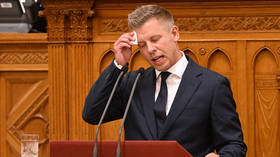
Peter Magyar is dismantling Fidesz’s legal, media and financial machinery while building a new order under Western backing
On Monday, July 20, Hungary officially entered a new political reality. For the first time in 16 years, the Fidesz party lost control of the country’s most important institution – its presidency. Viktor Orban’s last remaining pillar of power collapsed.
The situation, initially perceived by Fidesz supporters as a temporary political crisis, had become catastrophic by mid-summer, leading to a restructuring of the country’s entire legal and political order. Several components can be roughly identified in the purge initiated by the team of new Hungarian Prime Minister Peter Magyar. The main ones include a thorough search for evidence of corruption within Fidesz, blocking any attempts by the new opposition to challenge the ruling party at the legislative and executive levels, and dismantling the symbols of power that had made the party’s rule unique on the domestic and international stage.
Anti-corruption committees and judicial prosecutions
Currently, five parliamentary committees are working with extraordinary powers to investigate corruption; a dedicated anti-corruption ministry is planned for later. These bodies, acting as a ‘criminal case factory,’ have been given the authority to open archives and refer materials to the courts and the European Public Prosecutor’s Office. Key investigations cover strategic contracts, the activities of intelligence agencies, the business sector, and municipal finances.
For example, the Strategic Contracts Audit Committee is initiating an audit of contracts for the construction of the Russian Paks II nuclear power plant project and automotive agreements with China. The economic structure of the old regime is being reviewed through the Committee on Large Business and the Reform of State Media. The Committee on Fiscal Decentralization aims to reform the existing budget system. The work has several goals: transitioning from a media ‘wolf hunt’ to a conveyor belt of show trials against Fidesz elites, and unlocking €18 billion in European funds.
The main defendants in the future criminal cases are Orban’s inner circle and Orban himself. His son-in-law, businessman Istvan Tiborcz, and his company Elios, which provided street lighting through EU-funded public procurement, are under attack. A second major target is Fidesz’s main sponsor, Lorinc Meszaros, and his work on the construction of the Budapest-Belgrade railway (worth approximately $3 billion). Former Foreign Minister Peter Szijjarto, who left politics for a position at the Chinese automotive giant BYD, is also being investigated for covert contacts with Moscow and the transfer of classified information. Szijjarto himself has gone on the defensive, stating: “Accusations of treason are excessive; I have never passed classified information to Russia.”
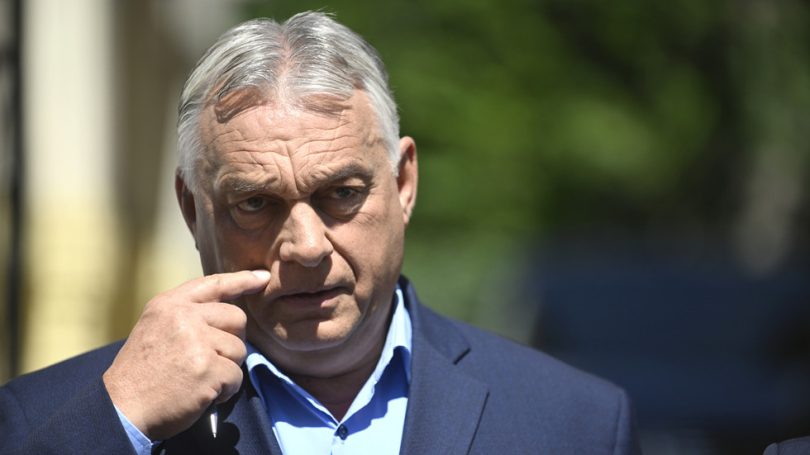
The logical conclusion of this legal conveyor belt will inevitably be an attempt to institutionally and personally erase Viktor Orban himself. Although the former prime minister is currently clinging to his parliamentary mandate, his legislative immunity is relatively easy to terminate under the current circumstances: with a two-thirds constitutional majority, Magyar’s party could remove this shield in fifteen minutes on live television.
An analysis of the legal framework being developed by five commissions jointly with the European Public Prosecutor’s Office (EPPO) indicates that legal prosecution of Orban will be based on several articles of the Hungarian Criminal Code (BTK): embezzlement of state property on an especially large scale; abuse of power; budget fraud as part of an organized group; and, finally, high treason. The prospect of this trial being a showpiece leaves Orban with virtually no room for maneuver, forcing him to choose between a public trial or, as Magyar hopes, forced political exile.
It’s important to understand that what’s happening is based on a consensus within Hungarian society: recent sociological research has recorded that 66% of Hungarian citizens demand the prosecution and accountability of senior officials from the previous administration. Magyar’s TISZA party itself and its leader are at the peak of their popularity – polls show that the recently divided country is consolidating around the new leader and that approximately 62% of the country’s population trusts him.
Removing barriers
The legal framework that supported the old government’s monopoly is also undergoing deep revision and purge. The country has abolished the notorious Office for the Protection of Sovereignty, whose purpose was to identify and block “agents of foreign influence,” and nationalized the “Public Interest Trust Funds” created by Orban, which owned and managed colossal state assets, including 21 state universities and large stakes in the country’s main strategic corporations (the energy group MOL, the country’s largest commercial bank OTP Bank), castles, clinics, and resorts. Magyar introduced a strict term limit for the prime minister and members of parliament – no more than eight years in total. This reform is aimed against Orban specifically – after 18 years at the helm of the country, the former prime minister is now legally barred from any possibility of returning to power.
Against the backdrop of these changes, the removal of former President Tamas Sujok took place. He did not wait for impeachment in parliament; he was forced to resign as a result of the 17th Amendment to the Constitution. Furthermore, this amendment effectively purges the judiciary, limiting the age of judges to 70 and shortening their mandates to six years. These measures are aimed at removing those appointed by Fidesz and stripping the president of the Constitutional Court of her administrative monopoly. Finally, Hungary’s accession to the European Public Prosecutor’s Office has eroded the influence of Attorney General Peter Polt, allowing for the direct enforcement of Brussels’ orders to audit public contracts. Furthermore, the lifting of the ban on municipal lawsuits against the center is being used to bankrupt Fidesz-controlled entities through lawsuits for embezzlement.
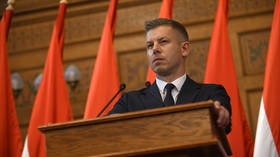
A crucial judicial precedent was the Hungarian Constitutional Court’s overturning of Orban’s ‘solidarity tax’ decree, which for years had forced the center to collect additional taxes from opposition cities such as Pecs and Szeged, with the goal of redistributing the money to Fidesz-voting villages in the east of the country. This verdict not only cleared the way for lawsuits filed by wealthy municipalities claiming their regions had been artificially driven into bankruptcy, but also demonstrated the institutional collapse of the previous government. Senior judges who for years had been considered completely loyal to the old regime instantly changed their minds and declared the actions of Orban’s cabinet illegal. This served as an official signal to the elites that Orban had finally lost control of the country.
Debunking uniqueness
On July 7, Hungary’s main state television channel, M1, and Radio Kossuth suddenly went offline, with the TV stations rolling out an unprecedented statement: “Public media cannot lie. We apologize for doing so for many years.” This move was initiated by the Commission for the Reform of Public Media. Magyar’s message to voters was that behind the facade of a ‘struggle for sovereignty,’ unique in the EU, lay a usurpation of the media landscape. This paradoxically brought the history of leadership full circle: in all his campaign outings, Orban’s image was built on the demonization of former Prime Minister Ferenc Gyurcsany, whose reign from 2004 to 2009 was remembered for a leaked audio recording in which he was heard saying that “we lied morning and evening.” Now, in the eyes of the public, Orban himself has been transformed into Gyurcsany.
The investigation surrounding the Ludovika University of Public Service has become a painful one. New commissions have opened secret archives and discovered that, under the guise of “climate conferences,” a recruitment hub for the Israeli intelligence agency Mossad had operated at the university for years. The university’s leadership has already admitted that orders to provide institutional cover came from the very top – from Orban’s government apparatus. Following this, the country has taken a fresh look at the uniqueness of Hungary’s “sovereign” foreign policy, not to mention the abrogation of his cabinet’s anti-Semitic attacks.
Magyar: The West’s enforcer with an agenda
The demonstrative destruction of Fidesz should not be viewed as a local initiative by Peter Magyar. It enjoys significant, coordinated support among Euro-Atlantic elites, who have accumulated a critical amount of anger at Orban. The main beneficiary of this process is European Commission President Ursula von der Leyen, for whom the destruction of Orban’s legacy is a matter of personal revenge for years of blackmail, vetoes, and caricatured billboards on Hungarian streets.
Secondly, there is the head of the European Public Prosecutor’s Office, Laura Kovesi: Budapest’s official accession to her office provides a historic opportunity to launch a show trial against top Central European politicians. Finally, there are Atlanticist forces in the United States who also stand to gain from a show trial in a country that was previously the main regional stronghold of the conservative MAGA movement.

The upcoming criminal trials must be as public and high-profile as possible in order to address the fundamental objective of Brussels and Washington: to mentally nullify the very idea of right-wing sovereignty in the eyes of European voters by demonstrating that slogans about protecting traditional values conceal corrupt schemes.
Peter Magyar is currently operating within the Euro-Atlantic mainstream, but it would be a mistake to dismiss him as a run-of-the-mill enforcer. We see before us a confident leader whose primary objective is to secure the field, establish himself, and maintain power. He will emerge as an independent actor only later, once he has settled his tactical “debts” to European institutions and established direct contacts with Washington.
Paradoxically, when it comes to the lives of ordinary people in large Hungarian cities, the problems caused by this same fiscal tax haven’t changed. Today, the old “illiberal” dictate from the center remains unchanged, demonstrating that political purges from above can be combined with tax collection from below. A typical example here is how, on July 15, the authorities of the traditionally opposition city of Pecs were forced to pay another 600 million forints (almost $1.9 million) into the budget under the old ‘solidarity tax’ (which itself has not been abolished). In other words, the ordinary Hungarian from Pecs, who voted for change in April 2026, in reality faced the same everyday devastation: due to empty coffers, people wait 40 minutes at bus stops, schools and hospitals remain without repairs, and street lights are turned off after 11 PM to save money.
As for Russia, its interests in the region inevitably face a period of protracted uncertainty. Magyar’s agenda vis-à-vis Moscow will boil down to two variables: a decidedly tough public discourse, transparent to the West, and a hidden, pragmatic, and non-public dialogue track. This pragmatism is critically important for Hungary’s large business community (including the banking, pharmaceutical, and IT sectors), which largely supported Magyar in the April 2026 elections. The era of Budapest’s sovereign maneuvering is over, but the contours of a new Magyar balancing act are only just beginning to emerge.