• Bank commits $20bn into Nigerian economy in the last five years
Deji Elumoye in Abuja
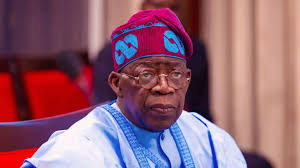
President Bola Tinubu has charged the leadership of African Export-Import Bank (Afreximbank) to intensify efforts to mobilise and deploy the continent’s vast human, financial, and natural resources for the collective economic advancement of Africans.
Tinubu said Africa’s drive for industrialisation could not remain a subject of theoretical discussion.
He spoke yesterday during a visit by a delegation from Afrieximbank, led by its President and Chairman of Board, Dr George Elombi, to State House, Abuja.
The president said his administration’s recent economic reforms, such as ending the fuel subsidy and tackling multiple exchange rates, were essential steps to combat corruption and ensure economic survival.
Tinubu stressed that Africa possessed enormous potential and must move beyond endless conversations about development to practical actions that drive industrial growth, expand trade, create jobs, add value, and improve the living standards of its people.
A structured financial backing and reliable infrastructure, he explained, were essential for building the continent.
The president stated, “The conscience and the future of Africa depend on what you and your team can do and will do for Africa as a whole, and the time has come for us to start doing things together as Africans.
“We have what it takes to build this continent. Do we continue to exploit and export raw materials without value addition? That answer is no.
“We have solid mineral deposits such as lithium and others that can be used, and you, as the financial partner, should be able to come with investment guarantees for the production and value addition in batteries and other manufacturing ecosystems.”
Commenting on farmer-herder clashes, the president told the visitors that his government had turned the longstanding conflict between farmers and herders into an economic opportunity for citizens through the introduction of the Federal Ministry of Livestock Development.
He stated, “I created the livestock ministry to create economic opportunities for Africans.
“The cotton, ginnery and garment industries are job creators. If we partner well and incorporate these ideas and do less talking and really put our heads into developmental programmes, we can turn it around.”
Tinubu stressed the need for Afreximbank to synergise with the Bank of Agriculture, make more investments in the production of crops, such as cocoa, palm kernel, and palm oil, among others, and ensure that agricultural value chains translated into tangible benefits for the future.
In his remarks, Minister of State for Industry, Senator John Enoh, explained the president’s bold economic diversification policies, describing the administration’s Eight-Point Renewed Hope Agenda as a transformative blueprint that is repositioning Nigeria for sustainable economic growth, industrial expansion, and shared prosperity.
Enoh said the Tinubu’s commitment to industrialisation, particularly through the development of the solid minerals sector, oil and gas, manufacturing, agriculture, the digital economy, and value-added exports, was laying the foundation for a resilient economy less dependent on crude oil revenues.
Elombi said he and his team were at State House to thank the president for his support, which led to his election as the president of the bank, as well as to brief him on the bank’s portfolios and activities in Nigeria.
According to him, the bank has investments across trade, agricultural processing, value chain, and healthcare.
He informed Tinubu of the bank’s efforts to reverse health tourism on the continent, highlighting that the bank has invested between US$15 and US$20 billion in the Nigerian economy over the last five years.
Elombi, while inviting the president to visit the African Medical Centre of Excellence (AMCE) located in Abuja, also disclosed that Afreximbank had committed US$2 billion to support Nigeria’s cotton and garment industry.
He also briefed the president on the bank’s investment in the Lagos-Calabar Coastal Highway and the Kano-Maradi Railway line.