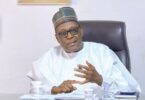
The Presidency has defended President Bola Tinubu’s 30-day petrol discount initiative, describing it as a temporary market-stabilisation measure rather than a return to fuel subsidy, while accusing former Vice-President Atiku Abubakar of promoting what it called unrealistic economic solutions.
Dr Sunday Dare, Special Adviser to the President on Media and Public Communications, said Atiku’s criticism of the discount offered by the Nigerian National Petroleum Company Limited (NNPCL) reflected a misunderstanding of global energy markets and Nigeria’s crude oil production arrangements.
In a statement on Sunday, Mr Dare also faulted Atiku’s proposal for a production subsidy, arguing that Nigeria lacked sufficient unencumbered crude oil to support a broad subsidy scheme without undermining government revenue and reviving the abuses associated with the former petrol subsidy regime.
The statement followed Atiku’s criticism of the NNPCL Retail’s decision to extend a 30-day petrol discount and the government’s reported price-modulation framework.
Mr Dare said the discount was initially introduced to mark Nigeria’s 66th Independence anniversary before being extended for another month.
He explained that the arrangement allowed NNPCL Retail to forgo its profit margin temporarily and sell petrol at landing cost, thereby cushioning consumers against increases in global crude oil prices.
According to him, the measure was designed to absorb short-term market volatility without requiring the Federal Government to resume direct subsidy payments.
“When NNPC Retail agrees to sell fuel at landing cost for 30 days during an unprecedented global crude price spike, it is not writing cheques to opaque import cartels. It is leveraging its corporate balance sheet to absorb short-term global volatility, backed directly by President Bola Ahmed Tinubu,” he said.
Mr Dare also defended the reported interim N1,350-per-litre ceiling on ex-gantry costs, describing it as a mechanism to moderate sudden increases in fuel prices rather than an attempt to impose permanent price controls.
Under the arrangement as described by the presidential aide, refiners and importers would absorb costs above the ceiling temporarily and recover them later when global crude prices decline or local exchange rates improve.
He argued that moderating sudden price increases could help prevent commercial transport operators from raising fares sharply whenever petrol prices rise.
“N1,400 today and N1,400 tomorrow provides far greater economic stability than N1,500 today and N1,300 tomorrow,” Mr Dare said.
He added that the ceiling would be reviewed monthly through cost audits to prevent the accumulation of undisclosed government liabilities.
However, the statement did not provide further details on the implementation of the reported ceiling, the arrangements for recovering deferred costs or the specific auditing mechanism.
Presidency challenges Atiku’s production subsidy proposal
Mr Dare said Atiku’s proposal for a production subsidy was impractical because the Federal Government did not own all the crude oil produced in Nigeria and could not freely allocate the entire volume to domestic refineries.
He cited figures presented by the Minister of Finance and Coordinating Minister of the Economy, Taiwo Oyedele, on Channels Television, which put Nigeria’s crude oil production at about 1.8 million barrels per day, serving a population of more than 200 million people.
According to Mr Dare, joint ventures and production-sharing contracts, alongside production costs, royalties and profit-sharing arrangements, significantly reduce the volume of crude available to the government without existing contractual obligations.
He claimed that Nigeria had fewer than 700,000 barrels per day of unencumbered crude oil available for such purposes.
The presidential aide argued that major domestic refineries, including the Dangote Petroleum Refinery, required substantial quantities of crude oil beyond what the government could freely allocate without affecting existing supply agreements or public revenue.