
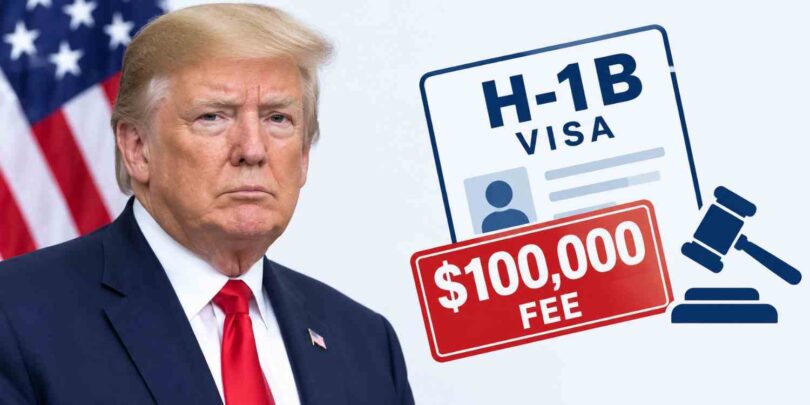
The White House confirmed Friday that President Donald Trump extended his executive order to raise the H-1B visa application cost to $100,000, providing extra time while the government fights legal challenges to the proposed increase.
Trump first signed the order in September 2025, setting a price that would have been a significant increase from the existing cost of $2,000 and $5,000.
The original injunction was set to expire this month, until the extension was announced.
Legal challenges block the fee hike
A federal judge in Boston determined in June that the higher fee was unlawful and prohibited the government from collecting it.
A US appeals court is currently examining that ruling. Separately, another court is considering whether a judge appropriately dismissed a challenge brought by the US Chamber of Commerce, the country’s largest corporate lobbying group.
Congress established the H-1B program in 1990 to allow American firms to temporarily import skilled foreign workers to the United States.
It is extensively employed by technological companies, which rely significantly on Indian and Chinese expertise to fill specialized positions.
Trump’s suggested fee increase did not include all applicants. Foreign citizens already in the US on student visas, who make up a major proportion of new H-1B grantees, were exempt, as were those renewing existing visas.
Businesses warn about disruption. Business organizations believe that the program is critical for attracting highly trained specialists to industries where American workers are in limited supply.
Critics, however, claim that some corporations take advantage of the plan to hire cheaper immigrant labor instead of local workers.
Changes in the screening and processing of H-1B applicants have already had an impact on firm operations.
Alphabet, the parent company of Google and one of the largest users of the H-1B program, has sought to extend its presence in India as the visa becomes less predictable.
The administration’s broader immigration crackdown has heightened scrutiny of legal avenues utilized by multinational corporations, with the H-1B dispute at the heart of conflicts between US business interests and Trump’s restrictive immigration agenda.