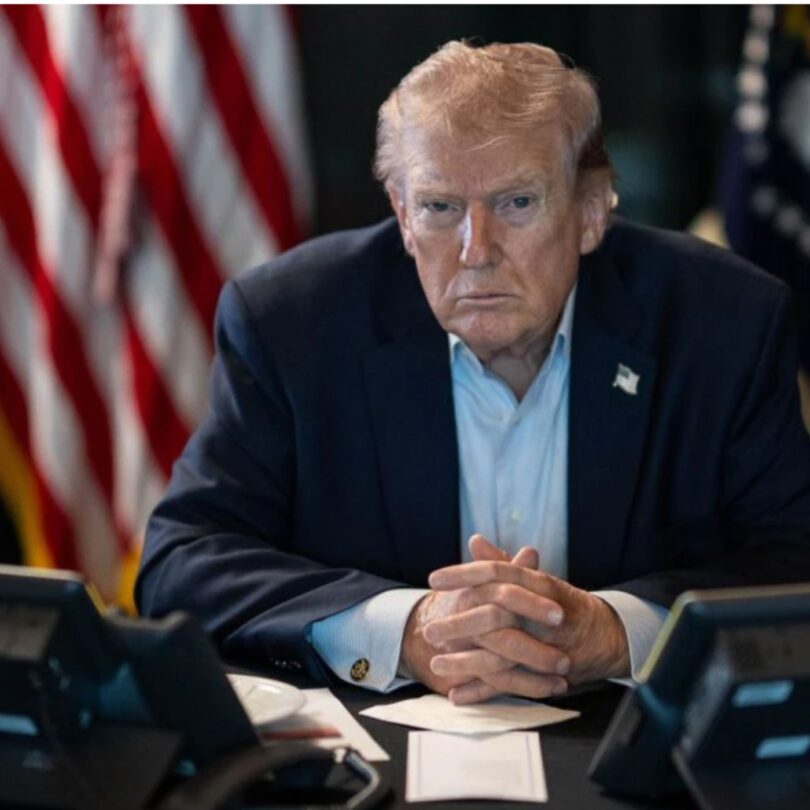
United States President, Donald Trump, has issued a warning regarding tariffs ranging from 10% to 12.5% on 60 nations, including the United Kingdom, the European Union, and Australia, due to alleged failures related to forced labor, marking his latest effort to reinvigorate his hallmark trade policy.
In response, the EU has promptly countered, expressing its expectation that the US will honor the tariff agreement established last July, contending that stealth tariffs violate the essence of that accord.
The suggested tariffs on nations accused of permitting the importation of goods produced by coerced labor follow a ruling by the supreme court in February, which deemed the president’s “liberation day” tariffs illegal.
Trump reacted by implementing a blanket 10% tariff; however, last month, the US trade court determined that these tariffs were also unlawful, although they remain effective during the ongoing appeal process.
The new tariff proposal based on forced labor allegations, which would impact significant partners such as Canada, Japan, Norway, Taiwan, and China, would allow Trump to bypass the previous court-imposed restrictions on his protectionist policies. This comes as the US threatens to introduce additional tariffs of 25% on Brazil.
US Trade Representative Jamieson Greer stated: “The failure of our most significant trading partners to tackle the importation of goods produced with forced labor is unacceptable. This creates a situation where American workers must compete on an uneven global playing field. We will no longer accept this inequality.”
The prospect of new tariff disruptions is likely to alarm trading partners, including Keir Starmer, who have worked diligently to establish trust with Trump and manage the costs associated with trading under his unpredictable administration.
The European Commission remarked that the EU “fully shares” the US’s concerns regarding forced labor but believes that tariffs imposed on these grounds are unwarranted.
It stated its continued commitment to the agreement made last July, which included 15% tariffs on the majority of goods. “We anticipate that the US will fully adhere to the terms” of that agreement, it remarked.
Analysts forecasted that Trump, who has long viewed tariffs as a means of ensuring national economic security, would seek ways to circumvent the Supreme Court’s ruling in February.
At that time, he threatened to employ tariffs in a “far more potent and aggressive manner,” with at least six alternative legal avenues to penalize countries he deemed a threat to the US economy.
The most recent tariffs stem from investigations into labor laws across 60 nations, conducted under Section 301 of the Trade Act of 1974.
A 98-page report on this investigation indicated that “only Canada, Ecuador, the European Union, Indonesia, Mexico, and Pakistan have successfully implemented a prohibition on imports associated with forced labor.”
Nevertheless, the White House assessed that Canada was not adequately enforcing its laws, while the EU’s comprehensive ban on imports of goods produced with forced labor will not take effect until December 2027, suggesting that both trading partners might be subjected to tariffs.
The report indicated that the EU, Canada, Mexico, Taiwan, and the UK would incur 10% tariffs, whereas 12.5% tariffs would be levied on China, Japan, India, South Korea, Brazil, and Switzerland.
The new tariffs will not be implemented immediately and will undergo a period of public commentary and review.