Uganda’s Ministry of Health reported that the country recorded 20 confirmed Ebola cases during the outbreak, including five locally acquired infections and 15 imported cases.
Uganda has commenced a 42-day countdown towards being declared Ebola-free following the discharge of its final patient from an isolation unit. According to a Reuters report, the patient’s release from Mulago National Referral Hospital in Kampala on Thursday morning triggered the mandatory waiting period required by the World Health Organisation (WHO) before an outbreak can be officially declared over.
Under WHO guidelines, a country may only be declared free of an Ebola outbreak if no new confirmed cases are recorded within 42 consecutive days following the recovery or death of the last patient.
Uganda’s Ministry of Health reported 20 confirmed Ebola cases during the outbreak, comprising five locally acquired infections and 15 imported cases. The ministry’s online dashboard further indicates that 17 patients recovered, while two people died.
Speaking on the progress, Ugandan government spokesperson Alan Kasujja confirmed that the discharge of the final patient initiated the WHO-mandated countdown. “When that happens, Uganda starts counting down. If 42 days pass without a single new case, WHO guidelines stipulate that we will be declared Ebola-free,” Mr Kasujja explained.
Meanwhile, the outbreak continues to spread in the Democratic Republic of the Congo (DRC), where the WHO declared a Public Health Emergency of International Concern in May. According to Reuters, data released by the Congolese government on Wednesday showed the country has recorded 2,011 confirmed Ebola cases and 754 confirmed deaths.
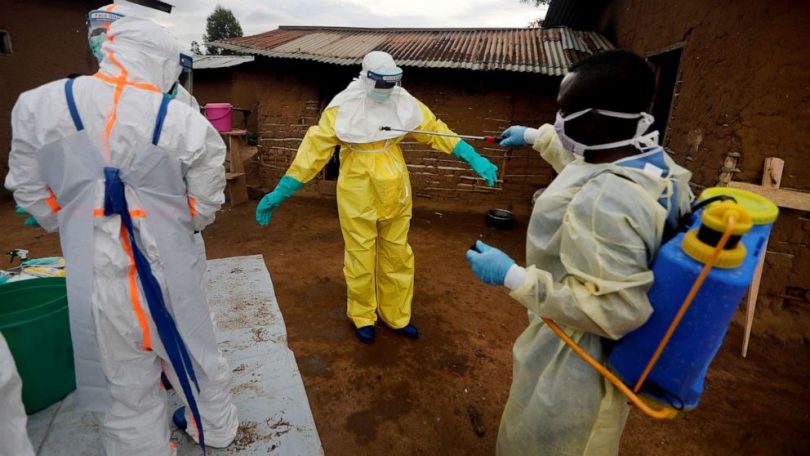
The Bundibugyo strain causes the current outbreak; it is a rare species first identified in Uganda in 2007. Unlike the Zaire strain, there is currently no widely licensed vaccine specifically approved for the Bundibugyo strain. Consequently, surveillance, early detection, contact tracing, and infection prevention remain critical to containing the disease.
Following the WHO’s declaration of the outbreak as a Public Health Emergency of International Concern in May, Nigerian authorities stepped up measures to prevent the virus from entering the country.
PREMIUM TIMES previously reported that President Bola Tinubu approved the establishment of a Presidential Task Force on Ebola Virus Disease Preparedness and Emerging Public Health Threats to coordinate the nation’s response. The President also authorised the release of ₦10 billion to strengthen the Nigeria Centre for Disease Control and Prevention’s (NCDC) preparedness and emergency response.
The NCDC has since intensified surveillance at the country’s borders and points of entry, enhanced laboratory capacity, activated rapid response teams, and urged health workers to report any suspected Ebola cases promptly.