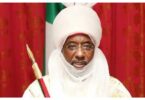

• Decade of unrelenting, unjust vilification finally concluded, says former minister
• Pledges to address matter in detail, share intentions for the future
•Jury arrived at decision after 46-hour deliberation
“I am profoundly relieved. My name has been cleared, and this ordeal has come to an end. This, however, is not the final chapter. In due course, I shall address this difficult period in greater detail and share my intentions for the future. For now, I intend to embrace the freedom that has been unjustly denied me for many years.”
Emmanuel Addeh in Abuja and Wale Igbintade in Lagos
Nigeria’s former Minister of Petroleum, Diezani Alison-Madueke, was yesterday found ‘not guilty’ of the six bribery charges brought against her by the UK’s National Crime Agency in 2023, effectively closing an investigation that began over a decade ago.
Alison-Madueke, 65, was charged by the agency over allegations that she took cash as well as accepted flights on private jets, chauffeur driven cars and luxury goods from Louis Vuitton and Harrods as Nigeria’s oil minister.
But in her defence, the first female president of the Organisation of Petroleum Exporting Countries (OPEC), said that in some cases, there was a culture of gift giving in Nigeria that explained some of the services and items she was bought by executives.
Besides, the jury was told that the former minister was the subject of a “major smear campaign” during her time in office by people who opposed reforms designed to increase competition in the sector.
Alison-Madueke said she never took any bribes and that she had no real influence over the awarding of lucrative government contracts. The jury came to the decision after 46 hours of deliberation, THISDAY learnt.
“At no time did I ask, take or seek a bribe,” Alison-Madueke said during her testimony. “I always sought to act impartially in all that I did,” she maintained.
Similarly, Alison-Madueke’s brother, Doye Agama, was found not guilty of one-count of conspiracy to commit bribery, while Olatimbo Ayinde, a Nigerian oil industry executive, was discharged and acquitted of two bribery counts.
The UK prosecutors said the charges were linked to the awarding of oil and gas contracts during her tenure as petroleum minister between 2010 and 2015.
Alison-Madueke relocated to the United Kingdom after the defeat of then President Goodluck Jonathan in Nigeria’s 2015 presidential election. However, she still faces multiple corruption cases in Nigeria, some of which have stalled due to her absence.
In a statement following the verdict, Alison-Madueke described the ruling as a full vindication after years of what she called “unrelenting and unjust vilification.”
She said the judgment had finally restored her reputation after more than a decade of legal proceedings that placed significant strain on her and her family. She expressed profound relief at the outcome, insisting that the case had come to a definitive end with her “name cleared.”
She also thanked her legal team for their diligence and acknowledged the support of her family and friends throughout the lengthy trial.
The former minister added that the judgment marked not the end of her story, hinting that she may in due course speak more extensively about her experience during the prolonged proceedings.
She said she now intends to embrace the freedom she believes was taken from her during years of investigation and prosecution, signalling a possible return to public commentary after more than a decade of legal uncertainty.
Earlier during the proceedings, prosecutors alleged that she lived a “life of luxury” funded by businessmen with interests in the oil industry, including luxury travel, furniture, handbags, and other high-value benefits.
However, she consistently denied all allegations throughout the trial, insisting she neither received bribes nor used her office to favour any individual or company.
In her testimony, she told the court that she did not solicit meetings with oil executives and maintained that many of the interactions and travel arrangements cited by prosecutors were initiated by others, not herself.
She also stated that she was undergoing cancer treatment during parts of the period under review, adding that her health affected her memory of certain events.
Alison-Madueke further told the court that she was not responsible for logistical arrangements such as travel and accommodation, which she said were handled by government agencies, particularly the Nigerian National Petroleum Corporation (NNPC). “I was not the logistics person for any of these trips,” she said.
She also rejected claims that gifts she allegedly received amounted to bribes, arguing that such items could not have influenced her official duties.
During the trial, she dismissed allegations that she demanded luxury assets such as yachts or properties, describing them as misinterpretations of casual conversations about business practices and perceptions in the oil industry.
Her defence team argued that she had no direct role in the award of oil contracts and was widely regarded within government circles as “Madame Due Process” because of her insistence on procedural compliance.
Lead defence counsel, Jonathan Laidlaw KC, challenged the prosecution’s case, accusing investigators of depending on unreliable evidence and failing to preserve key materials. He also questioned what he described as “selective prosecution,” noting that several oil executives allegedly linked to the bribery scheme were never charged.
The defence has also named businessmen Kola Aluko, Jide Omokore, Benedict Peters, Igho Sanomi, and Kevin Okyere, arguing that although they were central to the allegations, they had not faced prosecution.
“It is an absurd situation where those alleged to have paid bribes are free, while the accused has faced years of prosecution,” Laidlaw told the court. He further raised concerns about gaps in the investigation, including a 2015 search of Alison-Madueke’s Abuja residence, which the defence said was not properly documented.
Besides, the counsel had argued that key documents supporting her defence, including reimbursement and official records, were missing from the prosecution’s case file. “If the position were not so serious, it would be laughable,” he added.
Laidlaw also accused prosecutors of inconsistency in their reliance on evidence from Nigeria’s Economic and Financial Crimes Commission (EFCC), arguing that they accepted EFCC material when it supported the prosecution but rejected it when it favoured a co-defendant.
Following the verdict, her legal team said she was relieved and grateful to the jury, adding that she had endured an “ordeal” lasting more than a decade and could now return to private life with her reputation restored.
The full statement signed by one Bolouefe Opukiri on behalf of Alison-Madueke read: “Today, at Southwark Crown Court, I was acquitted of all charges brought against me. For eleven arduous years, this matter has weighed heavily upon me and my family. Today, a decade of unrelenting and unjust vilification, condemnation, and scrutiny has finally concluded.
“I give thanks to Almighty God for His faithfulness and for the complete vindication I have received. I am grateful to my legal counsel for their diligence, and to my family and friends for their steadfast support and encouragement throughout this period.
“I am profoundly relieved. My name has been cleared, and this ordeal has come to an end.
“This, however, is not the final chapter. In due course, I shall address this difficult period in greater detail and share my intentions for the future. For now, I intend to embrace the freedom that has been unjustly denied me for many years.”