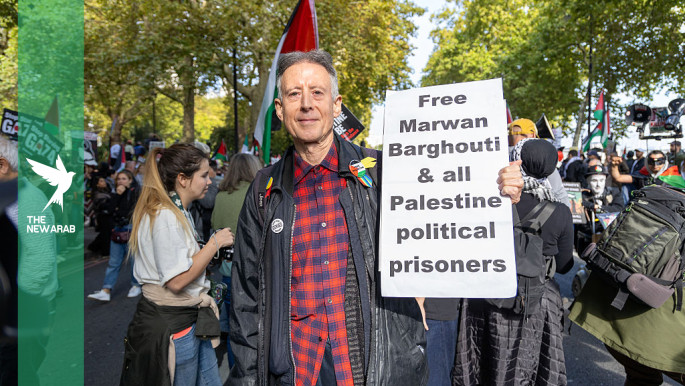
A prominent British human rights and LGBT+ campaigner was granted unconditional bail on Wednesday after being arrested for carrying a placard reading “Globalise the intifada” during a pro-Palestine protest in January.
At Westminster Magistrates’ Court, the judge ruled that bail conditions banning Peter Tatchell from attending pro-Gaza demonstrations were unreasonable, and he was subsequently granted unconditional bail.
In a statement on Facebook, Tatchell said police had shown contempt for the court by failing to attend the hearing.
Tatchell was taken to Sutton Police Station after his arrest, later released on bail under investigation, and was never charged.
The activist had posted a photograph of himself on X from the protest carrying a placard featuring several slogans, including “Globalise the intifada”.
The Metropolitan Police said officers had arrested a 74-year-old man at the protest “on suspicion of a public order offence”.
“He was seen carrying a sign including the words ‘globalise the intifada’,” police said, a month after announcing they would begin making arrests over use of the phrase.
Tatchell described the arrest as “an attack on free speech”.
Known internationally for his campaigning on human rights and LGBTQ+ equality, Tatchell has also been a longstanding supporter of Palestinian rights and has protested for Palestinian liberation since 2004.
He said in court that officers also told him to remove his “Free Palestine” badge, while allowing him to wear a Ukraine badge, which he said exposed a clear double standard.
Tatchell’s arrest came after UK police warned in December that people at demonstrations could be arrested for using the phrase “globalise the intifada”, claiming it could amount to incitement or create a threatening atmosphere. The first arrests followed the next day.
The word “intifada”, Arabic for “shaking off”, became widely associated with the first Palestinian uprising in 1987, when mass civil resistance emerged against Israeli occupation.
While pro-Israel groups often portray the phrase as a call for violence against Jewish people, Palestinians and their supporters say it refers to collective resistance against occupation, apartheid and oppression, rather than attacks on civilians.
The case comes amid growing criticism of attempts to criminalise pro-Palestine speech in Britain during Israel’s war on Gaza, widely condemned by rights groups as involving war crimes and genocide.