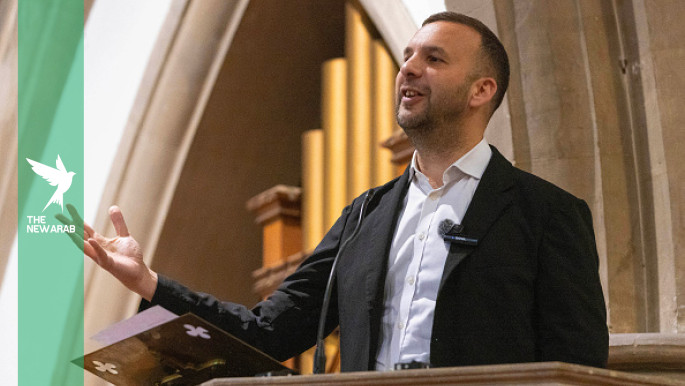
A stabbing attack in north London has triggered a wider political backlash against pro-Palestine activism, with Green Party figure Zack Polanski emerging as a central target amid mounting criticism from across the political spectrum.
Two Jewish men, aged 76 and 34, were injured in the attack in Golders Green last week. Police have charged a suspect with attempted murder. The suspect is also accused of stabbing a Muslim man earlier the same day, according to police.
Polanski condemned the attack as “horrendous”, but came under fire after sharing a post questioning the police response, which suggested officers had used excessive force on the suspect who suffers from severe mental health issues.
He later apologised, saying he had shared the post “in haste”, while maintaining that policing should not be beyond scrutiny.
The incident has prompted renewed calls to further tighten restrictions on pro-Palestine demonstrations that have taken place regularly since the start of the war in Gaza.
Polanski has been one of the most outspoken pro-Palestine voices in mainstream UK politics, calling for a ceasefire in Gaza and accusing the British government of being “not just complicit” but “active participants in genocide”.
He has also consistently defended pro-Palestine protests, rejecting calls to ban demonstrations and insisting he is “not interested” in policing language, even as he said he would discourage the use of allegedly contentious slogans such as “globalise the intifada”.
Polanski, who is the only Jewish leader of a major UK political party, has framed his position as rooted in opposition to injustice and has argued that criticism of Israel is increasingly being conflated with antisemitism.
Criticism of Polanski has come from across the political spectrum.
Prime Minister Keir Starmer described him as “disgraceful” and “not fit to lead any political party”, while Communities Secretary Steve Reed said his apology was “nowhere near enough”.
Metropolitan Police Commissioner Mark Rowley also rebuked the comments, calling criticism of officers “inaccurate and misinformed”.
Conservative figures, including Kemi Badenoch, backed calls to restrict protest language they say risks inciting violence, while Reform UK figures linked the attack to broader concerns around immigration and public order.
Liberal Democrat leader Ed Davey said Polanski had “taken up where Jeremy Corbyn left off”, alluding to the antisemitism charges levelled against Corbyn when he was leader of Labour.
Polanski has also faced accusations of being “soft” on alleged antisemitism.
In the House of Lords, Conservative peer Lord Jackson of Peterborough criticised remarks suggesting antisemitism was a “perception of unsafety”, saying such arguments were “dangerous” and that those who “apologise for it are not fit to hold public office”.
The pressure has extended beyond Westminster.
In an article in the right-wing Daily Mail titled ‘Beware of the Green Menace’, staunchly pro-Israel freelance journalist Nicole Lampert wrote that Polanski was facing a “rebellion from his own family”, citing unnamed relatives who feared being forced to leave the UK if he became prime minister.
The article quoted one relative as saying: “He’s currently the leader of the future Islamic party of Britain”.
After a by-election win, critics accused the Greens of “sectarian politics”, with Matt Goodwin warning “a dangerous Muslim sectarianism has emerged”, in comments widely considered to be Islamophobic.
The pressure on Polanski has included demands that he distance himself from protest movements and rhetoric associated with pro-Palestine demonstrations, something he has resisted.
The row has expanded into a wider political battle over protest rights, antisemitism, Muslim voters and the boundaries of acceptable dissent in the UK.
Polanski’s supporters, however, argue the backlash has been exaggerated or politically motivated. Some within the Green Party have described the controversy as a “witch-hunt”, while commentary elsewhere has accused critics of attempting to “smear” the party’s only Jewish leader. Polanski himself has said antisemitism is being “used as a political football”.
The political intensity of the backlash comes amid growing electoral competition.
With local elections approaching in England, the Greens have emerged as an increasing challenge to Labour in several areas, while also competing with the Conservatives and Reform UK for disaffected voters.