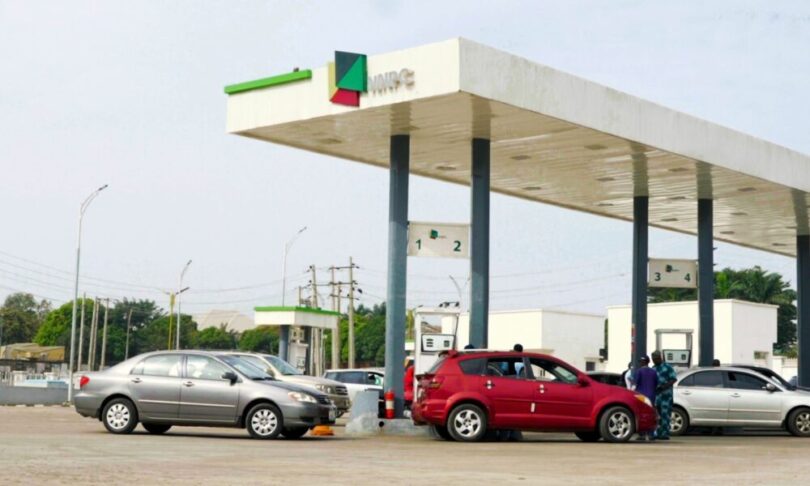
A commercial driver in Zaria said he had not yet seen any meaningful benefit despite buying petrol at an NNPC station in Dakatsalle.
Residents of Zaria Local Government Area in Kaduna State have expressed dissatisfaction with the impact of the federal government’s petrol price reduction at Nigerian National Petroleum Company Limited (NNPC) retail stations, saying the intervention has done little to ease the rising cost of living.
While some residents acknowledged the reduction in petrol prices, others complained that the price difference was too small to affect their daily expenses significantly.
Some also questioned whether the relief was being implemented uniformly across filling stations.
The complaints highlight the challenges of translating a temporary reduction in fuel costs into broader economic relief, particularly for low-income households and small businesses that depend heavily on petrol-powered transportation and generators.
For commercial drivers, who spend a significant portion of their daily earnings on petrol, even a modest price reduction can make a difference.
However, Danlami Garba-Dan Kabo, a commercial driver in Zaria, said he has yet to see any meaningful benefit despite buying petrol at an NNPC station in Dakatsalle.
Mr Garba-Dan Kabo said he preferred buying fuel from privately owned filling stations because he saw little difference between their prices and those offered at NNPC outlets.
“The price reduction is supposed to help the poor, but we are yet to benefit from this relief, especially those of us who are drivers,” he said.
He explained that the high cost of petrol had made it increasingly difficult for commercial drivers to earn enough to support their families.
According to him, some drivers could go two or three days without working because they could not afford to operate their vehicles.
“Some drivers have two or three wives and children to cater for, yet they spend two to three days without work because of the high cost of petrol in the country,” he said.
Commercial motorcycle and tricycle operators also said petrol prices remained a major burden on their businesses.
Idris, a commercial motorcycle rider in Zaria, called on the government to further reduce petrol prices, arguing that the existing reduction had not provided enough relief for operators who depend on daily earnings to sustain themselves and their families.
Sanin Mallan, a commercial tricycle operator popularly known as a Keke NAPEP rider, said he regularly bought petrol from NNPC stations because he considered the fuel good quality.
However, he said the price remained high and appealed to the government to introduce further reductions.
Transport operators’ accounts show how fuel prices affect not only petrol buyers but also commuters who depend on commercial vehicles to travel to work, schools, and markets.
Beyond the transport sector, traders in Zaria said the high cost of living had weakened consumer demand, making it increasingly difficult for businesses to sell their goods.
Alhaji Dahiru, a retailer at Sabon Kasuwa market, said high petrol prices contributed to rising commodity prices and reduced his customers’ purchasing power.
He illustrated the pressure by comparing parboiled rice prices over the past five years.
According to him, a tier of parboiled rice that sold for between ₦450 and ₦500 about five years ago later rose to ₦7,500 before dropping to ₦3,500.
He said the price had recently increased again to ₦4,500 per tier, while local rice sold for between ₦3,800 and ₦4,000 per tier.
Mr Dahiru said the high cost of essential commodities had left many customers unable to buy food in the quantities they could previously afford.
He added that on some days, he spent more than 24 hours in his shop without selling a single bag of parboiled rice.
His account reflects the wider pressure facing small retailers when customers cut back on purchases because their incomes cannot keep pace with the prices of essential goods.
Not all residents were dissatisfied with the petrol price reduction.
Hamisu Sani, chairman of a cooperative car wash in Zaria, welcomed the reduction, saying petrol prices at NNPC stations had fallen from ₦1,423 to ₦1,379 per litre.
He expressed hope that the government would sustain policies that improve the economic conditions of low-income earners.
However, Suleman Abba-GT, a mobile phone dealer at PZ in Zaria, said the reduction had not brought the relief many Nigerians needed.
He argued that a meaningful reduction should substantially lower the amount consumers spend on petrol.