
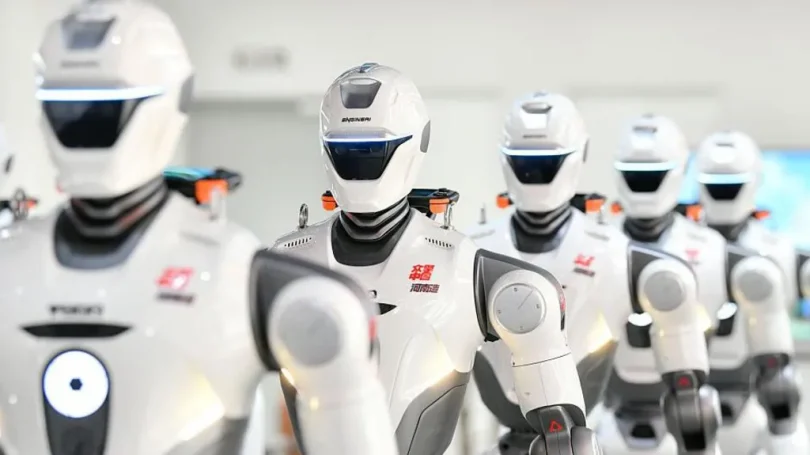
The Trump administration has announced a ban on the import of new foreign-made humanoid robots and certain power inverters, citing what it described as “unacceptable risks” to US national security….
The Trump administration has announced a ban on the import of new foreign-made humanoid robots and certain power inverters, citing what it described as “unacceptable risks” to US national security.
The restrictions, unveiled on Tuesday by the Federal Communications Commission (FCC), apply to advanced robotic systems, including humanoid and four-legged robots, many of which are manufactured in China.
The FCC also prohibited imports of foreign-made power inverters used in data centres and solar energy systems.
The agency added the products to its Covered List, which identifies technologies considered to pose national security risks.
The ban applies only to new devices and does not affect models that had already received FCC authorisation.
FCC Chairman Brendan Carr said the move was aimed at protecting America’s critical supply chains from potential security threats.
According to the FCC, foreign-made power inverters could be exploited by overseas actors to disable systems, steal data, facilitate remote access or launch cyberattacks.
It also warned that advanced robots could be used for surveillance, support foreign intelligence operations or even be remotely commandeered.
China strongly criticised the decision, accusing Washington of politicising trade and imposing sanctions on “groundless pretexts.” The Chinese embassy in Washington urged the US to abandon what it described as a “hegemonic mindset” and warned that Beijing would take “all necessary measures” to safeguard its interests.
The latest restrictions add to a series of US measures targeting Chinese technology, including limits on semiconductor exports and steep tariffs on Chinese electric vehicles, as Washington seeks to protect its technological edge and address national security concerns.
The move comes amid intensifying competition between the world’s two largest economies in artificial intelligence and robotics, with Chinese firms rapidly expanding the development and commercial deployment of humanoid robots in factories, businesses and homes.