Washington DC [US], April 24 (ANI): A new assessment by the Washington, DC-based think tank Institute for the Study of War (ISW) has suggested that recent statements from Iranian leadership appear to reflect a coordinated response shaped by both internal regime politics and external pressure from the United States.
The think tank stated,’ US President Donald Trump’s messages have appeared to elicit a choreographed response by the Iranian regime that is directed both to regime factions and to the United States.’
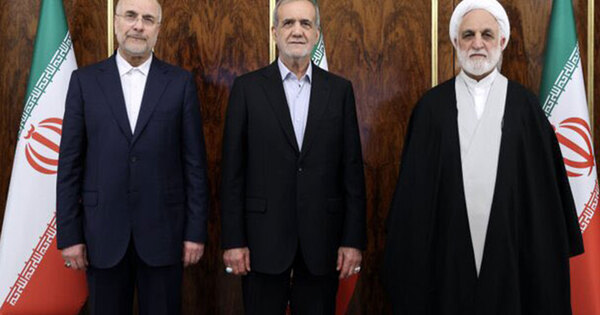
It added, ‘The heads of Iran’s three branches of government issued a series of statements likely aimed at defending themselves from accusations of ‘moderation’ in the Islamic Revolutionary context. ‘
According to the think tank, this messaging was followed by a further symbolic alignment from Iran’s top leadership, ‘ Iranian Supreme Leader Mojtaba Khamenei acknowledged Ghalibaf, Pezeshkian, Ejei, and Aragchi’s obeisance several hours later in a choreographed manner that likely seeks to demonstrate unity and signal an end to the internal competition between pragmatic and hardliner officials.’
The think tank’s analysis also highlighted claims regarding Iran’s internal power structure, stating that ‘Iranian Supreme Leader Mojtaba Khamenei is likely unable to seriously impact Iranian decision-making due to injuries sustained during the war.’
Citing reporting from The New York Times, the assessment claimed that Mojtaba Khamenei is under frequent medical supervision. The think-tank stated, ‘The New York Times reported on April 23 that Mojtaba is under frequent medical attention and heavily reliant on the advice and guidance of senior IRGC commanders led by Islamic Revolutionary Guards Corps (IRGC) Commander Major General Ahmad Vahidi, citing a number of former IRGC and current regime officials.’
The analysis further suggests that Vahidi (Commander-in-Chief of the IRGC) plays a central role in shaping strategic direction within the regime. It stated, ‘Vahidi continues to support Iranian sovereignty over the Strait of Hormuz and efforts to retain the nuclear program, because he views negotiations with the United States as having no present value, according to IRGC sources and anti-Iranian regime media.’
The think tank further characterised Vahidi as part of Iran’s first revolutionary generation, the analysis stated, ‘Vahidi is part of the first generation of revolutionaries, and he prioritises ideological purity and hard power over the economy and well-being of Iranian citizens.’ (ANI)