
A group of Democratic lawmakers in the United States has urged the State Department to end decades of official ambiguity surrounding Israel’s nuclear capabilities, arguing that the ongoing US-Israel war on Iran has made transparency an urgent issue.
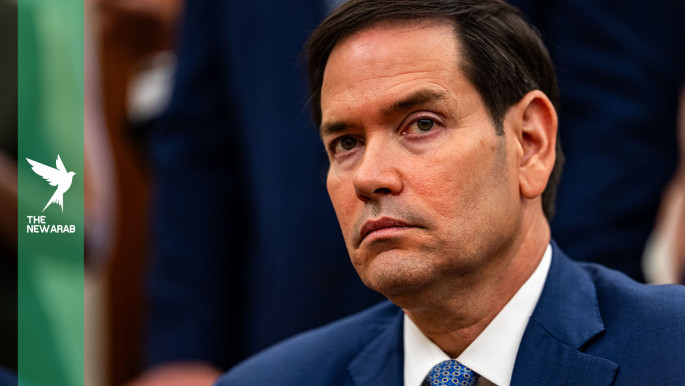
In a letter sent to Secretary of State Marco Rubio earlier this week, 30 members of Congress said lawmakers had not received sufficient information about “the nuclear balance in the Middle East” or the risks of escalation linked to the conflict with Iran.
The lawmakers argued that maintaining silence over Israel’s nuclear arsenal undermines coherent non-proliferation policy across the region.
“A policy of official ambiguity about the nuclear capabilities of one party to this conflict makes coherent nonproliferation policy in the Middle East impossible,” the letter stated.
The signatories asked Rubio to clarify what nuclear capabilities Israel possesses, including details about warheads, launch systems, enrichment capabilities, fissile material, and plutonium production.
The lawmakers also questioned whether Israel had communicated any “nuclear doctrine, red lines, or thresholds for nuclear use” to Washington during the conflict with Iran, and whether the US had received assurances that nuclear weapons would not be used.
Israel has long maintained a policy of nuclear opacity, neither confirming nor denying possession of nuclear weapons, although former US officials, Israeli whistleblowers, and intelligence documents have repeatedly pointed to the existence of an undeclared nuclear arsenal.
For its part, the Nuclear Threat Initiative estimates Israel possesses around 90 nuclear warheads, alongside submarines and ballistic missiles capable of carrying nuclear weapons.
Divisions over support
The congressional push comes amid broader signs of growing divisions within both major US political parties over support for Israel, particularly following Israel’s genocidal war on Gaza and the joint US-Israeli attack on Iran.
The shift was highlighted in a recent poll commissioned by Democratic congressional candidate Dorothy McAuliffe, wife of former Virginia governor Terry McAuliffe, which asked whether the United States should stop arms sales to Israel, a question the Washington Post said would have been rare in Democratic primaries just two years ago.
It comes after a CNN poll conducted in March found that 72% of Democrats and 47% of Republicans described US support for Israel as an issue causing problems within their own parties.
Another poll conducted by the Washington Post, ABC News and Ipsos in late April found that 47% of Americans believe the United States supports Israel too much, up from 18% in a 2015 Pew Research Centre survey.
Among Democrats, the figure rose from 26% in 2015 to 66% today, while among independents it increased from 20% to 51%, and among Republicans from 7% to 22%.
The shift has become increasingly visible in election campaigns across the United States, with criticism of Israel no longer confined to progressive activists.
Campaigns against military aid to Israel
Some Democratic candidates have openly described Israel’s war on Gaza as genocide, while several candidates backed by progressive groups have campaigned on reducing or ending military aid to Israel.
Michigan Senate candidate Abdul El-Sayed argued that politicians unwilling to describe Gaza as genocide could not be trusted to challenge injustice elsewhere.
Last month, 40 Democratic senators voted in favour of a measure blocking the sale of military bulldozers to Israel, compared with 27 senators who supported a similar measure in July.
The Washington Post reported that pro-Israel lobbying groups, including AIPAC, are increasingly becoming a political liability for some candidates in competitive races.
The debate has also exposed fractures within Donald Trump’s political base, particularly among right-wing supporters who argue that the war on Iran contradicts his “America First” agenda.
Trump allies and conservative commentators, including Tucker Carlson, former congresswoman Marjorie Taylor Greene, and Representative Thomas Massie, have emerged as critics of US support for Israel during the conflict.
Meanwhile, public attitudes among younger Republicans appear to be shifting significantly.
A Pew Research Centre survey conducted in March found that 57% of Republicans aged 18 to 49 held negative views of Israel, compared with 24% of Republicans over the age of 50.
The Washington Post reported that criticism of Israel, once considered politically risky in both parties, is increasingly being used by candidates to position themselves as challengers to the political establishment.