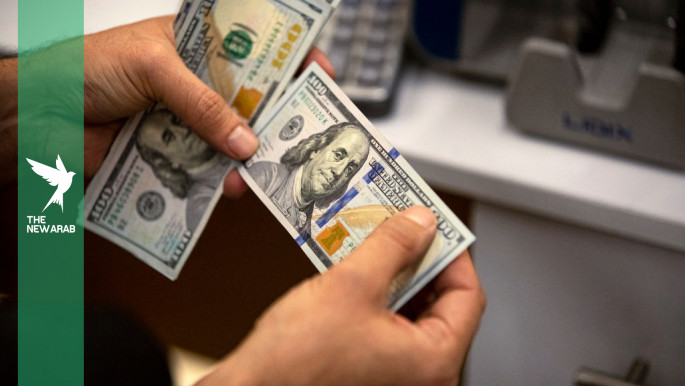
Iraqi oil revenues have been held in the US and transferred to Baghdad as cash since the 2003 invasion [Getty]
Sources close to the Iraqi government told The New Arab on Wednesday that two shipments of US dollars arrived in Baghdad simultaneously during the visit of US envoy Tom Barrack to Iraq, as part of efforts to maintain the value of the Iraqi dinar, strengthen import operations and secure the salaries of public employees, which had recently come under threat due to the inability to export oil.
The sources, who preferred not to be named, said that “the two shipments arrived in Baghdad from Washington after a halt in dollar shipments that lasted about four months as part of US pressure on Baghdad to implement a programme for the state to monopolise all weapons and dismantle Iran-backed armed factions operating in the country”.
According to the sources, the funds that arrived in Baghdad came from Iraq’s oil revenues deposited in the United States.
Under a previous decision made during the US-led invasion of Iraq in 2003, Iraq’s financial revenues from oil exports are deposited in the US Federal Reserve as part of measures to protect them from debts accrued during the rule of Saddam Hussein, granting them immunity from claims.
The United States has regularly transported these funds by air to Iraq over the past two decades.
However, the transfers stopped in recent months amid accusations that Iran had benefited from the Iraqi financial system to evade sanctions.
This led to a decline in the value of the Iraqi dinar on the parallel market, in addition to problems in the private sector related to import operations for traders and companies.
While the sources did not disclose the value of the latest two shipments, they confirmed that they were “sufficient for Iraq for months”.
In April, US State Department spokesperson Tommy Pigott said that the Iraqi government’s failure to prevent attacks by factions, and its provision of political, financial and operational cover for them, was negatively affecting US-Iraqi relations.
He noted that Washington expected the Iraqi government to take all necessary measures to immediately dismantle Iran-aligned factions in Iraq.
That comment marked the beginning of a deterioration in relations between Baghdad and Washington, prompting the latter to refrain from sending any dollar shipments to Baghdad.
US envoy to Iraq and Syria Tom Barrack arrived in Baghdad on Monday, 15 June, and held a series of meetings with Prime Minister Ali al-Zaidi and other government officials in Iraq.
He said that his visit included conveying support from US President Donald Trump for the government of Ali al-Zaidi, which won parliamentary confidence in mid-May but has yet to complete the formation of all ministries because of political disputes.
Barrack wrote in a post on X upon his arrival in Baghdad, “I am pleased and honoured to return to Baghdad, where I am meeting the outstanding team at the US Embassy led by Chargé d’Affaires Joshua Harris.”
He added, “Today I will meet Prime Minister al-Zaidi to convey President Trump’s support for his government and discuss our partnership to shape a new path for a strong US-Iraqi relationship that achieves mutual benefit for both countries.”
According to sources close to the Iraqi government, the two dollar shipments represent economic cover for Iraq during the initial stages of Zaidi’s premiership, but this remains contingent on US conditions.
They said that envoy Tom Barrack told al-Zaidi that he should make use of Washington’s support and the international openness towards his government during this phase to resolve internal crises, including ending the issue of the weapons held by armed factions.
However, Following the Barrack–al-Zaidi meeting, a statement issued by the U.S. State Department appeared less like a joint agreement between two countries and more like a set of political, economic, and security conditions that Iraq’s government must meet in exchange for U.S. support and avoidance of what one official described as “massive” sanctions.
The statement included broad demands, beginning with the disarmament of armed factions and, for the first time, using terms such as the dissolution of armed groups and formations. It also called for preventing threats to neighboring countries from originating on Iraqi territory and included what resembled guidance regarding the entry of American companies into Iraq.
In response, Prime Minister Ali al-Zaidi’s office republished the statement almost verbatim. It contained three sections written in direct language, the first of which called on the government to:
“Implement plans for the complete disarmament and dissolution of all armed groups and formations operating outside the authority and control of the Iraqi state; restrict weapons exclusively to the Iraqi state; and enforce full sovereignty to keep Iraq away from conflicts and prevent its territory from being used by any party to threaten regional peace.”
According to official U.S. and Iraqi announcements, Prime Minister Ali al-Zaidi is scheduled to visit the White House in mid-July to discuss the future of this relationship.
However, the sources told Al-Araby Al-Jadeed that al-Zaidi must continue working on the issues agreed upon with Barrack in the weeks leading up to the Washington visit. These include anti-corruption initiatives and, most importantly, the effort to place all weapons under state control. As a result, the coming weeks are expected to witness significant developments.
Article translated from Arabic by Afrah Almatwari. To read the original, click here.