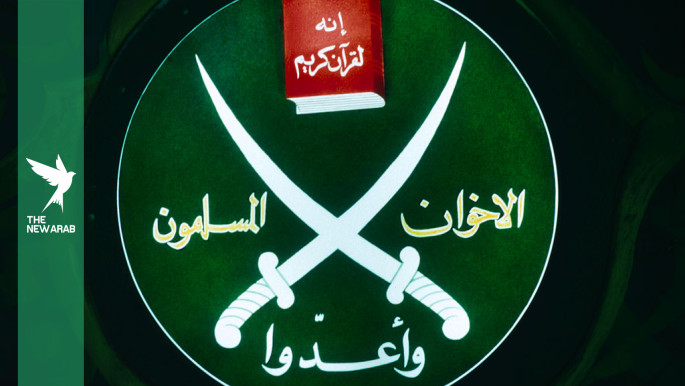
The Muslim Brotherhood has branches across the Middle East and has largely engaged in peaceful political activity [Getty]
The US has announced a new counterterrorism strategy, which claims for the first time ever that the Muslim Brotherhood is the originator of both Al-Qaeda and the Islamic State extremist group.
The strategy was announced on Tuesday by Sebastian Gorka, Trump’s counterterrorism director, who has a history of making Islamophobic statements.
In January 2026, the US State Department designated the Muslim Brotherhood’s Lebanese, Egyptian, and Jordanian branches as “terrorist organisations” for the first time.
The strategy document claims that the Muslim Brotherhood is “the root of all modern Islamist terrorism predicated on recreating the Muslim Caliphate and killing or enslaving non-Muslims”.
“President Trump knows that all modern Jihadi groups, from al Qaeda to ISIS to Hamas, can trace their roots back to one organization: the Muslim Brotherhood,” it adds.
Founded in 1928, the Muslim Brotherhood has autonomous branches across the Middle East which have largely engaged in peaceful activity and electoral politics, despite being banned by many Middle Eastern governments.
In 2012, a Muslim Brotherhood member, Mohammed Morsi, won Egypt’s first ever democratic presidential elections but was overthrown in a coup led by current President Abdel Fattah al-Sisi.
The view of the Muslim Brotherhood presented in the White House document reflects a long-standing view held by Gorka, who in 2016, authored a book titled Defeating Jihad: The Winnable War, in which he argued that the US’s enemy is not terrorism or violent extremism itself, but “global jihadism,” which he described as “a modern totalitarian ideology rooted in Islamic doctrine and military history.”
The book became a US bestseller but was criticised for its simplistic view of Islam and Islamophobia.
In the book Gorka recommended that US citizens carry firearms and report “suspicious” activity to police. He also urged the US government to designate the Muslim Brotherhood as a terrorist group, and take action against the Council on American-Islamic Relations (CAIR) advocacy group.
The strategy document identified three “major types of terror groups”, saying that these were “narcoterrorists and transnational gangs”, “legacy Islamist terrorists”, and “violent left-wing extremists, including anarchists and anti-fascists”.
It said that the first priority was to cripple transnational criminal organizations so they cannot smuggle drugs, gang members, or trafficking victims into the United States.
It also said its second priority is to “target and destroy the five major Islamic terrorist groups,” although it did not mention all five.
It did specifically mention al-Qaeda and its branch in the Arabian Peninsula as well as ISIS, particularly ISIS-Khorasan, which is active in Afghanistan.
It also called for continued pressure on the “global jihadist movement” through further terrorist designations of Brotherhood-linked entities worldwide.
The strategy also criticizes previous US administrations. It blamed failed “forever war” policies and what it describes as Democratic appeasement of “state sponsors of terrorism”, particularly Obama’s 2015 nuclear deal with Iran.
It also reiterated that the Muslim Brotherhood is “the root of all modern Islamic terrorism” and vowed “to crush this organization everywhere.”