
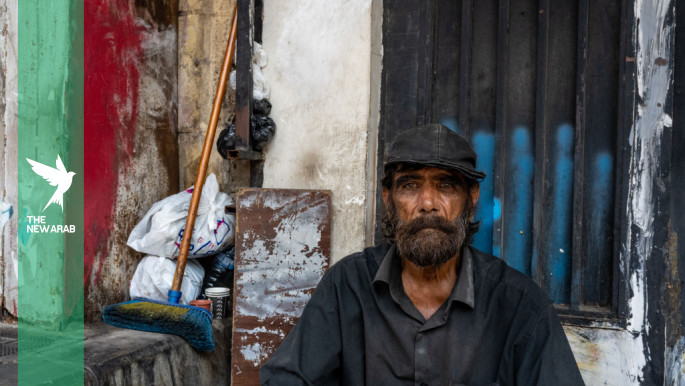
War has always been a mechanism that destroys some economies while enriching others, often following old imperialist frameworks, writes Jad Chaaban. [GETTY]
The costs of the current US-Israel war on Iran are often measured in cold, macroeconomic abstractions. We hear of “supply disruptions,” “energy shocks,” and “inflationary pressures”. But behind the fluctuating price of a Brent crude barrel, there is a far more devastating and silent reality: the systematic destruction of human lives and the rapid descent of millions of our neighbours into poverty.
As researchers and policymakers, we have a moral and professional duty to re-centre the discourse on the people of this region. While some economies may benefit from military investments, the direct victims of this conflict are becoming invisible in the grand geopolitical narrative.
The latest macroeconomic projections from April 2026 reveal a grim economic landscape. The International Monetary Fund (IMF) has been forced to slash its growth projections for the Middle East and North Africa (MENA) region to nearly a quarter of its original estimates. We are witnessing severe contractions even in countries once considered stable, and these economic shocks ultimately impact livelihoods.
The mechanics of this crisis are rooted in the extreme vulnerability of the Arab states. Our region is uniquely exposed to price shocks due to our heavy dependency on food imports. When conflict disrupts trade routes, it is the poorest families who feel the immediate sting of inflation. While the United States maintains a low inflation rate, the Arab region is grappling with double-digit price hikes.
Perhaps most concerning is the “remittance trap.” Many Arab nations rely heavily on financial lifelines from workers in the Gulf Cooperation Council (GCC) countries. In Egypt, these workers’ remittances from the GCC accounted for over $22 billion in 2022—nearly 5% of its GDP.
In Jordan and Lebanon, the figures are even higher, reaching 7% and 8% respectively. As the economies of the Gulf contract under the weight of regional instability, these flows are drying up, triggering a domino effect of poverty across the Levant and North Africa.
Our simulations suggest that under current conditions, we will see an additional 4.4 million people fall into poverty across the Arab region. If the war continues to drag on and the GCC economies contract further, that number will likely climb to nearly 5.3 million. These are not just statistics; they represent people whose education will be interrupted, whose health will be compromised, and whose potential will be stifled by traumas that will last for decades.
War has always been a mechanism that destroys some economies while enriching others, often following old imperialist frameworks. But the human cost of this specific conflict is a compounded deterioration of human development.
Women and children, as is so often the case, are bearing the heaviest burden. Refugees and displaced populations, who already have limited capacity to recover, are being pushed to the absolute brink.
The priority must be an immediate end to this destructive war. However, even if the guns fall silent tomorrow, the road to recovery will require more than just rebuilding physical infrastructure. We must design a new model for economic growth that is explicitly biased toward the poor—one that ensures an equitable distribution of resources and prevents poverty from becoming a hereditary condition passed down from one generation to the next.
We cannot allow the “invisible” victims of this war to remain so. The data is clear: the cost of this conflict is being paid in the form of human capital and the dignity of the Arab people. It is time for our policies to reflect that reality.
Dr. Jad Chaaban is an economist and public policy expert, and currently an associate professor of economics at the Doha Institute for Graduate Studies. He was the Lead Author of the United Nations Development Programme (UNDP) Arab Human Development Report 2016, and a member of the Advisory Board of UNDP’s Global Human Development Report (HDR). His research focuses on sustainable human development, political economy and public economics.
Follow Jad on X: @JadChaaban
Have questions or comments? Email us at: editorial-english@newarab.com
Opinions expressed in this article remain those of the author and do not necessarily represent those of The New Arab, its editorial board or staff.