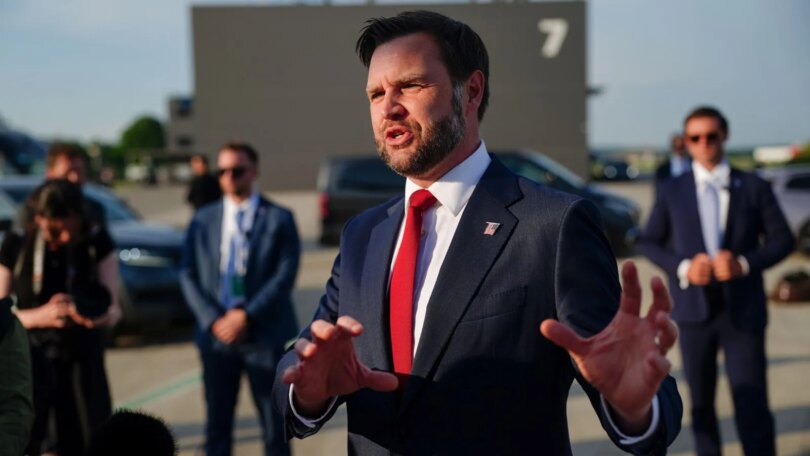
U.S. Vice President JD Vance speaks to members of the media before boarding Air Force Two at Emmen Military Air Base, Emmen, Switzerland. (Photo: AP)
The first full day of US-Iran talks in Switzerland ended with the two sides offering sharply different accounts of what was actually agreed with US Vice President JD Vance claiming Iran had committed to admitting UN nuclear inspectors, Iran’s foreign ministry, however, said earlier that real negotiations on the “nuclear issue” haven’t yet started.
Speaking to reporters on the tarmac before leaving Switzerland on Monday, Vance said Iran had agreed to allow inspectors from the International Atomic Energy Agency back into the country “at the minimum of this week.” He called it a “very, very good day” and described nuclear inspector access as “probably what we’re most excited about as Americans.”

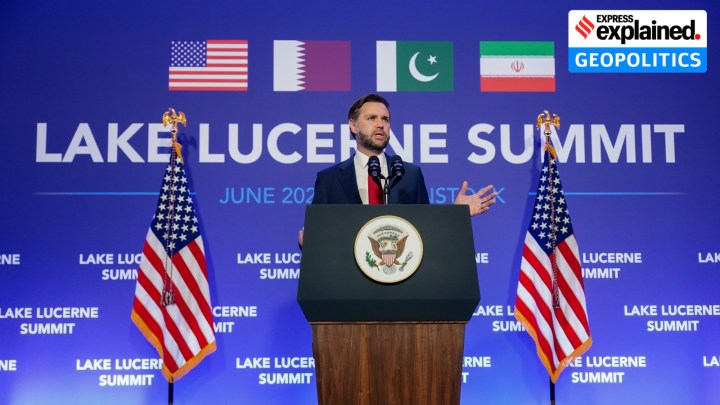
“Letting in the inspectors is a big deal,” Vance said. “But again, we’re going to see what they actually let the inspectors do once they’re in the country.” He added that he trusted actions over words, saying the US would judge Iran by what it does, not what it says.
Vance said four things had been accomplished on the day: agreeing to nuclear inspector access, building a mechanism to keep the Strait of Hormuz open, creating a Lebanon de-confliction cell, and setting up a process for future talks. He described the outcome as laying “a very good foundation for a successful, final deal.”
What Iran said
Iran’s foreign ministry pushed back almost immediately. Tehran denied making any new commitments on nuclear monitoring, with Iran’s foreign ministry saying real negotiations on the nuclear issue had not yet started.
Story continues below this ad
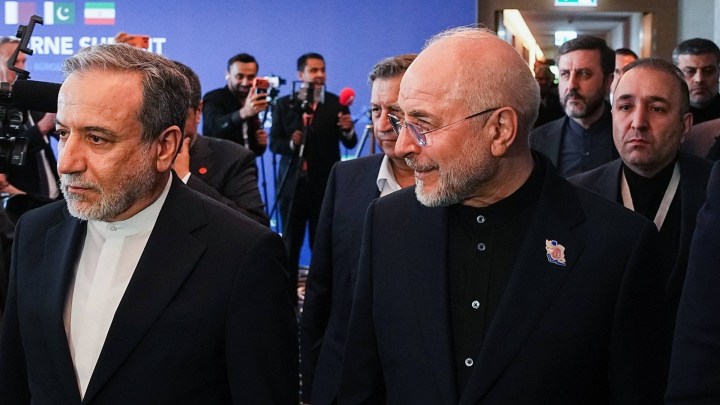
Iran’s chief negotiator Mohammad Bagher Ghalibaf separately insisted the Strait of Hormuz would remain under Iranian management and subject to international law a direct counter to US claims of progress on the waterway.
The IAEA has had no access to Iran’s nuclear facilities since the conflict began and has been unable to verify whether Iran has resumed enrichment, whether its uranium stockpile has moved, or whether any uranium was destroyed in the strikes.
Any enrichment limits agreed at the talks would remain formally unverifiable until inspectors physically re-enter Iranian facilities making the inspector access question the single most consequential near-term test of whether the deal is real.
Vance said the US goal was to make Iran’s nuclear programme “effectively impossible” to rebuild a commitment that does not appear in the memorandum of understanding text signed last week.
Story continues below this ad
What else was agreed
Despite the conflicting accounts on inspectors, both sides confirmed several other outcomes. Iran and the US agreed to set up a telephone hotline to prevent misunderstandings over Strait of Hormuz shipping.
A Lebanon de-confliction cell was established, facilitated by Qatar and Pakistan, to enforce the ceasefire there. The US Treasury also temporarily lifted sanctions on Iranian oil, following through on a key commitment made in the memorandum. Treasury Secretary Scott Bessent said the decision was made in line with what he called productive talks in Switzerland.
Technical talks are continuing at Burgenstock through the week. US Secretary of State Marco Rubio will travel to the United Arab Emirates, Kuwait and Bahrain to discuss regional priorities including the Iran memorandum. Iran is also due to hold separate talks with Gulf states on regional security as part of the next stage of negotiations.
(With inputs from agencies)