
…Condemns Attacks On Opposition
Abia State Governor, Alex Otti, has said his administration has constructed about 450 roads across the state without taking fresh loans, while simultaneously reducing a substantial portion of the debt inherited when he assumed office in May 2023.
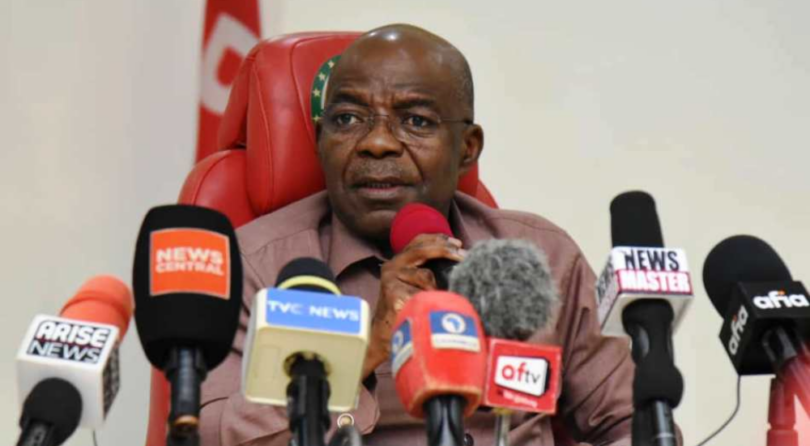
Otti made the remarks in an interview on Arise News aired on Friday, where he spoke on his administration’s finances, infrastructure projects, electricity reforms, the development of Aba, political opposition and the 2027 elections.
The governor said his administration inherited N191.2 billion in various forms of debt, including contractor obligations, pension arrears and loans owed to multilateral organisations.
“You are correct. It was N191.2 billion. Different types of debt. Some of them were contractor debt. Some of them were pension arrears,” Otti said.
He said the state had significantly reduced its obligations to multilateral organisations.
“That one was somewhere about N140 billion, as reported by DMO. We’ve actually reduced that debt to about N48.4 billion. So we’ve taken almost 75 per cent of that loan out; we’ve paid,” he said.
Otti attributed the administration’s ability to execute infrastructure projects while reducing its debt burden to what he described as disciplined budget planning.
He said his administration had deliberately committed at least 80 per cent of its budget to capital expenditure.
“We said no less than 80 per cent of our budget will go into capital expenditure,” Otti said. “So in the last three years, 80 to sometimes 82 per cent. In 2024, 82 per cent of our budget was in capital expenditure, leaving a meagre 18 per cent for recurrent spending.”
Explaining the rationale behind the policy, he said, “If the budget is N1 trillion, it means that we will quarantine N800 billion for capital expenditure, and then the rest can use its operating cost and other. So that helps discipline us.”
According to the governor, the approach had enabled the state to devote more resources to roads, schools, hospitals and environmental projects.
“So that leaves us with a lot of the money to build roads, clean the environment, build hospitals, rebuild schools, and all the things you see,” he said.
Otti also linked his administration’s approach to what he described as the high cost of governance in Nigeria.
“The other thing it has done is what I always have campaigned on, and that is cost of governance. It is a major problem in the country,” he said. “If you don’t manage your cost very well, you will find that year in year out, you are struggling. You are working hard. You are sweating, but it’s not showing.”
On personnel expenditure, he said the government had kept spending within the limits it set for itself.
“We brought it down, caged it within that 20 per cent,” he said. “Salaries and other, it’s about 11.9 per cent of our costs goes into salaries and other, and we keep it there, even though minimum wage increased.”
The governor, a former bank chief executive, acknowledged that his financial-sector experience had influenced his approach to managing public resources.
“Experience matters also,” he said when asked whether his background in banking had helped him manage Abia’s finances.
Otti also discussed his administration’s development programme in Aba, rejecting comparisons that suggest the city is being developed as a replica of Japan or China.
“I always quarrel, maybe not quarrel, I always disagree with this Japan of Africa,” he said. “We are not copying Japan, not China, not Dubai. We just want to be ourselves.”
He identified electricity as one of the major challenges confronting manufacturers in Aba and said restoring power supply through Geometric Power had been a major priority.
“When we came, we started with power,” Otti said. “For manufacturers, close to 60 per cent of their cost is in energy.”
He said the government worked with the company to resolve the problems that had prevented it from operating effectively.
“One year after, Geometric was up and running, and that solved a lot of problems,” he said.
Otti said his administration was also working to reduce the vulnerability of the power system by exploring alternative gas supply arrangements.
“If the problem is gas, we must have an alternative gas supply for Geometric,” he said, adding that TotalEnergies would be able to provide an alternative gas supply.
The governor also pointed to road reconstruction and support for manufacturers as part of the administration’s efforts to reposition Aba.
“We looked at the quality of products made in Aba, and we found that they were good,” he said.
He said the state, working with the United Nations Development Programme, established an export growth laboratory to help local manufacturers expand their markets.
Otti also defended his administration’s high capital expenditure ratio in the 2026 budget, which he put at N1.016 trillion, with about 80 per cent allocated to capital expenditure.
Asked whether such a model was sustainable, he said, “It is not an aberration; it is sustainable. If we can do it now, then we can continue doing it.”
According to him, the objective was to use government spending to build a productive economy rather than simply fund consumption.
“We are not spending on consumption. We are spending to build a resilient economy,” Otti said.
The governor was also questioned about electricity subsidies and his support for the removal of petrol subsidy.