Evian [France], June 15 (ANI): The 52nd G7 Summit kicks off on Monday in the French spa town of Evian, bringing together world leaders to address pressing economic imbalances, geopolitical tensions, and global governance. France is hosting the high-profile three-day event, which runs from June 15 to 17.
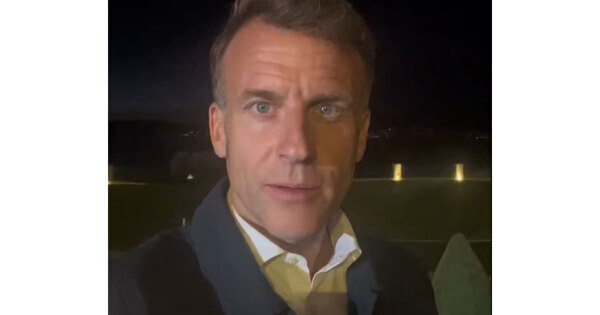
In a video address posted on X on the eve of the summit, French President Emmanuel Macron set the tone for the high-level talks. He announced, ‘Arrived in Evian for the G7.’
With the summit kicking off today, the French President outlined an extensive and critical agenda ranging from regional crises to global trade imbalances and cybersecurity.
Macron detailed the core participants of the summit, stating, ‘We will welcome here in Evian the United States of America, the United Kingdom, Canada, Germany, Italy, Japan, the European Commission, and the President of the European Council. Together, we’ll try to move forward on the major topics.’
The core G7 members participating in the high-level talks are Canada, France, Germany, Italy, Japan, the United Kingdom, the United States, and the European Union.
To foster broader international co-operation, the French President further emphasised France’s initiative to bring in key global partners to foster deeper co-operation among nations. He noted, ‘We will also associate with this work some international institutions and some countries with which we wanted a very special convergence: South Korea, India, Kenya, Brazil.’
To achieve this, the host nation has invited Brazil, Egypt, India, Kenya, South Korea, Qatar, Saudi Arabia, Syria, Ukraine, and the United Arab Emirates as ‘outreach partner countries’.
This high-level engagement marks the 13th time that India will participate in the G7 summit as a ‘partner country’, underscoring New Delhi’s growing influence on the world stage. The international event will also mark Prime Minister Narendra Modi’s seventh consecutive appearance at the elite gathering.
Under France’s leadership, the presidency centres heavily on restoring the G7 to its original purpose, a forum for dialogue between major economic powers to co-ordinate responses to crises and global economic imbalances. To achieve this objective, world leaders are convening across multiple dedicated working sessions.
Outlining the primary objectives of the summit, Macron listed world crises and economic imbalances as top priorities. He explained, ‘What will be the main topics of this G7? First, the world’s imbalances and crises. We will obviously talk about Ukraine, and we will welcome President Zelensky to try to strengthen our support for Ukraine, for its energy infrastructure, and for the war effort, as well as to prepare the right conditions for a negotiation that would be useful for a lasting peace.’
The primary focus of these discussions targets key systemic areas, beginning with macroeconomic governance and international financial architecture. Additionally, the leaders are exploring collaborative frameworks to strengthen global health and energy security.
Amid ongoing international friction, the summit is dedicating significant attention to major geopolitical challenges, including peace and security for Ukraine and the Middle East.
The summit will also delve deeply into Middle Eastern geopolitics, particularly focusing on a major nuclear agreement with Iran. Macron stated, ‘We will then talk about Iran and the agreement that is being signed tonight. For that, we will involve Egypt, which will also be with us, along with the Gulf countries, in particular Qatar and the United Arab Emirates. The goal will be to see the consequences of this agreement, support for Lebanon, the long-term reopening of Hormuz, and, obviously, the conclusion of an agreement on nuclear and ballistic issues in Iran.’
The French leader added that global dignitaries will work to secure alternative energy networks to protect their domestic markets. He emphasised, ‘We’ll also look at ways and means of diversifying the energy routes leaving the region to reduce our dependence. Basically, the heart of this discussion will also be the consequences of the crisis in the Near and Middle East on our economies.’
Macron also stressed the importance of reshaping international trade and supporting developing nations through a stronger North-South partnership.
He expanded on this by saying, ‘We’ll talk about the major global imbalances, that is, the partnership between North and South, how to help the South more by mobilising more private money, by recreating solidarities, and how to succeed in dealing with the imbalances that we are experiencing and that are disrupting international trade today. On that, a great deal of expert work has been done, and a few days ago we held an in-depth exchange with India, China, and the G7 members as well, to try to move forward on this framework.’
Turning towards technology, artificial intelligence, and digital safety, the final core pillar of the agenda centres on the regulation and future trajectory of artificial intelligence.
Macron announced that major technology leaders would be participating in the discussions to safeguard democratic institutions, noting, ‘Beyond that, we will also have a discussion with the major players in technology, social networks, and artificial intelligence who will join us, with two objectives: how to improve cybersecurity, how to improve the resilience of our systems, and how to protect our children and our democracies.’
Macron summarised that the summit would yield several multilateral agreements on vital global issues, affirming, ‘I’m going through the menu of this G7 and everything we’re going to discuss quite quickly. Several texts will be adopted on critical minerals, rare earths, international trade, health, cancer, Ebola, the fight against drug trafficking, immigration, and more. But the heart of the discussion will be about trying to create new agreements and convergence between the G7 countries and the few partners I mentioned, to build common solutions, reduce tensions in the world, and improve the state of our economies. At our service.’
Expressing his pride in hosting the event, Macron concluded his address with a message of gratitude and encouragement for local citizens and students.
‘It’s a great source of pride for France to host this G7 in Evian. I want to thank the residents of Evian and the entire region who are suffering a bit from the constraints of such an event. I also have a very special thought for graduates, obviously the graduates here, but graduates all over France, because at the time I’m speaking to you, they must be studying in the final moments of anxiety, and so I have a very special thought for them,’ Macron said. (ANI)