It is easy to blame all the wrongdoings of the World Cup directly on the US, but FIFA also does the bare minimum when it comes to holding host countries to account. [Getty]
As millions of fans around the world feast their eyes on the largest World Cup in history, co-hosted by the US, Canada, and Mexico, the event once again finds itself tangled up in ugly political realities. While the governing body, FIFA, cowers behind its questionable “non-profit” status, the tournament has long facilitated corruption and human rights controversies.
When Qatar hosted in 2022, Western media and critics went out of their way to scrutinise the Gulf nation. Yet in 2026, the mainstream media buzz is strikingly different regarding the primary host nation, the US.
This passivity towards the US effectively ignores the reality that the country is leveraging an $11 billion tournament to sportswash some of the most severe international law and domestic human rights violations of the decade.
The US is using the global sporting event to improve its public reputation and redirect attention away from its damaging policies, such as Trump’s ICE mass deportation campaign and its full-scale wars killing thousands of people, attacking seven countries since January 2025.
FIFA’s broken bidding process
The 2026 World Cup sportswashing campaign can be traced back to the co-host bid submitted to FIFA in 2018, during Donald Trump’s first presidential term.
The glossy bid contained endless promises on how “deserving” this group of nations would be as hosts, with the US as the primary venue for most matches.
It is easy to blame all the wrongdoings of the World Cup directly on the US, but FIFA also does the bare minimum when it comes to holding host countries to account.
Despite repeated calls by human rights groups for independent monitoring of FIFA and its practices, there is still no external committee. FIFA also fails to impose penalties on countries that do not fulfil their promises, which raises the question: What is the point of the bid in the first place?
One section of the 2026 bid promises that “critical social issues in each host country are being addressed.” The text says these issues “include racism, gender and socio-economic inequality, public health and safety, disenfranchisement of indigenous peoples, discrimination against any population, environmental protection, and more—using science-based approaches.”
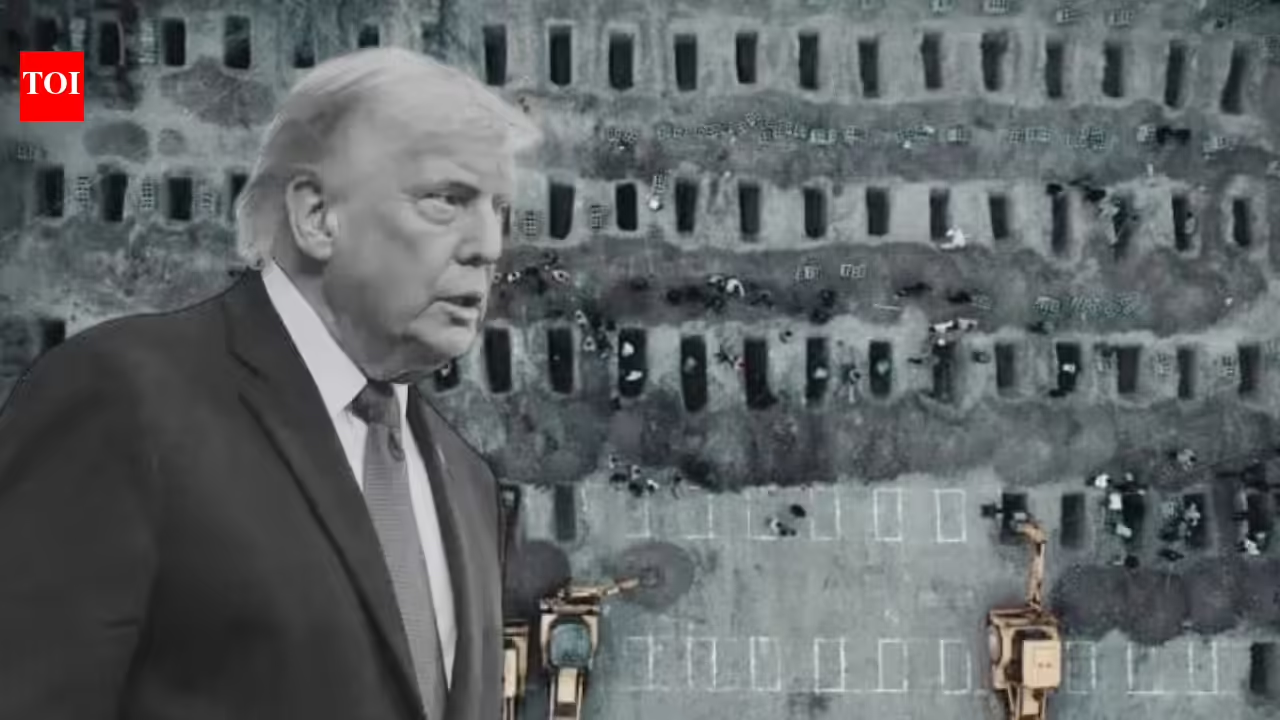
Whereas in reality, we are seeing the complete opposite. Trump and his ICE crackdown have deported over 675,000 people since 2025. That’s six times the capacity of the stadium hosting the final World Cup match.
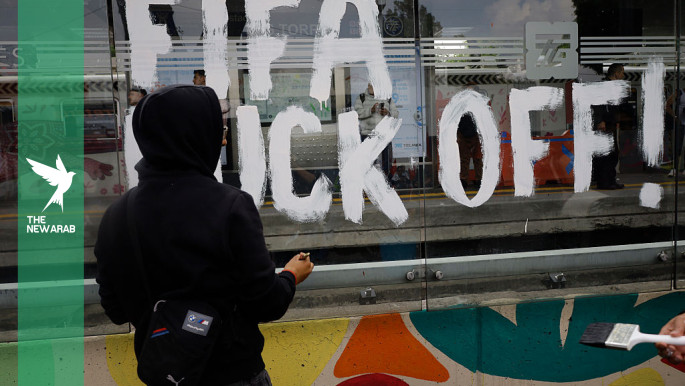
A tournament cannot call itself a global celebration while allowing border control and security to operate through fear and violence.
However, in the 530-page FIFA bid, the US painted itself as a country “proud” of its diversity, while ICE agents are racially profiling people, pulling them out of school, off the street, out of work, to deport them to a country where they might not have set foot in before.
The headlines in the lead-up to the World Cup have also proved the US is nowhere near as “inclusive” as originally promised, with multiple people being refused entry. Somali referee Oman Artan was denied entry to the US despite having the correct visa to travel and officiate matches.
In addition, several Iranians were denied entry due to the ongoing US-Israel war on Iran; Iranian players were allowed entry just 10 days before the tournament began, but other members of the squad, including administrative and managerial members, were denied.
Where is the inclusivity if industry professionals and spectators from all around the world, in all their diversities, are denied access to watch the games?
A dark contrast
Scrolling further down the bid, and it’s not long before you stumble across another great irony, as the US begins to boast its “important leadership role in championing fundamental human rights.” This statement is quickly followed by an assertion that the nation is bound by a “fundamental right to life, liberty, and the pursuit of happiness.”
These declarations are a dark contrast to the disregard the US shows for human rights both at home and abroad. Under the Trump administration since 2025, the US has executed airstrikes and military operations in Yemen, Iraq, Nigeria, Iran, Somalia, and Syria, alongside a violent military operation in Venezuela that killed 75 guards while capturing the leader, Nicolas Maduro, and his wife. The combined death toll across these actions exceeds 8,000 people.
Furthermore, Trump has threatened to colonise Greenland and has slapped a strict economic embargo on Cuba since January, forcing the island into a severe energy crisis that has cut power to essential infrastructure, including hospitals.
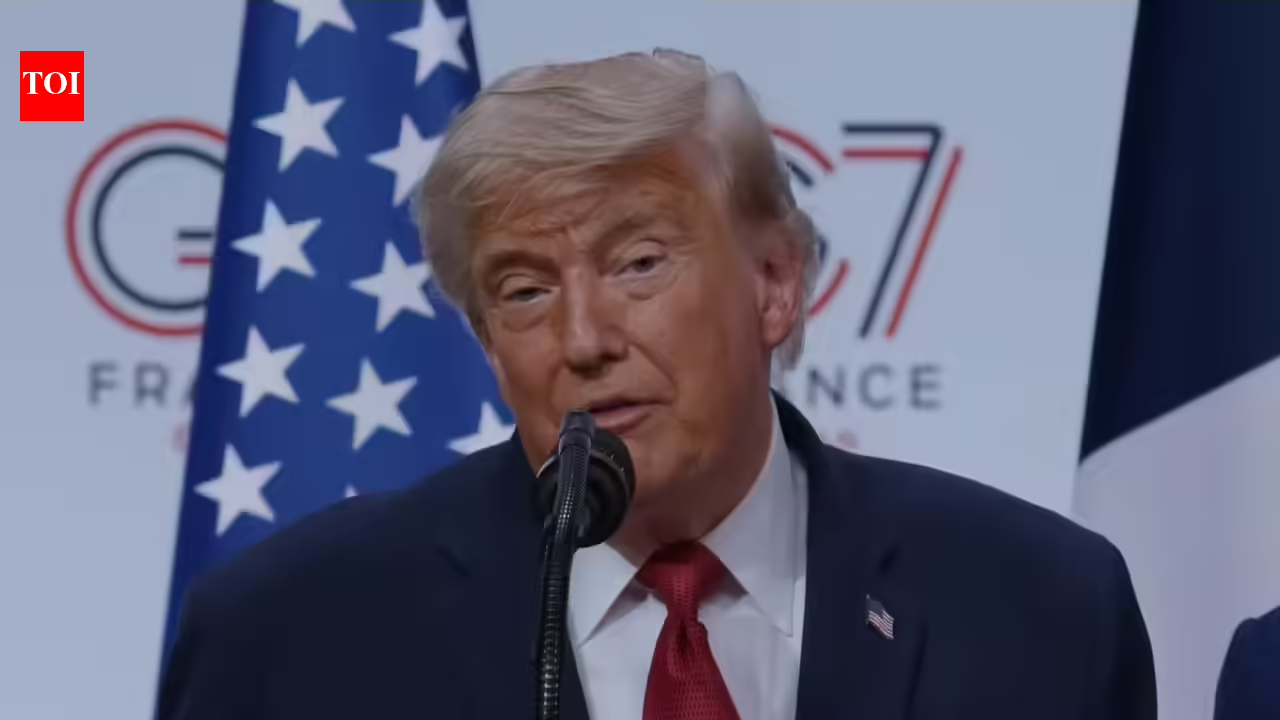
For the US, there is an extra layer of bias, as President Gianni Infantino and Trump are considered close friends.
Infantino has gone to great lengths to commend Trump on his leadership and even awarded him the FIFA Peace Prize in 2025, for his so-called “pivotal role in establishing a ‘ceasefire’ between Israel and Palestine,” and for “actively” seeking to end other conflicts.
This gesture conveniently ignores Trump’s active role in bombing several countries, not to mention the fact that the ceasefire is non-existent as military assaults continue against Palestinians in the Gaza Strip and the occupied West Bank.
The Western pedestal
Commonly, World Cup hosts are heavily scrutinised for labour violations in stadium construction. Western media frequently weaponises these exact compliance metrics against Arab hosts, with less vigour applied to Western hosts, like the US.
The US section of the bid states: “With no major public expenditures required to stage a successful and memorable Competition, our resources and energy will be applied to growing the game, raising the profile of critical environmental and human rights issues, improving the lives of people on our continent and beyond […].”
By using the fact that the US is already home to a robust stadium infrastructure as its primary selling point, the nation has managed to dodge the heavy scrutiny that is often levelled at non-Western countries.
Back in 2022, UK Prime Minister Keir Starmer, among other officials, refused to attend the World Cup and condemned Qatar’s hosting due to its “human rights abuse record.”
But these same politicians who quickly jumped on the anti-Qatar bandwagon have been remarkably quiet when it comes to the US hosting and its track record of human rights violations.
Olivia Hooper is a British journalist based in Morocco, specialising in humanitarian and gender-based topics, writing for Middle East Eye and Al-Monitor, among others.
Have questions or comments? Email us at: editorial-english@newarab.com
Opinions expressed in this article remain those of the author and do not necessarily represent those of The New Arab, its editorial board or staff.